The human hand contains twenty-seven bones, thirty-four muscles, and over three thousand nerve receptors. Usually, we use them to greet, to soothe, or to build. But in the spring of 2017, on a sun-drenched veranda in Brussels, two men used them to wage a silent, agonizing war.
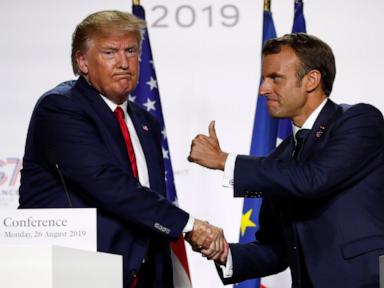
Donald Trump and Emmanuel Macron met for the first time, extended their right arms, and locked fingers. What followed was not a handshake. It was an ordeal.
For nearly six long seconds, the skin on their knuckles went a translucent, bloodless white. Their jaws clenched. Macron, young and newly elected, leaned in, his eyes fixed on the older American president like a poker player refusing to fold a weak hand. Trump pulled, Macron held, and the world watched two alpha personalities attempt to squeeze the submission out of each other. When they finally let go, Trump’s hand bore the physical red impression of Macron’s thumb.
Diplomacy is often painted as a cerebral game of chess played by disembodied minds in wood-paneled rooms. We track GDPs, count warheads, and analyze treaties. But look closer. The real history of the world is driven by something far more volatile: the fragile, bruised egos of powerful men trapped in a room together.
Now, as the G7 summit convenes, that white-knuckle tension has evolved from a physical grip into open political warfare. The theater has shifted, but the fundamental human drama remains exactly the same.
The Chemistry of the Friction
Step back from the podiums and look at the sheer contrast in the room.
In one corner stands Donald Trump, the consummate creature of the television age. His worldview was forged in the brutal real estate landscape of New York in the 1980s, where every interaction is a zero-sum game. You win, or you lose. You eat, or you get eaten. To Trump, alliances are not sacred trusts; they are bad business deals where America is being ripped off by smooth-talking foreigners.
In the other corner is Emmanuel Macron, the product of France’s most elite academic institutions. He is a man who treats politics as a philosophical treatise, prone to delivering multi-hour speeches on European sovereignty and the grand arc of history. He views himself as the intellectual savior of the West, the reasonable centrist who can charm any beast through sheer force of logic.
Imagine putting those two perspectives into a single blender.
At first, Macron genuinely believed he could be the "Trump whisperer." He invited the American president to a Bastille Day military parade in Paris, complete with marching bands and rolling tanks. He treated him to dinner at the Eiffel Tower. It was a calculated play to Trump’s love of grandeur. For a brief moment, it seemed to work. There were backslaps, public declarations of a special friendship, and even an absurd moment where Trump brushed a speck of dandruff off Macron’s suit jacket, telling the press he wanted to make the French president "perfect."
It was patronizing masquerading as affection. And it could not last.
The problem with trying to charm a transactional leader is that eventually, the bill comes due. Macron wanted Trump to stay in the Iran nuclear deal and the Paris climate accord. Trump, viewing these agreements as constraints on American power, tore them up anyway. The courtship was over. The barbs began.
When the Subtext Becomes the Text
By the time the global leaders gathered for a NATO summit, the thin veneer of civility had completely evaporated.
The turning point was not a formal policy disagreement, but a tweet. As Macron’s plane touched down in Washington for a state visit, Trump fired off a scathing critique of Macron’s suggestion that Europe needed its own army to protect itself from threats, including the United States. It was a direct slap in the face to a guest.
Consider the psychological toll of these summits. These world leaders are severely sleep-deprived, constantly surrounded by cameras, and carrying the terrifying weight of their respective nations' futures. Every sigh, every glance away, every half-second delay in a translation headset is dissected by millions.
Under that kind of pressure, the polite euphemisms of statecraft disintegrate.
During one memorable press conference, the two men sat side-by-side in low armchairs. The body language was excruciating. Macron spoke rapidly in French, his hands cutting through the air, defending his vision for global security. Trump sat entirely still, his arms tightly crossed over his chest—the classic physical posture of total emotional closure. When asked about their relationship, Trump offered a smirk that didn't reach his eyes. Macron simply stared ahead, his face a mask of cold determination.
The G7 summit is no longer about signing a joint communique. The communique has become a casualty of their personality clash. Instead, it is an arena where two profoundly different ideas of the world are fighting for dominance, personified by two men who simply cannot stand the sight of each other’s success.
The Invisible Stakes at the Table
Why should someone watching this from a kitchen table thousands of miles away care about two wealthy politicians having a spat?
Because when the machinery of international relations breaks down into personal grievances, the world becomes a vastly more dangerous place.
Think of global stability like a suspension bridge. The steel cables holding it up are the invisible habits of cooperation—the shared understandings, the routine phone calls between state departments, the assumption that if one country is attacked, the others will stand with them. When leaders weaponize their personal disdain, they snip away at those cables. One by one.
When Trump attacks Macron on Twitter, or when Macron takes a public swipe at Trump’s isolationist policies, they aren't just scoring domestic political points. They are signaling to adversaries around the world that the Western alliance is fractured. They are telling every hostile actor that the bridge is swaying.
The real tragedy of the white-knuckle diplomacy is that it reduces systemic, monumental global challenges into a petty reality television storyline. Climate change, nuclear proliferation, economic inequality—these are massive, generational problems that require absolute trust to solve. Yet, the conversation is entirely consumed by who insulted whom at the morning bilateral meeting.
The Long Shadow of the Stage
Watch the footage of the group photos at these summits. The "family photo," as the organizers ironically call it.
The leaders are lined up on a stage, instructed to smile and wave at the massive bank of photographers. You can see the micro-expressions of discomfort. You can see Macron deliberately walking past Trump to greet another leader first, a subtle, choreographed snub. You can see Trump standing slightly apart, towering over the others, projecting an aura of deliberate defiance.
This is the state of modern geopolitics. It is a world where the personal has completely overwhelmed the political.
The G7 summit will eventually end. The motorcades will speed away to the airports, the red carpets will be rolled up, and the aides will begin drafting the next round of press releases. But the memory of those white knuckles remains. It is a stark reminder that beneath the grand institutions and the ancient treaties, the fate of billions still rests in the hands of flawed, proud, and stubborn men who would rather break the world than be the first to let go of the grip.