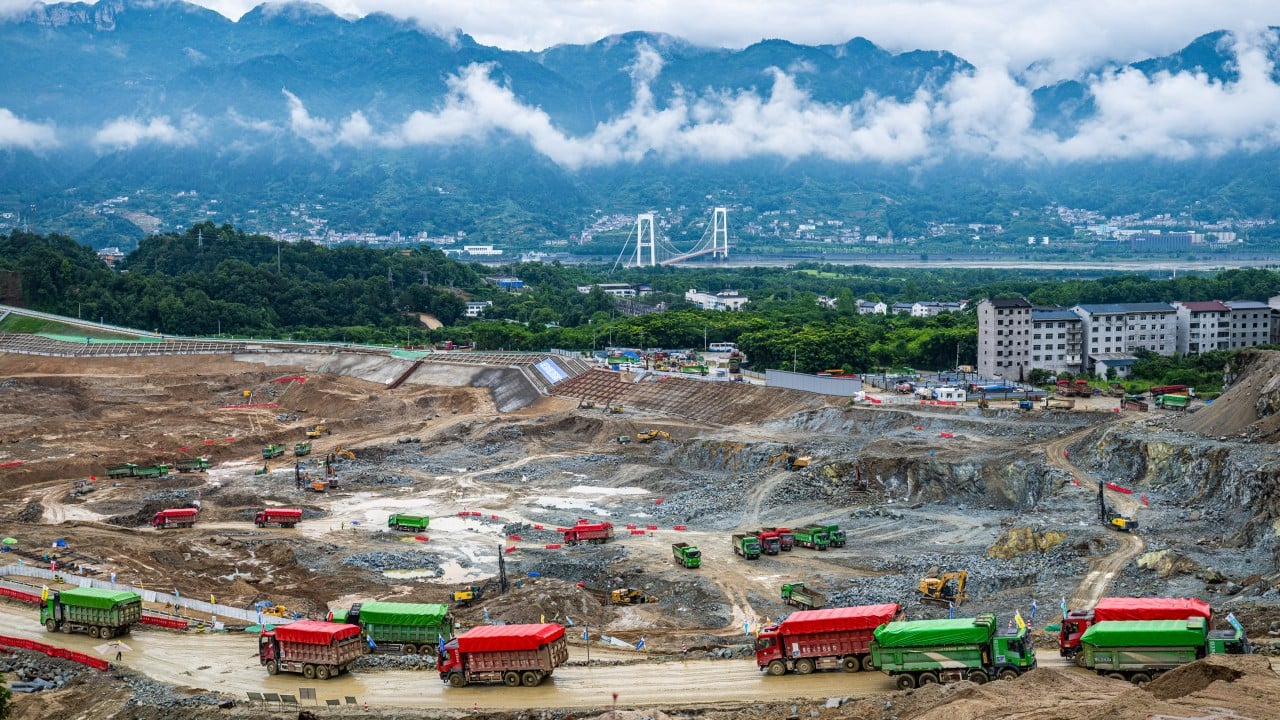
Mainstream infrastructure reporting has a predictable flaw. It gets blinded by scale. When a government announces an eleven-billion-dollar megaproject to carve a massive "water staircase" through the Three Gorges chokepoint, the financial press instantly swoons. They echo official talking points about unlocking trade bottlenecks, multiplying shipping capacity, and creating a flawless inland maritime highway.
They are missing the entire point.
The proposed multi-tier ship lock expansion on the Yangtze River isn't a masterstroke of economic foresight. It is an expensive, analog patch on a digital-era logistical problem. By focusing entirely on brute-force civil engineering, planners are ignoring the shifting realities of global supply chains, industrial decarbonization, and the physical limitations of hydraulic engineering. Building bigger locks to cram more hulls through a changing river ecosystem is doubling down on a twentieth-century solution.
The Bottleneck Isn't Physical Concrete. It's Time.
The standard argument for the Yangtze expansion is simple arithmetic. The existing Three Gorges Dam ship locks are operating far beyond their designed capacity. Vessels wait days, sometimes over a week, in queues just to transit the dam. The "lazy consensus" says that if you build a second, parallel set of locks—a massive water staircase—you double the throughput and solve the problem.
This assumes that shipping logistics in 2035 and beyond will operate exactly like they did in 1995. It treats the river like a conveyor belt that can be widened indefinitely.
In reality, the biggest constraint on the Yangtze corridor is not the physical width of the locks, but the systemic volatility of the river itself.
- Siltation Reality: The upper reaches of the Yangtze continually deposit sediment. Heavy dredging is a permanent tax on operations, not a one-time setup cost.
- Climate Volatility: Extreme weather regularly breaks the hydrological models. In recent years, severe droughts have dropped water levels so low that even medium-sized barges couldn't run at full draft, regardless of how big the dam's locks were. Conversely, major flood events halt lock operations entirely for safety reasons.
- The Transit Tax: A multi-stage lock system is inherently slow. Even with optimized hydraulics, raising or lowering a 10,000-ton vessel through multiple steps takes hours. Adding another lane of locks simply creates a wider line; it does not speed up the actual processing time per vessel.
When you look at the data from the Ministry of Transport, the congestion isn't just a volume issue. It is a predictability issue. Shipping lines do not just want capacity; they crave certainty. A multi-billion-dollar concrete staircase does absolutely nothing to control the weather or stop the mud from settling.
The Structural Shift the Analysts Are Missing
I have spent years analyzing industrial supply chains, and if there is one universal rule, it is this: when you optimize for a single, centralized transit route, you create a massive single point of failure.
The economic center of gravity in China is shifting. The assumption that everything manufactured in the western interior must float down the Yangtze to Shanghai ports is outdated.
The Rise of the Western Land-Sea Corridor
Instead of waiting for a ship to clear the Three Gorges bottleneck, modern logistics managers are bypassing the river entirely. The New Western Land-Sea Cargo Corridor connects inland hubs like Chongqing and Chengdu directly to southern ports like Qinzhou via high-speed rail.
- Speed: Rail transport from southwestern China to a seaport takes roughly two days. Yangtze shipping can take up to two weeks when lock congestion peaks.
- Inventory Costs: In modern manufacturing, sitting on a barge for 14 days is a massive capital drain. The carrying cost of inventory frequently outweighs the raw fuel savings of water transit over rail.
- Resilience: Rail networks offer redundancy. If one track is blocked, cargo can be rerouted. If the Yangtze locks face a mechanical failure or an eco-emergency, the entire economic artery of central China paralyzes.
Investing eleven billion dollars into a fixed water route when rail infrastructure is rapidly closing the cost-efficiency gap is a profound misallocation of capital. It is optimizing for bulk displacement in an era that values velocity and flexibility.
The Ecological Toll Nobody Is Factoring Into the ROI
Proponents love to frame inland shipping as the ultimate green transport method. They point to the low carbon emissions per ton-kilometer compared to trucking. It sounds convincing on a PowerPoint slide.
But this calculation conveniently ignores the localized environmental destruction required to keep these mega-channels viable.
[Hydraulic Intervention] -> [Altered Sediment Flow] -> [Downstream Erosion]
                                        |
                                        v
                            [Constant Dredging Costs]
The Yangtze is already an eco-system under extreme stress. Constructing a massive new water staircase requires shifting hundreds of millions of cubic meters of rock and earth, altering local water tables, and permanently changing current patterns.
When you deepen channels and accelerate transit, you destroy the shallow-water habitats critical for the river's remaining biodiversity. The subsequent downstream erosion requires further billions in riverbank stabilization and engineering interventions. The true cost of the project isn't the eleven-billion-dollar price tag on the construction tender. It is the infinite tail of ecological maintenance that follows.
The Real Solution is Not Bigger Locks
If the goal is genuinely to move more goods efficiently across the country, the solution isn't to pour more concrete into the riverbed. The answer lies in asset optimization and technological upgrades to the existing fleet.
Instead of building a new water staircase, that capital should be deployed into three distinct areas:
- Fleet Standardization: A massive percentage of Yangtze congestion is caused by non-standard, inefficient vessel designs that do not maximize lock space. Mandating and subsidizing standardized, modular hull designs would instantly increase the throughput of the existing locks by up to 30% without moving a single stone.
- Dynamic Digital Scheduling: The current queuing system is shockingly archaic. Implementing a fully integrated, predictive digital twin of the river's logistics—using real-time hydrological data and AIS tracking—could eliminate anchorages and optimize lock fills to near 100% efficiency.
- Intermodal Redirection: Shifting low-value, non-time-sensitive bulk goods (like gravel and coal) away from prime lock slots, while prioritizing high-value manufactured goods, would instantly clear the artificial deficit in capacity.
The Megaproject Trap
The fascination with the Yangtze water staircase is a classic symptom of the megaproject trap. It is always easier to secure political will and capital for a monumental physical structure than it is to execute the complex, gritty work of regulatory reform, digital optimization, and intermodal integration.
We are told this project will future-proof the region's economy. But true resilience does not look like an eleven-billion-dollar concrete staircase stuck in a volatile river. It looks like an agile, multi-modal logistics network that does not care if the river is rising, falling, or blocked.
Doubling down on massive hydraulic interventions is a gamble against nature and technology—and nature always wins the long game. Instead of building bigger stairs, it is time to change the route entirely.


