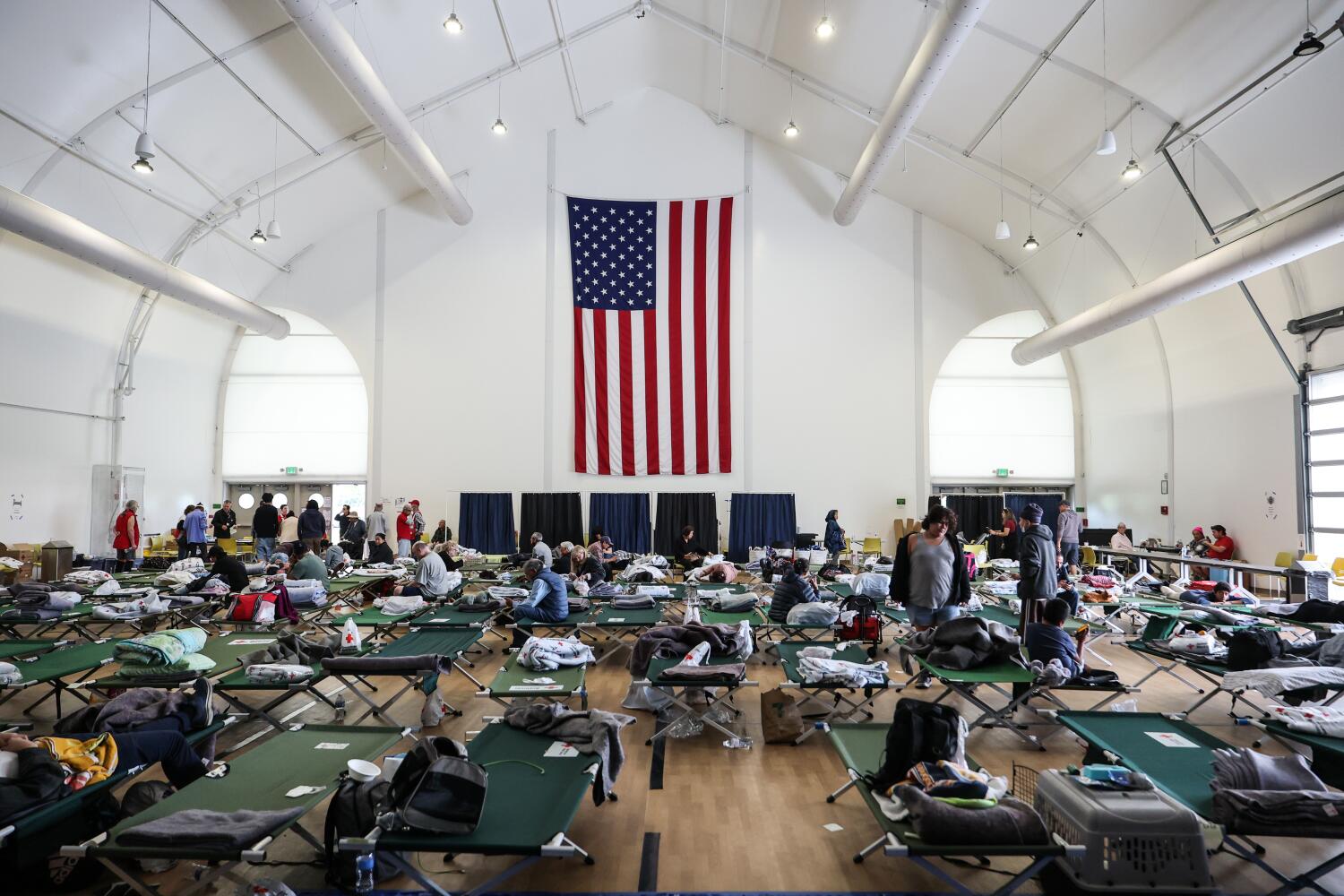
The air inside the community center tasted like stale coffee and collective panic. On the folding chairs sat people who usually spent their Tuesday evenings arguing about neighborhood parking or coaching Little League. Tonight, they were holding printouts of chemical compound names they couldn’t pronounce.
A mile down the road, behind a chain-link fence topped with barbed wire, the GKN Aerospace plant loomed like a silent giant. For decades, it was just part of the local scenery—a reliable generator of blue-collar pride and steady paychecks. You didn’t think about what happened inside. You just knew it kept the town alive. Also making news lately: The Geopolitical Friction of Chokepoint Monetization: Structural Mechanics of the Hormuz Transit Toll Crisis.
Then came the sirens. Then came the flashing lights, the men in pressurized hazmat suits, and the sudden realization that the air we breathe shares a zip code with industrial-grade toxicity.
When a hazardous materials crisis hits a community, the immediate response is always clinical. First responders count the gallons spilled. Scientists measure parts per million. Corporate spokespeople draft press releases using words like "containment" and "isolated incident." But outside the perimeter, the metrics are entirely different. The true cost of an industrial accident isn't measured in liters or milligrams. It is measured in the sudden, terrifying premonition that your home is no longer safe. Additional details regarding the matter are covered by NPR.
The Silence Before the Sirens
Consider a hypothetical resident. Let's call her Sarah. She has lived three blocks from the facility for twelve years. Her children play in the backyard. She grows tomatoes along the fence line. To Sarah, the aerospace plant was just a low, ambient hum at the edge of her consciousness. It represented progress. Aviation. The cutting edge of engineering.
Now look closer at what happens when that illusion of safety shatters.
An industrial leak is not just a logistical failure; it is a breach of a psychological contract. When a company operates a high-stakes facility near residential areas, an unwritten agreement exists: We provide jobs, and in return, you trust us not to poison the groundwater. When that contract breaks, the fallout ripples far beyond the physical spill zone.
Politicians were quick to arrive at the microphones, their faces tight with calculated outrage. They demanded answers. They called for transparency, legislative oversight, and immediate accountability from GKN executives. They stood before local news cameras, gesturing toward the plant, their voices booming with righteous indignation.
But their anger, while justified, felt disconnected from the quiet terror gripping the neighborhood. The politicians wanted policy changes. The people wanted to know if it was safe to let their kids dog-paddle in the plastic backyard pool.
The gap between political theater and human reality is where trust goes to die.
The Chemistry of Fear
To understand why the community’s reaction was so fierce, we have to look at the nature of modern manufacturing. Aerospace engineering requires materials that exist on the extreme edge of science. We are talking about advanced composites, specialized solvents, and chemical bonding agents designed to withstand the freezing vacuum of the upper atmosphere.
These materials are miracles of human ingenuity. They are also incredibly volatile.
When an accident occurs, the technical jargon used by corporations serves as a barrier to understanding. Telling a frightened parent that a spill contained "hydrofluoric acid derivatives within acceptable thresholds" doesn’t de-escalate fear. It amplifies it. To a mother or father, that phrasing sounds like a cover-up masquerading as science.
The true weight of the crisis settled in during the days following the initial evacuation. The physical mess was cleaned up relatively quickly. The containment booms were removed. The specialized vacuum trucks drove away. Yet, the yellow caution tape remained tied to a fire hydrant on Elm Street, flapping lazily in the wind.
That piece of plastic became a monument to uncertainty.
The Boardroom and the Backyard
There is a fundamental disconnect between how a multi-billion-dollar corporation views a crisis and how a local community experiences it.
To the executive team in the corporate headquarters, the incident is a line item. It is a risk mitigation problem. They look at the spreadsheets. They calculate the cost of fines versus the cost of upgrading secondary containment systems. They consult with legal counsel to minimize liability. This isn't because they are inherently malicious; it is because the machinery of modern commerce is built to prioritize survival, compliance, and shareholder value.
But down on Elm Street, the math is simpler. And much more brutal.
The currency here is not stock options; it is peace of mind. When a corporation chooses to delay upgrading a valve or cuts corners on safety drills to meet a quarterly production quota, they are gambling with someone else's chips. They are betting with the health of the people who live downwind.
During the public forum, a GKN representative stood at a podium, flanked by charts and graphs. He spoke clearly, his tone measured and professional. He explained that the company had met 98% of its safety benchmarks over the past decade.
A man in the third row stood up, interrupting him. His voice didn't boom like the politicians' voices. It trembled.
"My daughter has asthma," the man said, pointing out the window toward the facility. "I don't care about your ninety-eight percent. I care about the two percent that sent her to the emergency room last night."
The room went completely still. The charts and graphs suddenly looked incredibly small.
Rebuilding from the Subsoil
Fixing this problem requires looking past the immediate political fallout. The standard playbook for an industrial crisis is predictable: a flurry of press conferences, a government investigation, a hefty fine that represents a fraction of the company's daily revenue, and a quiet return to business as usual.
That cycle is no longer enough.
True accountability requires a structural shift in how these facilities integrate into the communities they occupy. If a company wants the privilege of operating a hazardous site near a neighborhood, they must accept a level of radical transparency that goes far beyond standard regulatory requirements.
Consider what a real solution looks like. It starts with real-time, publicly accessible environmental monitoring. Not data hidden behind a public records request or buried in a quarterly report, but a digital billboard outside the plant gates showing air and water quality metrics in real time. If the air is clean, prove it to the people breathing it.
Next, community members must have a literal seat at the table. Not a symbolic advisory board that meets once a year to look at glossy pamphlets, but a neighborhood safety committee with the legal authority to trigger independent audits and halt production if safety thresholds are breached.
This isn't about hurting business. It is about protecting lives. It is about shifting the power dynamic so that the people who bear the risk also have a say in how that risk is managed.
The Cost of Staying
The sun began to set over the community center, casting long shadows across the parking lot. The crowd slowly dispersed, people walking back to their cars in small, quiet groups. The politicians had already left, their motorcades heading back toward the capital where the next news cycle awaited them.
Left behind were the residents, facing the quiet, heavy reality of what it means to live on the frontline of modern industry.
Many of these families cannot afford to pack up and move. Their wealth is tied up in the mortgages of these modest homes, properties whose values took an invisible hit the moment the hazmat trucks arrived. They are stuck. They are forced to rely on the promises of a corporation that failed them, and the oversight of a government that only seems to show up after the smoke rises.
As night fell, the lights of the aerospace plant flickered to life, casting a bright, industrial glow over the eastern horizon. The machinery inside was already whirring back to life, turning out the components that keep the world moving forward.
On Elm Street, Sarah stood on her front porch, looking out at the distant towers. She didn't look at the sky to see the planes anymore. She just watched the wind, wondering which way it was blowing.