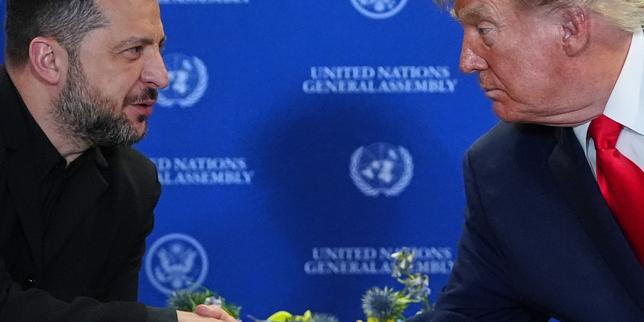
Volodymyr Zelensky feels betrayed by the United States because Washington shifted from backing Ukraine's survival to treating Kyiv's sovereignty, satellite links, and sanctions pressure as bargaining chips in broader negotiations with Moscow. That sense of betrayal hardened in mid-October 2026, when restrictions hit Starlink and Starshield connectivity along the front lines while the White House moved to license Russian diesel imports and waive major sanctions just days before a new package was scheduled to take effect.
For more than four years, Ukrainian commanders built their operational tempo around the assumption that American intelligence, commercial space hardware, and economic coercion against Russia were anchored to a clear strategic goal. Now, Kyiv faces a White House that frames the war as a negotiation bottleneck rather than a binary moral struggle.
After covering conflicts and diplomatic realignments across Eastern Europe and Washington for decades, one pattern stands out with brutal clarity. Allies rarely break over a single speech or a dramatic walkout. They fracture when the underlying incentives of the stronger power change while the weaker power still depends on the old equation to stay alive.
When Hardware Becomes Diplomatic Leverage
Nothing stings a military leader faster than losing bandwidth while drones are inbound. In October 2026, Ukrainian forces ran into speed limits and service disruptions on Starlink and Starshield terminals—systems that had become central to battlefield communications, reconnaissance coordination, and fire control.
Zelensky did not treat the slowdown as a routine glitch. He pointed directly to political will and warned that restricting satellite access while Russian strikes hammered Ukrainian cities and energy infrastructure only raised the cost in Ukrainian lives.
Elon Musk and SpaceX pushed back with a very different version of events. Musk argued that commercial Starlink terminals were never meant to act as offensive weapons, accused Ukrainian units of breaching terms of service by using them for lethal drone operations, and insisted that operational limits on military-grade Starshield sat under the authority of the Pentagon and President Donald Trump. Reporting from outlets including The Wall Street Journal and The Telegraph painted a messier picture, pointing to directives and friction behind the scenes before full service was restored later in October.
The Danger of Privatized Bottlenecks
Even after speeds were restored, the psychological damage lingered. Relying on a commercially built constellation tied to a billionaire entrepreneur who also wields political influence in Washington creates a structural vulnerability that no diplomatic communiqué can erase.
When a sovereign army depends on private infrastructure that can be throttled over terms-of-service disputes, deep strikes on Russian oil refineries, or White House negotiating strategy, sovereignty becomes conditional. Kyiv can plead for technical clarity, yet the kill switch or speed limiter remains outside Ukrainian hands.
Sanctions Relief and the Diesel Shock
If satellite throttles hit Ukraine's tactical edge, Washington's economic moves struck at Kyiv's strategic leverage. In early October 2026, the Treasury Department issued General License 135 authorizing transactions tied to Russian-origin diesel fuel, followed days later by Executive Order 14436 waiving sweeping sanctions and tariff hikes under the Lindsey O. Graham Sanctioning Russia and Iran Act of 2026 just before they were set to kick in.
For Zelensky, timing was everything. Russia was preparing another winter campaign against Ukraine's power grid while Washington was opening commercial breathing room and suspending penalties that Congress had moved to impose. Zelensky called the waiver a reward for Russian President Vladimir Putin and warned that lifting sanctions on Russian diesel looked like a first step toward broader concessions.
The White House defended the move on pragmatic grounds. Administration officials argued that easing economic pressure could help bring Moscow to the negotiating table, lower fuel costs, and keep diplomatic channels open.
Yet that logic runs straight into a hard economic reality. Oil and refined products are Russia's most reliable source of export revenue when Western defense spending and drone strikes strain Moscow's wartime economy. Giving Russia a legal route to sell diesel—even conditionally or under license caps—eases pressure on the Kremlin at the exact moment Kyiv argues maximum squeeze is required.
- Congressional pushback: Lawmakers from both parties challenged the waivers, arguing the executive branch was sidelining legislation passed with broad support.
- State-level resistance: In early November, New Jersey Governor Mikie Sherrill warned port and terminal operators that offloading Russian diesel could still expose them to civil and criminal liability despite federal licensing.
- Unresolved financial strain: Even as European partners propose tens of billions of euros in fresh aid, Ukraine still faces massive budget and defense financing gaps heading into 2027.
The Territory For NATO Bargain
Betrayal in wartime rarely stops at money or hardware. It deepens when a partner floats trading your map for a promise.
In mid-November 2026, Zelensky revealed that American negotiators had asked—for the first time—whether Ukraine would withdraw its forces from remaining Ukrainian-held parts of the eastern Donbas region in exchange for potential NATO membership. For Kyiv, that question turned the entire premise of the war upside down.
Ukrainian leaders have long viewed NATO membership and ironclad security guarantees as the shield that prevents a third Russian invasion. Floating a withdrawal from fortified Donbas territory in return for a hypothetical path into the alliance sounds, to many in Kyiv, like paying a concrete territorial price upfront for an uncertain security payoff later.
| Policy Area | Kyiv's Position | Washington's Shift | Friction Point |
|---|---|---|---|
| Starlink and Starshield | Uninterrupted front-line connectivity is vital to defend troops and cities. | Speed limits, terms-of-service enforcement, and Pentagon or executive oversight. | Ukraine cannot control access when tensions flare over strikes or talks. |
| Sanctions and Diesel | Maintain and expand pressure on Moscow's war economy. | License Russian diesel transactions and waive new statutory penalties for leverage. | Kyiv sees economic relief for Moscow before a brutal winter campaign. |
| Donbas and NATO | Reject unilateral surrender of land; tie any territorial talk to firm guarantees. | Probe whether withdrawing from Donbas could unlock NATO movement. | Trading real ground for contested diplomatic choreography. |
| Negotiating Format | Nothing about Ukraine without Ukraine, and nothing about Europe without Europe. | Direct envoys like Steve Witkoff and Jared Kushner shuttle between Moscow, Kyiv, and Berlin. | Fear of side deals made over Kyiv's head. |
Zelensky flatly rejected surrendering Ukrainian land, though he noted that any question touching on territory and real security guarantees would require democratic legitimacy, including a potential referendum. That distinction matters. A president fighting an existential war cannot simply sign away fortified towns without fracturing his own country's morale.
Why The Rift Is Older Than One Presidency
It is tempting to blame every fracture in U.S.-Ukraine relations on Donald Trump's transactional style or his push for a negotiated settlement. That explanation is too convenient.
Even during the Biden administration, friction between Washington and Kyiv was a recurring feature of the war. In his November 2026 memoir Promise Me, America, former President Joe Biden described Zelensky as stubborn and moody in private talks and complained about a lack of gratitude, even while insisting he refused to abandon Ukraine's fight.
Consider a hypothetical scenario where a wartime ally receives billions in aid but is repeatedly told it cannot strike certain targets or move on its own timeline. Even under a sympathetic administration, resentment builds on both sides: the donor resents pushback, and the recipient resents limits that feel like managed survival rather than decisive victory.
What changed under Trump is not the existence of tension, but its direction. Under Biden, Washington's friction with Kyiv usually centered on how fast and how far to escalate against Russia while avoiding direct U.S.-Russian combat. Under Trump, friction has increasingly centered on whether to press Moscow hard at all when envoys like Steve Witkoff and Jared Kushner pursue talks with the Kremlin and coordinate with European capitals.
The Trap Of Transactional Diplomacy
Transactional diplomacy treats grievances as negotiable and alliances as temporary alignments of interest. From Washington's vantage point, talking to Moscow, testing concessions, and avoiding endless open-ended commitments can look like hard-nosed realism.
From Kyiv's vantage point, realism looks very different when Russian drones hit apartment blocks and power stations overnight. When the U.S. president suggests Zelensky should be replaced or signals openness to economic deals with Russia while Ukraine bleeds, "pragmatism" feels like abandonment.
What Kyiv Actually Gains By Going Public
Calling out a superpower in public carries obvious risks. A smaller nation rarely wins a shouting match with Washington's Oval Office.
Yet Zelensky has a calculated reason for airing his sense of betrayal openly. Quiet diplomacy in Washington often lets unpopular compromises harden behind closed doors before the public or allies can object.
By speaking bluntly about Starlink slowdowns, sanctions waivers, and territorial questions, Zelensky forces three audiences to pay attention:
- European capitals: Leaders in Berlin, London, Paris, and Brussels—who carry heavy financial and security stakes through groupings like the Coalition of the Willing—face sharper pressure to step up funding and stay in the room.
- U.S. lawmakers and voters: Public friction highlights bipartisan discomfort in Congress over waiving sanctions and easing pressure on Moscow.
- Domestic Ukrainians: Showing that Kyiv is not quietly trading away sovereignty helps hold together a weary home front entering another winter of war.
Still, public confrontation has limits. If Washington feels cornered or lectured, the administration can retaliate through intelligence delays, slower weapons deliveries, or sidelining Kyiv in big-power talks.
That is the tightrope Zelensky walks every week. He cannot afford a clean break with the United States, yet he cannot afford silent compliance if that compliance surrenders Ukraine's leverage before a single binding security guarantee is on paper.


