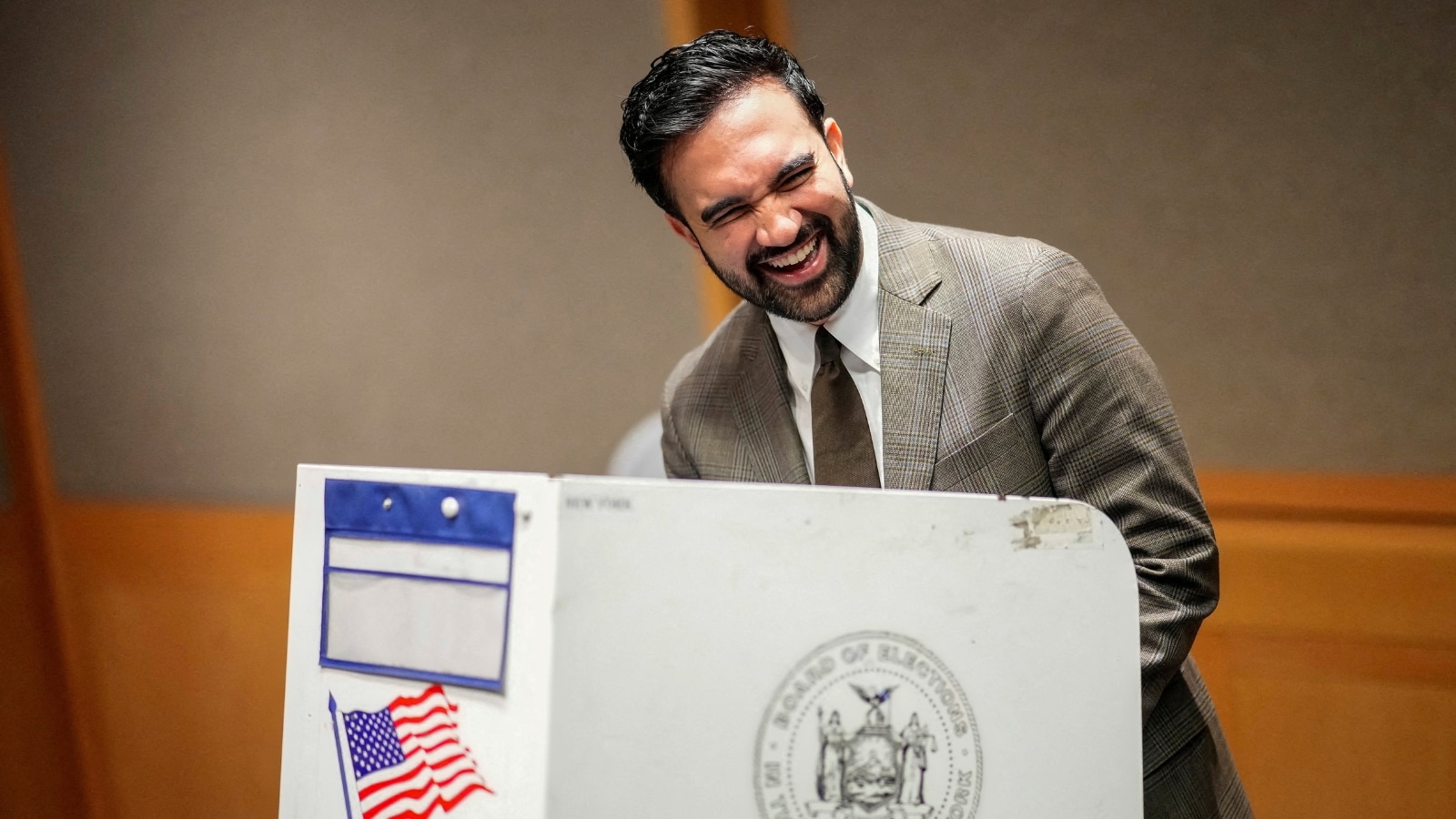
The traditional political playbook in New York City just got shredded. On Tuesday night, voters delivered a clear message to the old guard of the Democratic party. They want a change, and they want it now.
By backing a trio of insurgent candidates who swept their primary races, New York City Mayor Zohran Mamdani proved his election last year wasn't a fluke. It was the start of a deep shift. This wasn't just a local victory. It represents a real shakeup that will affect national politics ahead of the November midterm elections. Observers are calling Zohran Mamdani's sweep in New York a 'political earthquake' among Democrats, and honestly, they aren't exaggerating.
For years, establishment figures assumed they held an iron grip on safe blue seats. They relied on wealthy donors, institutional endorsements, and predictable voter turnout. That strategy failed miserably this week. Two sitting members of Congress were kicked out by challengers running far to their left. Another handpicked successor of a legendary incumbent was soundly defeated.
If you think this is just a New York story, you're missing the bigger picture. This election showed that voters in working-class neighborhoods are furious about the cost of living, rising rents, and an establishment that feels entirely out of touch. The new left isn't just complaining anymore. They are winning power.
The Three Upset Victories That Reshaped the City
To understand how massive this shift is, look at the specific races. The most shocking result happened in the 13th Congressional District, covering parts of Upper Manhattan and the Bronx. Representative Adriano Espaillat has been a towering figure in New York politics for a decade. He chairs the Congressional Hispanic Caucus and holds a powerful seat on the House Appropriations Committee. He seemed unbeatable.
He lost to Darializa Avila Chevalier. She is a 32-year-old doctoral student and community organizer who had never held public office. She worked on Mamdani's mayoral campaign and ran a fiery, grassroots race. Espaillat's campaign tried to paint her as an out-of-touch transplant. They pointed to her past online rhetoric and her role in organizing pro-Palestinian protests at Columbia University. Big money flowed into the district to protect the incumbent.
Avila Chevalier turned that outside spending against him. She argued that Espaillat had stopped delivering for the working-class people in his district while corporate donations filled his campaign coffers. Her ground game was relentless. On election day, she was out on Harlem street corners talking directly to voters. The strategy worked perfectly, resulting in the biggest upset of the night.
Down in the 10th Congressional District, which covers lower Manhattan and brownstone Brooklyn, another major casualty fell. Two-term incumbent Representative Dan Goldman lost to former city comptroller Brad Lander. Goldman is a former federal prosecutor who gained national fame as the lead counsel in Donald Trump's first impeachment trial. He is also one of the wealthiest members of Congress.
Lander ran hard to Goldman's left, focusing heavily on housing costs and foreign policy. The race turned into a fierce debate over U.S. policy toward Israel. Lander criticized Goldman for not being critical enough of the Israeli government and took aim at Goldman's support from the American Israel Public Affairs Committee. Lander didn't carry an official democratic socialist endorsement, but he had the open backing of Mamdani and left-wing activists. He won in a landslide.
The third victory completed the clean sweep in the 7th Congressional District. Longtime Representative Nydia Velázquez decided to retire, creating a power vacuum in a district that covers parts of Brooklyn and Queens. Velázquez endorsed Brooklyn Borough President Antonio Reynoso to succeed her. Reynoso is a well-known progressive leader, but he wasn't left-wing enough for the current moment.
State Assembly Member Claire Valdez, a member of the Democratic Socialists of America, challenged Reynoso. She positioned herself as the true voice of a district that activists call part of the city's left-wing corridor. Valdez talked openly about her past experience bagging groceries and looking through drive-through windows. She connected deeply with voters who feel left behind by the current economy. She won the nomination, ensuring that three staunch Mamdani allies are headed to Washington next year.
The Forces Behind the Socialist Surge
A lot of political pundits are scrambling to explain how this happened. The truth isn't that complicated. Working-class people are struggling to survive in America's most expensive city. Rents are sky-high, childcare costs are crippling, and everyday groceries feel like a luxury.
Mamdani won the mayor's race last November by focusing entirely on these kitchen-table issues. He promised fare-free buses, universal childcare, and higher taxes on millionaires to fund public goods. Now, he has successfully expanded that coalition into federal races.
The establishment tried to use traditional scare tactics. They warned that electing left-wing radicals would hurt the party in swing districts across the country. National Republican groups quickly jumped on the results, claiming the Democratic party has officially surrendered to the socialist wing. They hope to use these victories to terrify suburban voters in November.
But inside these deep-blue urban districts, those warnings fell flat. Voters care more about their immediate material needs than the strategic anxieties of party insiders in Washington. When the establishment offers incremental tweaks and the left offers bold economic relief, voters choose boldness.
The policy positions of these three victors show just how much the line has moved. All three ran on platforms that include taxing the rich, expanding social programs, and placing restrictions on military aid to Israel. They don't back down from these positions. They lean into them.
What This Means for National Democratic Leadership
This sweep is incredibly bad news for House Minority Leader Hakeem Jeffries. He is trying to guide the party toward reclaiming the House majority in the midterms. To do that, he wants to present a moderate, stable image to swing voters. Instead, his home base of New York City just elected a slate of lawmakers who will openly challenge his leadership from day one.
The internal battle within the Democratic party is about to get much louder. The old guard wants to focus on protecting institutions and preserving the status quo. The rising faction led by Mamdani wants to use government power aggressively to redistribute wealth and reshape society.
This isn't a minor disagreement over details. It is a fundamental clash over the identity of the party. The New York primary proves that the left wing has the organizing energy and the voter turnout to defeat institutional giants.
We are seeing a generational changing of the guard. The leaders who dominated New York politics for the last thirty years are losing their grip. The voters who powered these upsets are younger, more diverse, and completely unconcerned with traditional party loyalty. They don't care about a candidate's resume or their seniority in Washington. They care about what that candidate is going to do for them right now.
How to Apply These Political Lessons Locally
You don't have to run for Congress to use the lessons from this election. The strategy that Mamdani and his allies used can work in local community organizing, school board races, or tenant unions.
First, focus entirely on material needs. Don't get bogged down in abstract political theory. Talk about rent, bills, public transit, and childcare. People respond when you address the things that keep them awake at night.
Second, don't rely on institutional gatekeepers. The establishment candidates had the support of major labor unions, legacy politicians, and traditional party organizations. The insurgents built their own networks through face-to-face organizing and digital outreach. They went directly to the people who usually get ignored.
Third, stand your ground on your core principles. Voters can spot a calculated political calculation from a mile away. The candidates who won this week didn't dilute their messages to appeal to moderate donors. They were clear about what they believed, and that authenticity attracted voters who were tired of typical political doublespeak.
The political environment is shifting rapidly. The old rules don't apply anymore, and the establishment is finding out the hard way. Pay attention to who is actually doing the work on the ground in your neighborhood. Support the groups that are building independent political power outside of the corporate fundraising system. That is where real change starts, and as New York just proved, it can happen a lot faster than anyone expects.