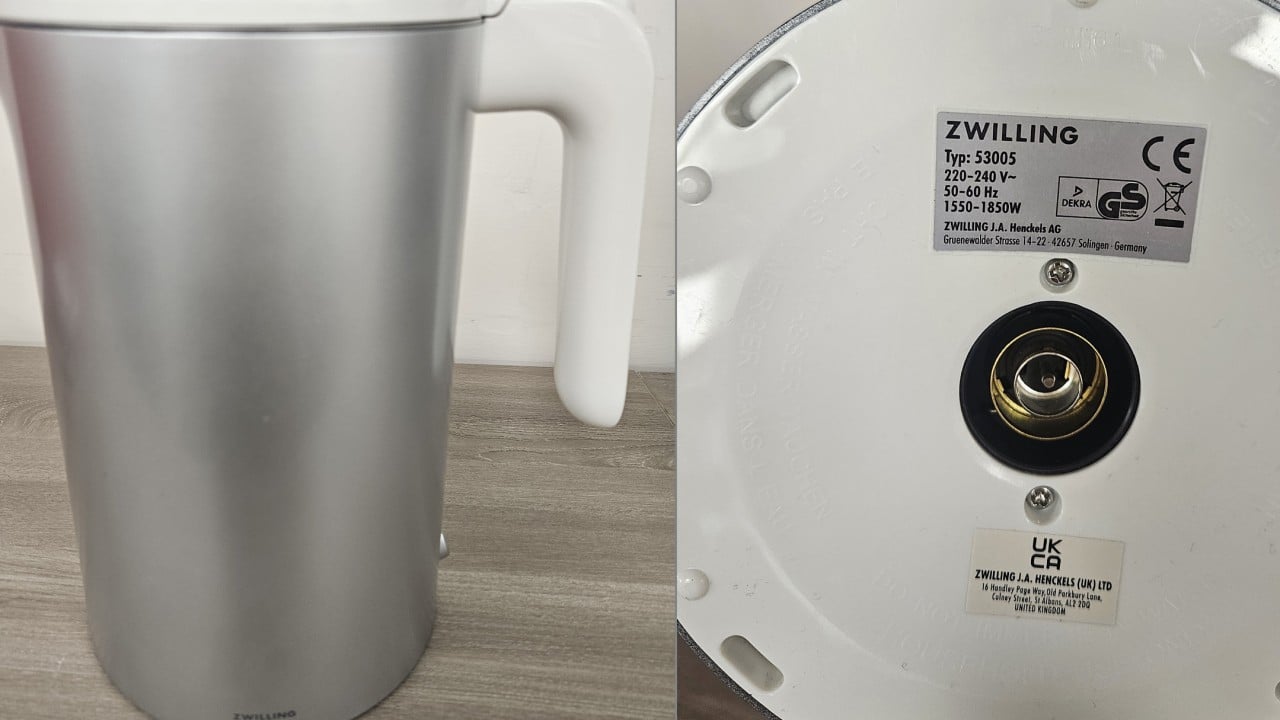
The recent recall of the Zwilling Enfinigy Electric Kettle in Hong Kong serves as a blunt reminder that a luxury price tag is not a shield against fundamental engineering errors. When the Customs and Excise Department flagged the product due to a structural flaw in the handle, it wasn't just identifying a burn hazard. It was exposing a rift in the promise of German-engineered reliability. The issue is straightforward but dangerous: the handle can detach from the body of the kettle while it contains boiling water, leading to immediate and severe scalding risks for the user.
This is not a budget brand sold at a discount warehouse. Zwilling J.A. Henckels is a name synonymous with heritage, precision, and the kind of kitchen vanity that consumers pay a significant premium to own. When a $150 kettle fails at its most basic mechanical junction, the conversation moves past simple product safety and into the territory of brand erosion and manufacturing shortcuts.
The Mechanics of a Handle Failure
To understand why this recall is particularly damning, one must look at the physics of a countertop kettle. A full electric kettle typically holds around 1.5 liters of water. In standard gravity, that is roughly 1.5 kilograms of dead weight, not including the weight of the stainless steel and plastic housing. When a user lifts that weight, the stress is concentrated entirely on the connection points between the handle and the chassis.
If these joints are secured with undersized screws, brittle plastic clips, or insufficient adhesive, the thermal expansion caused by repeated boiling cycles will eventually compromise the integrity of the bond. Heat causes materials to expand and contract. Over months of daily use, a marginal design becomes a mechanical liability. In the case of the Enfinigy line, the failure suggests a gap between the aesthetic design—the sleek, minimalist look consumers crave—and the rugged structural reinforcement required for a heavy, heat-generating appliance.
Why Recalls Often Start in High Density Markets
It is no coincidence that the alarm was sounded by Hong Kong authorities. Markets like Hong Kong and Singapore have some of the most stringent consumer protection watches in the world regarding electrical appliances. The Electrical and Mechanical Services Department (EMSD) maintains a low tolerance for "catastrophic failure" risks, which includes any defect that could lead to fire or third-degree burns.
When a recall happens in one territory, it creates a domino effect. While the specific batch numbers involved in the Hong Kong recall (identified as those sold between certain dates in late 2023 and early 2024) may seem localized, the manufacturing supply chains for Zwilling are global. If the assembly line in the factory used a faulty batch of fasteners or a weaker polymer for the handle housing, the problem is likely sitting on kitchen counters in London, New York, and Berlin as well.
The False Security of the Premium Label
The modern consumer has been conditioned to believe that higher cost equates to higher safety margins. We assume that a luxury brand conducts more rigorous "torture testing" on its products than a white-label manufacturer. However, the reality of globalized manufacturing often tells a different story.
Many high-end kitchenware brands have transitioned from being "manufacturers" to being "brand managers." They design the look and feel in Europe, but the actual fabrication is outsourced to massive Original Equipment Manufacturers (OEMs) in Asia. In this transition, the distance between the engineer who understands the stress loads on a handle and the factory floor where the screws are tightened can become a chasm.
- Cost Cutting in Hidden Places: A company might use high-grade 18/10 stainless steel for the interior to satisfy the marketing team, but then use a cheaper, glass-filled nylon for the internal handle support to save three cents per unit.
- Aesthetic Over Function: Thin, "floating" handles look beautiful in a minimalist kitchen. They are, however, significantly harder to secure than a traditional thick-set handle that wraps around the body of the vessel.
- The Batch Problem: Sometimes the design is fine, but the quality control at the component level fails. A single shipment of sub-standard plastic resin can result in thousands of "brittle" handles that pass initial inspection but fail after fifty heat cycles.
Managing the Scalding Risk at Home
If you own a Zwilling electric kettle, or any high-capacity kettle that has not been officially recalled yet, there are physical warning signs of an impending handle failure. You do not need to wait for a government press release to protect yourself.
First, check for lateral movement. If the handle wiggles even slightly when the kettle is empty, the internal fasteners have likely loosened or the plastic mounting points have begun to crack. Second, listen for audible creaking. A kettle should be silent when lifted. Creaking is the sound of friction between two surfaces that should be fused together. Finally, look for discoloration around the handle seams. This often indicates that steam is escaping from the main reservoir and entering the handle assembly, which will accelerate the degradation of any internal screws or adhesives.
The Liability Landscape for Kitchenware Giants
For Zwilling, the fallout of this recall isn't just the cost of replacing the units. It is the damage to the "Solingen" aura. Even if these kettles are part of their electronic line—which is notoriously harder to perfect than a forged chef’s knife—the consumer does not make that distinction. To the person holding a detached handle while boiling water pours onto their feet, the brand is the brand.
Regulatory bodies are becoming more aggressive. In the past, a company might have issued a "voluntary repair program" to keep things quiet. Today, social media and rapid government alerts ensure that a defect in one city becomes a global PR crisis within forty-eight hours. The demand for transparency is no longer a suggestion; it is a business requirement for survival in the small appliance sector.
Assessing the Alternatives
When a market leader stumbles, it forces a re-evaluation of what makes a "good" kettle. Is it the digital temperature control? The app connectivity? Or is it the fact that the handle won't fall off?
We are seeing a return to monoblock designs—kettles where the handle is either part of the main mold or is reinforced with a full metal strap that circles the entire circumference of the jug. It is less "elegant" by modern standards, but it is a design that respects the laws of physics. Brands that prioritize these "old school" mechanical connections are gaining ground as consumers grow weary of high-tech gadgets that fail at low-tech tasks.
Steps for Affected Consumers
If your unit falls under the Hong Kong recall or shows signs of instability, stop using it immediately. Do not attempt to "superglue" or DIY a fix for a handle on a pressurized or heat-generating vessel. The internal temperatures and steam pressure will defeat almost any consumer-grade adhesive, and the risk of a catastrophic spill is too high.
Contact the retailer or the Zwilling service center directly. In many regions, the company is obligated to provide a full refund or a replacement unit from a corrected production batch. Keep your receipt, but even without it, the serial number on the bottom of the base is usually enough to prove the manufacturing date.
The burden of safety sits with the manufacturer, but the burden of vigilance remains with the user. A kettle is a simple tool, but it handles a dangerous element. When the tool fails, the consequences are immediate and painful. Demand more from the brands that charge you for the privilege of their logo.
Check the base of your kettle today. If that handle has even a millimeter of play, it is no longer a kitchen tool; it is a medical bill waiting to happen.