The Cold Reality of a Kitchen Stove
Deep in the heart of a middle-class neighborhood in Kanpur, a woman named Sunita turns a plastic knob. A blue flame flickers to life under a heavy iron tawa. To Sunita, this is a mundane Tuesday morning ritual. To the global financial architecture and the halls of power in Washington and Moscow, this tiny blue flame is a geopolitical battleground.
Every time that flame ignites, it consumes a fraction of the millions of barrels of crude oil India imports daily. India is a country that breathes energy but produces very little of it. We are the third-largest consumer of oil on the planet, yet we depend on the outside world for nearly 85% of our supply. When global prices spike, Sunita’s grocery budget shrinks. When a pipeline in Eurasia is throttled, the ripple effects eventually reach the price of a liter of milk in a Mumbai suburb.
This is the human face of energy security. It isn't about spreadsheets; it is about survival.
The Russian Pivot
For decades, India’s oil map was dominated by the Middle East. Iraq, Saudi Arabia, and the UAE were the steady anchors of our energy needs. Then, the world fractured. The conflict in Ukraine triggered a seismic shift in global trade, as Western nations slammed the door on Russian exports.
Moscow, suddenly holding a massive surplus of "Urals" crude and facing a shrinking list of buyers, looked East. India, facing a post-pandemic inflationary surge that threatened to derail its economic growth, looked back.
It was a marriage of necessity.
Before 2022, Russian oil accounted for less than 2% of India’s total imports. Fast forward to the present, and that number has scaled mountainous heights, at times crossing 40%. This wasn't a political statement or a shift in ideological loyalty. It was a cold, hard calculation based on the fact that Russia was offering its oil at a significant discount. By some estimates, this strategic pivot saved the Indian exchequer billions of dollars—money that stayed in the pockets of people like Sunita instead of flowing into a global price vacuum.
The Shadow of the 47th President
As the political winds in the United States shifted with the return of Donald Trump to the White House, a collective breath was held in New Delhi. The "America First" doctrine isn't just a campaign slogan; it is a framework that dictates how the world’s largest economy interacts with its allies and adversaries alike.
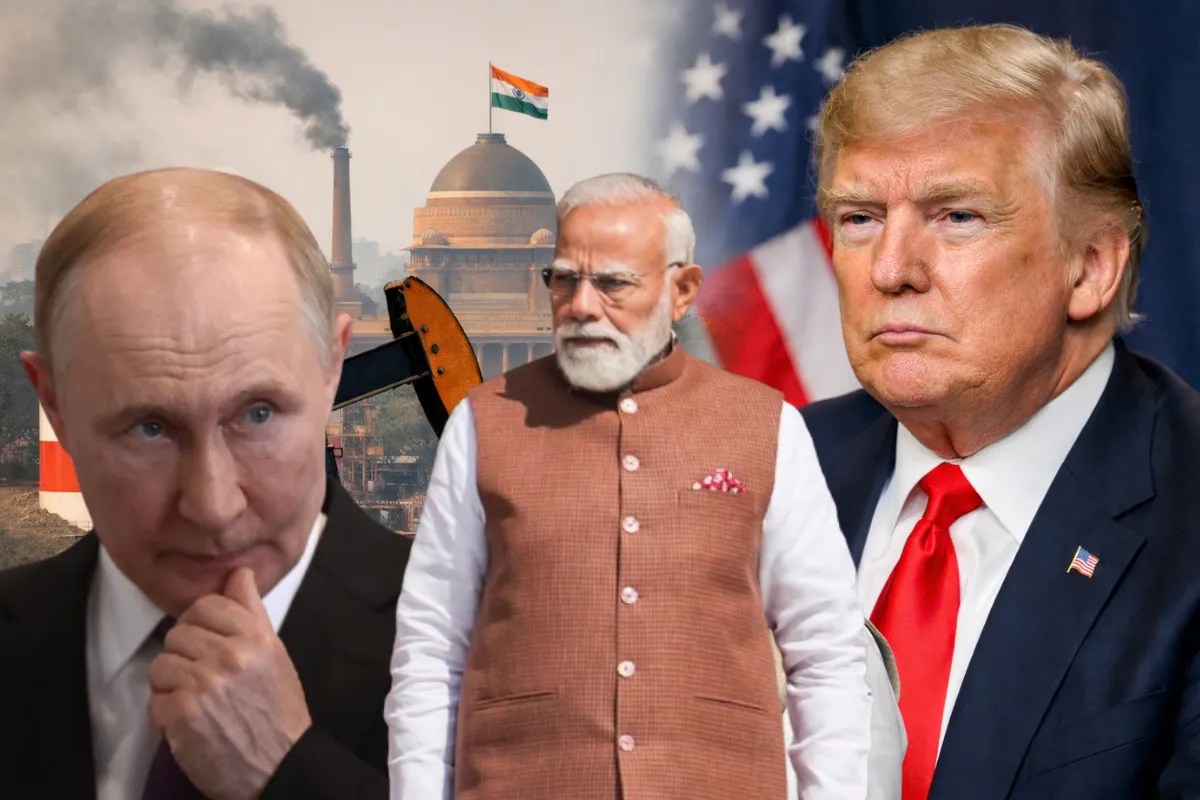
The question echoing through the corridors of South Block and the trading floors of Mumbai is simple: Will India need "permission" from the Trump administration to keep buying Russian oil?
To understand this, we must look at the mechanics of the price cap. The G7-led mechanism was designed not to stop Russian oil from flowing—which would cause a global price explosion that would hurt Americans at the pump—but to limit the revenue the Kremlin receives from it.
Expert consensus suggests that the relationship between Prime Minister Modi and President Trump is built on a foundation of transactional respect. Trump understands scale. He understands the leverage of a market with 1.4 billion people. When Indian officials speak about their energy policy, they don't talk about defying the West. They talk about "India First."
The Myth of the Permission Slip
There is a common misconception that international relations function like a classroom where a teacher hands out hall passes. Reality is far grittier. India does not seek a formal "permission slip" to buy oil from Russia, nor is it likely to receive one in writing.
Instead, there is a sophisticated dance of "carve-outs" and "understandings."
Consider the hypothetical case of Arjun, a high-level negotiator at an Indian state-run refinery. His job isn't just to buy oil; it’s to navigate a minefield of secondary sanctions. He has to ensure that the tankers carrying the oil are insured, that the banks processing the payments aren't tripping over US Treasury wires, and that the price per barrel stays within the "acceptable" range to avoid triggering Washington’s wrath.
Under a Trump presidency, the pressure on Iran is expected to intensify. If the US moves to choke off Iranian exports again, the global supply will tighten. In such a scenario, the world—including the US—actually needs Indian refineries to keep processing crude from wherever they can get it. If India stopped buying Russian oil tomorrow, the global price of Brent crude could realistically skyrocket toward $150 a barrel.
No US President, least of all one who campaigned on lowering the cost of living, wants to see $6-a-gallon gasoline in Ohio because India was forced to stop buying discounted Russian crude.
The $90 Billion Question
The scale of this trade is staggering. We are talking about an annual bill that can top $90 billion depending on price fluctuations. This is the lifeblood of the Indian economy. It fuels the trucks that carry vegetables from Himachal to Delhi. It powers the factories in Chennai. It keeps the lights on in the burgeoning tech hubs of Bengaluru.
The tension lies in the currency. For a long time, the US Dollar was the undisputed king of oil. But the sanctions on Russia forced a search for alternatives. We saw experiments with the Dirham, the Yuan, and even the Indian Rupee.
But the Rupee has a problem: it isn't "convertible" enough. Russia found itself sitting on mountains of Indian Rupees with nothing to spend them on, as they don't buy enough Indian goods to balance the scales. This trade imbalance is the quiet friction point that matters more than any political rhetoric. Russia wants to be paid in a currency it can use to buy microchips or machinery. India wants to protect its foreign exchange reserves.
The Architecture of Sovereignty
True sovereignty is the ability to make choices that are unpopular in foreign capitals but essential at home.
When Indian diplomats sit across from their American counterparts, they aren't asking for permission. They are presenting a reality. They point to the sheer volume of the Indian market. They highlight the role India plays as a bulwark in the Indo-Pacific. They essentially say: "We are too big to be told where to buy our fuel."
This isn't defiance for the sake of defiance. It is an acknowledgment that India’s primary moral obligation is to its own citizens. If the choice is between following a Western-led sanction regime to the letter or ensuring that 1.4 billion people can afford to eat and travel, the choice for any Indian leader is already made.
The Invisible Stakes
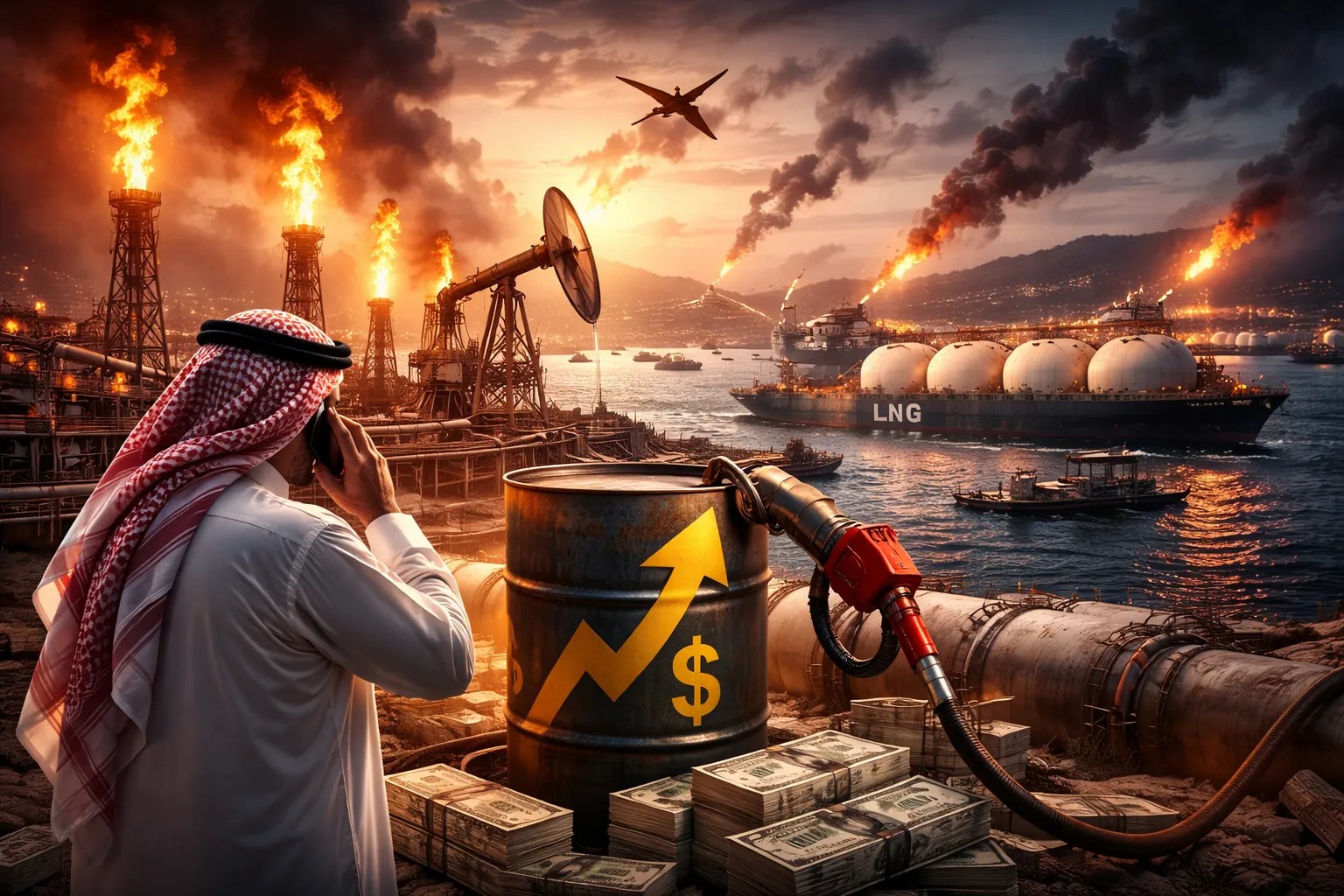
As the second Trump term unfolds, we will likely see a push for India to buy more American energy. The US is now a massive exporter of Liquified Natural Gas (LNG) and crude. Trump’s "permission" may come in the form of a trade-off: "Keep your Russian oil for now, but start signing long-term contracts for American gas."
It is a high-stakes game of poker played with tankers and pipelines.
In the end, the narrative of India’s oil strategy is a story of a nation coming of age. It is about a country that no longer sees itself as a junior partner in global affairs, but as a pole in a multi-polar world. It is about the realization that in the world of energy, there are no permanent friends, only permanent interests.
Back in Kanpur, Sunita turns off her stove. The blue flame vanishes. She doesn't know about the price cap or the intricacies of the SWIFT banking system. She doesn't need to. But the fact that she could afford to turn that stove on at all is the result of a thousand quiet battles fought in boardrooms and diplomatic villas halfway across the world.
The oil continues to flow. The tankers continue to dock at Jamnagar and Mundra. The world watches, waits, and complains, but the engine of the Indian economy refuses to stall for anyone's convenience.
The map of the world is being redrawn, not with ink, but with the dark, viscous trail of a commodity that remains the ultimate arbiter of power.