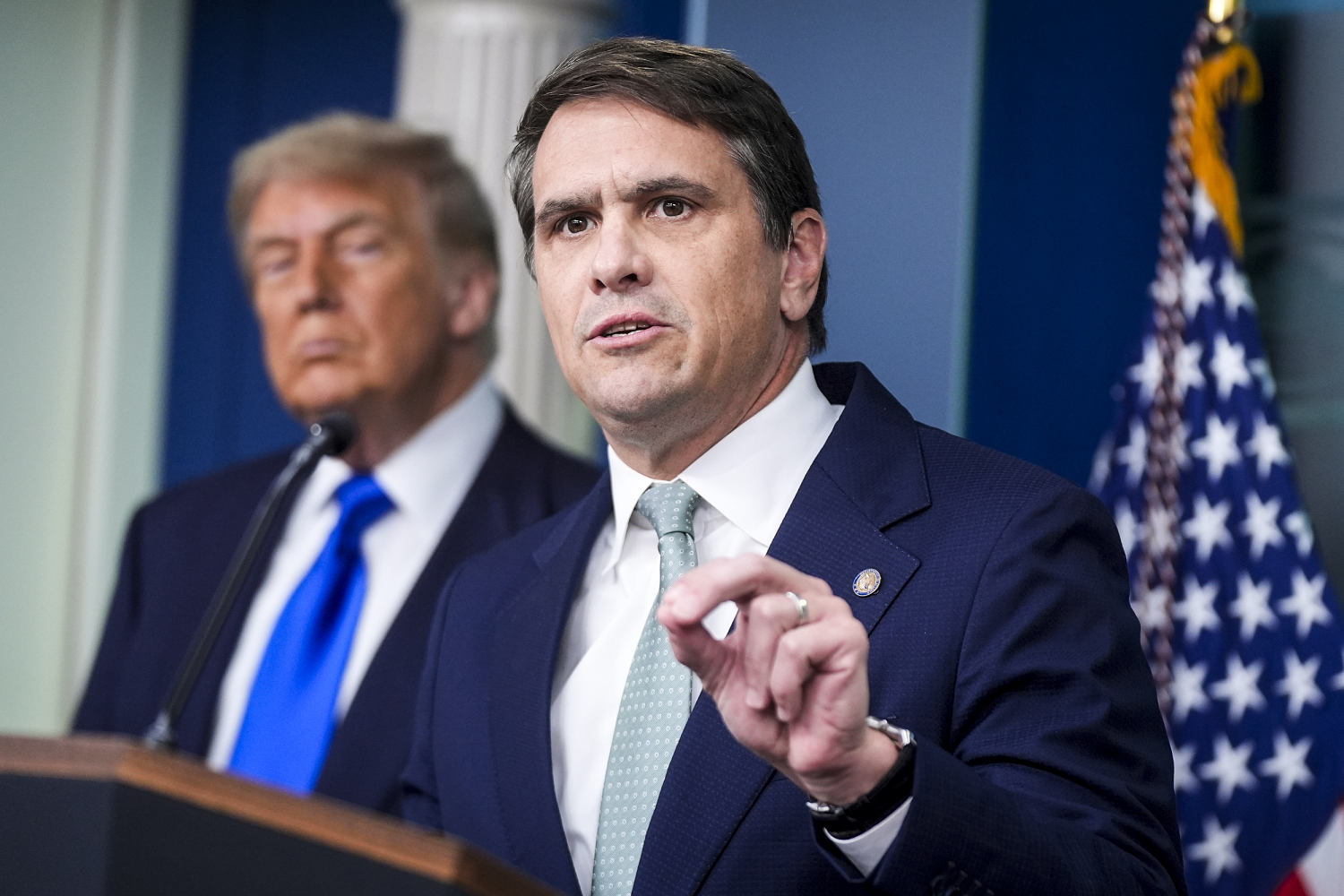
The confirmation process for United States Attorney General nominee Todd Blanche has stalled in the Senate Judiciary Committee, exposing a structural vulnerability in executive branch appointments when legislative margins are razor-thin. President Donald Trump responded to the deadlock—enforced primarily by outgoing Republican Senators John Cornyn and Thom Tillis—by floating the tactical option of temporarily withdrawing the nomination until those holdouts leave office. This standoff is not merely a personality clash; it is a clinical demonstration of legislative leverage, institutional self-preservation, and the friction points between executive preference and congressional oversight.
The Cost Function of Committee Math
In a polarized Senate where committee arithmetic dictates survival, a single defection destroys a nominee's path to the floor. The Senate Judiciary Committee requires a majority vote to favorably report a nomination. With a narrow Republican majority, the dissent of even two members from the president's own party creates an insurmountable barrier. Building on this theme, you can find more in: Stop Pretending the Pakistan Occupied Jammu and Kashmir Elections Are a Surprise to Anyone.
Senators Cornyn and Tillis leveraged this exact mathematical constraint to demand concessions regarding a controversial legal settlement. The dispute centers on two core components:
- A $10 billion lawsuit settlement involving President Trump and the Internal Revenue Service, which included expansive tax audit immunities.
- A proposed $1.776 billion "Anti-Weaponization Fund" designed to compensate individuals claiming injury from Department of Justice actions.
Although the Department of Justice walked back the financial fund amid bipartisan criticism, the institutional demand from the holdouts shifted toward legal permanence. Cornyn and Tillis required explicit, written guarantees that the fund was definitively dead and that audit immunities would not bleed into future tax cycles. Because Blanche, serving as acting attorney general, resisted issuing these specific written retractions, the committee vote was scrapped. Analysts at The New York Times have also weighed in on this matter.
The Executive Counter-Strategy
Faced with legislative resistance, the executive branch possesses distinct temporal levers. Trump's proposal to withdraw the nomination temporarily and resubmit it after the departure of Cornyn and Tillis exploits the clock of the current congressional term.
This maneuver relies on two operational assumptions:
- The continuity of Blanche's executive control via his acting status, allowing the Department of Justice to function under his leadership without formal confirmation.
- The changing composition of the Senate following upcoming structural turnovers, which would theoretically remove the specific institutional roadblocks erected by the current holdouts.
However, this counter-strategy carries its own friction costs. Operating indefinitely under an acting capacity invites legal challenges regarding the statutory limits of vacancy acts and weakens the long-term institutional authority required to steer the Department of Justice through complex litigation and policy implementation.
The Mechanism of Legislative Oversight
The standoff illuminates the structural checks designed into the confirmation mechanism. Holdouts in the Senate do not merely vote on executive appointments; they use the confirmation window to extract policy concessions and legal boundaries from prospective agency heads.
When an executive nominee is a former personal defense lawyer to the president, the demand for institutional distance becomes acute for legislators prioritizing procedural norms. The insistence on red-line strikeout documents and binding written disavowals of prior administrative settlements represents an attempt to bind future departmental discretion. When the nominee declines to fully satisfy these demands, the legislative branch exercises its ultimate negative capability: delay.
To break this equilibrium, the executive must calculate whether the cost of altering the settlement terms to satisfy current committee members is higher than the political and operational cost of delaying the confirmation into a subsequent legislative window. The current stalemate demonstrates that until that cost-benefit ratio shifts, the nomination remains suspended in procedural purgatory.
Resubmit the nomination only after conducting a complete legal audit of the departmental settlements in question, ensuring that the written parameters match the statutory comfort level required to secure a unanimous party-line committee vote upon re-entry.