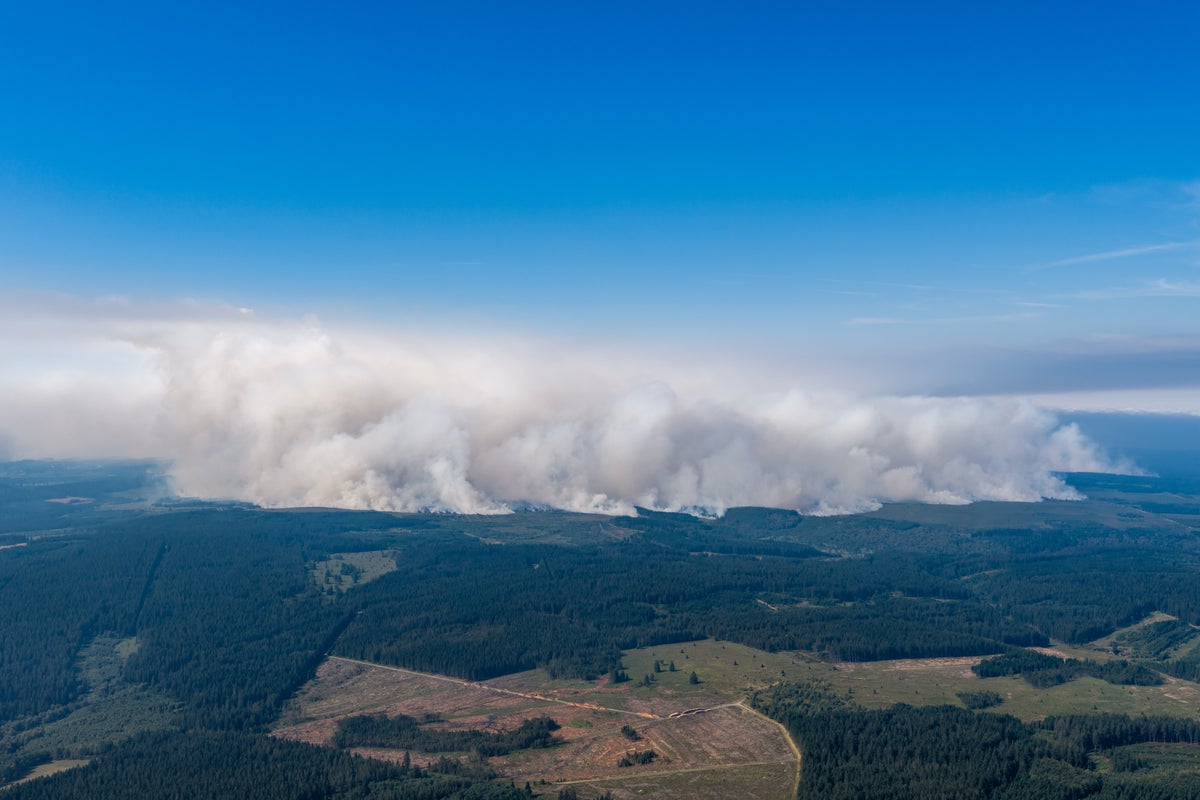
Flames don't care about borders. When a massive wildfire tore through a protected nature reserve in Belgium, it caught local authorities completely off guard. Most people assume massive blazes belong in California or Australia. They don't think about Western Europe burning down.
Yet, centuries-old peatlands and dense woodlands in regions like the Kalmthoutse Heide or the High Fens face escalating risks as climate extremes intensify across the continent. When hundreds of campers, residents, and hikers get evacuated from a European green space, it signals a dramatic shift in how we must view environmental safety. You can't just treat these events as one-off anomalies anymore.
The Reality of Western European Wildfires
Europe is getting hotter and drier. That is not a political talking point. It's a meteorological fact backed by decades of data from the European Forest Fire Information System. Summer droughts turn lush heathlands into tinderboxes.
When a fire starts in a Belgian nature reserve, the response speed dictates everything. Peat soils hold immense amounts of carbon and water. Once dry peat catches fire, it burns underground for weeks. Firefighters don't just battle visible flames on the surface. They fight a hidden enemy that smolders beneath their boots.
Local municipalities often lack the specialized aerial firefighting fleets found in Mediterranean countries like Greece or Spain. They rely heavily on ground crews, local volunteer fire zones, and mutual aid agreements with neighboring Netherlands or France. When a blaze spreads across sandy, boggy terrain, heavy fire trucks get stuck. That slows down containment efforts immediately.
What Went Wrong During the Evacuations
Evacuating a nature reserve sounds simple on paper. Clear the people, put out the fire. Reality is messier.
Hikers stray off marked trails. Tourists ignore warning flags. Campers sleep through early alerts. During the recent emergency response, emergency services struggled with communication bottlenecks. Cell towers get overloaded instantly when thousands of panic-stricken visitors try to call relatives or check evacuation routes at the same time.
If you are visiting a remote park or reserve during a heatwave, you need a personal survival mindset. Don't wait for a park ranger to tap you on the shoulder.
- Check local fire risk indexes before heading out.
- Keep your vehicle fueled and parked facing the exit.
- Know at least two ways out of the area.
- Leave immediately when you smell smoke, long before flames appear.
The Ecological Toll on Protected Habitats
The immediate danger to human life always triggers the evacuation order. Once the smoke clears, the long-term devastation sets in. Nature reserves exist to protect endangered species, rare birds, and delicate flora.
Ground-nesting birds, amphibians, and slow-moving mammals cannot outrun a fast-moving front. Even if animals survive underground or in burrows, their food sources vanish. The ash runoff pollutes local streams and waterways, impacting aquatic life for miles downstream.
Restoring a burned European heathland takes decades. It requires active conservation management, including controlled grazing, removal of invasive species that thrive in disturbed soil, and sometimes artificial rewetting of dried-out peat layers.
Why Traditional Prevention Fails
For years, forest management focused heavily on absolute suppression. Put every fire out fast. Stop nature from running its course.
Ecologists now know that policy backfired terribly. Total suppression allows dead wood, dry brush, and flammable undergrowth to accumulate over decades. When a fire finally breaks through those artificial defenses, it burns hotter and faster than any historical baseline.
Controlled burns are necessary. Thinning dense pine plantations planted decades ago for timber is mandatory. But local communities often push back against prescribed burning because they fear smoke, property damage, or lost tourism revenue. Public perception has to change. You have to let small fires happen so catastrophic ones don't destroy everything.
Preparing for the New Normal
Europe's climate is shifting toward a regime of dry summers and erratic, violent storms. Nature reserves cannot be managed with twentieth-century playbooks.
Governments need to invest in localized early-warning sensor arrays, automated sprinkler systems near high-risk zones, and better cross-border coordination. Fire departments require specialized all-terrain vehicles capable of navigating boggy paths and sandy dunes.
Take personal responsibility when you spend time outdoors. Never discard a cigarette butt out of a car window. Obey burn bans instantly, no matter how inconvenient they feel. Pack out what you bring in, including glass bottles that can act as magnifying lenses under harsh sunlight.
Protecting these landscapes requires vigilance from every single person who walks among the trees.


