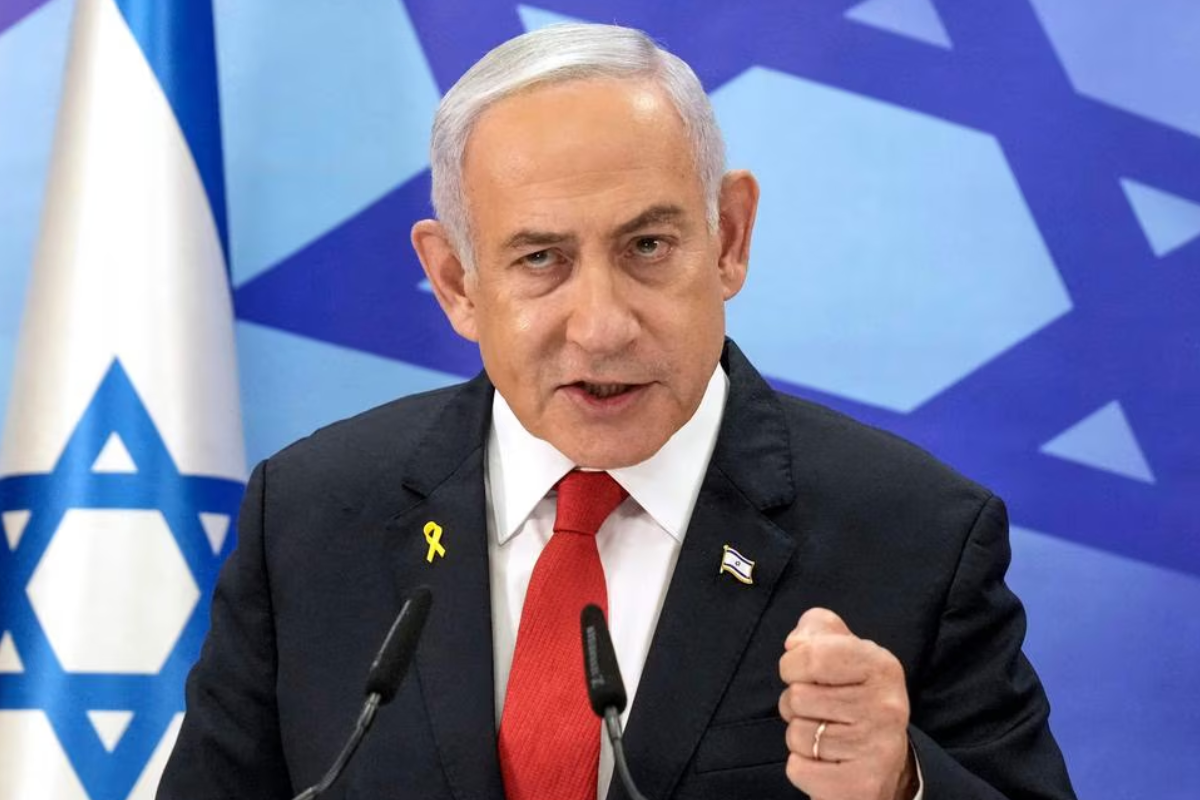
Israel isn't backing down and Benjamin Netanyahu wants the world to know it. The Middle East is currently a powder keg with a very short fuse. When the Israeli Prime Minister recently looked into the cameras and declared that their work isn't finished yet, he wasn't just talking to his own citizens. He was sending a direct, blunt message to Tehran. The shadow war that’s played out for decades in the dark has finally stepped into the light, and the rules of engagement have changed forever.
We've seen years of proxy battles. Whether it’s Hezbollah in Lebanon or various groups in Gaza and Yemen, the friction has always been there. But now, the distance between Jerusalem and Tehran feels smaller than ever. Netanyahu’s rhetoric suggests a shift from containment to active dismantling. If you've been following the surgical strikes and the high-stakes intelligence operations lately, you know this isn't just "politics as usual." It’s a fundamental recalibration of power in the region.
The Message Behind the Warning
Netanyahu’s "work is not finished" comment carries a heavy weight. It’s a signal that Israel views the recent exchanges not as a conclusion, but as a chapter in a much longer book. The Israeli defense establishment isn't just looking at the next week or month. They're looking at the next decade. For them, a nuclear-capable Iran is a non-starter. It’s an existential red line that they’ve drawn in thick, permanent ink.
The strategy here is two-fold. First, it’s about deterrence. By keeping the threat of further action on the table, Israel hopes to keep Iranian leadership off balance. Second, it’s about internal Israeli politics. Netanyahu knows his audience. A significant portion of the Israeli public demands a "total victory" mindset, especially after the trauma of recent years. He’s leaning into that demand with everything he’s got.
Why the Proxy War is Losing Its Shield
For a long time, Iran used its "Ring of Fire" strategy to keep Israel busy at its borders. The idea was simple. Use proxies to bleed Israel out so it never has the energy to look toward Tehran. That shield is cracking. The decapitation of Hezbollah's senior leadership and the degradation of Hamas’s military wings have stripped away layers of protection.
Netanyahu’s recent stance shows he thinks the momentum has shifted. He’s betting that Iran is more vulnerable now than it has been in years. When a leader says the job isn't done, they're usually eyeing the source of the problem, not just the symptoms. In this case, the source is the Islamic Revolutionary Guard Corps (IRGC) and their regional command structure.
The Intelligence Gap
One thing that doesn't get enough attention is the sheer depth of Israeli intelligence penetration inside Iran. From the daring heist of nuclear archives years ago to the more recent precision hits, it’s clear that Israel’s reach is long. This isn't just about dropping bombs. It’s about knowing exactly where the pressure points are and when to press them.
Iran’s security apparatus has been embarrassed repeatedly. Each time Israel pulls off a high-profile operation on Iranian soil, it sends a psychological shockwave through the regime. Netanyahu uses these moments to reinforce the idea that no one is untouchable. It’s a grim game of chess where one side seems to see three moves ahead.
Global Reactions and the American Factor
Washington is in a tough spot. The U.S. wants to prevent a full-scale regional war that could send oil prices screaming and drag American boots back into the sand. Yet, the "special relationship" means they can't exactly walk away from Israel. Netanyahu knows this. He plays the American card expertly, often pushing the envelope right to the edge of what the White House can tolerate.
European leaders are mostly calling for "restraint"—a word that has lost almost all its meaning in the current climate. In the Middle East, restraint is often seen as weakness. Netanyahu’s rhetoric is designed to reject that European sensibility entirely. He’s operating on a different frequency, one tuned to survival and dominance rather than diplomatic niceties.
The Risks of a Never-Ending Conflict
Is there an exit ramp? Right now, it doesn't look like it. When both sides feel they can't afford to lose, the only direction is up the escalation ladder. The risk of a miscalculation is massive. A single stray missile or an overly ambitious covert operation could trigger a response that neither side can walk back.
Iran has its own domestic pressures too. The regime faces a struggling economy and a restless youth population. Sometimes, a foreign enemy is exactly what a struggling government needs to distract people. This creates a dangerous feedback loop where both Netanyahu and the Ayatollahs find utility in the tension.
The Practical Reality of Modern Warfare
Modern war isn't just about tanks and planes anymore. It’s about cyberattacks that can shut down a power grid or a port in seconds. It’s about the "war between wars"—the constant, low-level strikes that keep the enemy from ever feeling secure. Israel has mastered this. They don't wait for a formal declaration. They act when the opportunity arises.
We’re seeing a version of warfare where the front line is everywhere. It’s in the digital infrastructure of Tehran and the shipping lanes of the Red Sea. Netanyahu’s insistence that the work remains unfinished suggests that these unconventional operations are going to ramp up. Expect more "mysterious" explosions at industrial sites and more sophisticated cyber disruptions.
What to Watch for Next
The rhetoric is sharpening. Usually, when Netanyahu starts talking this way, a specific military or intelligence objective is already in the crosshairs. We should watch the following areas closely:
- The Nuclear Threshold: Any sign that Iran is moving toward 90% enrichment will likely trigger an immediate and massive Israeli response.
- Syrian Supply Lines: Israel will continue to hammer any attempt to move advanced weaponry through Syria.
- Long-Range Capabilities: Both sides are testing their ability to strike deep into each other's territory with drones and missiles.
The cycle of "threat and response" has become the new normal. For Netanyahu, staying on the offensive isn't just a military choice—it’s his entire political identity. He’s betting his legacy on the idea that he can fundamentally neutralise the Iranian threat before his time in office is up. Whether that’s actually possible remains to be seen, but he’s certainly not going to stop trying.
If you're tracking these developments, look past the headlines about "threats" and look at the movement of assets. Watch the flight patterns of tankers and the deployment of air defense systems. The words provide the cover, but the logistics tell the real story. The Middle East is bracing for what comes next, and based on the recent tone from Jerusalem, it’s going to be a long, hot season of confrontation. Stay informed by following direct military briefings and regional analysts who understand the nuances of the IRGC's internal politics. Don't just wait for the big explosion; pay attention to the silence that precedes it.