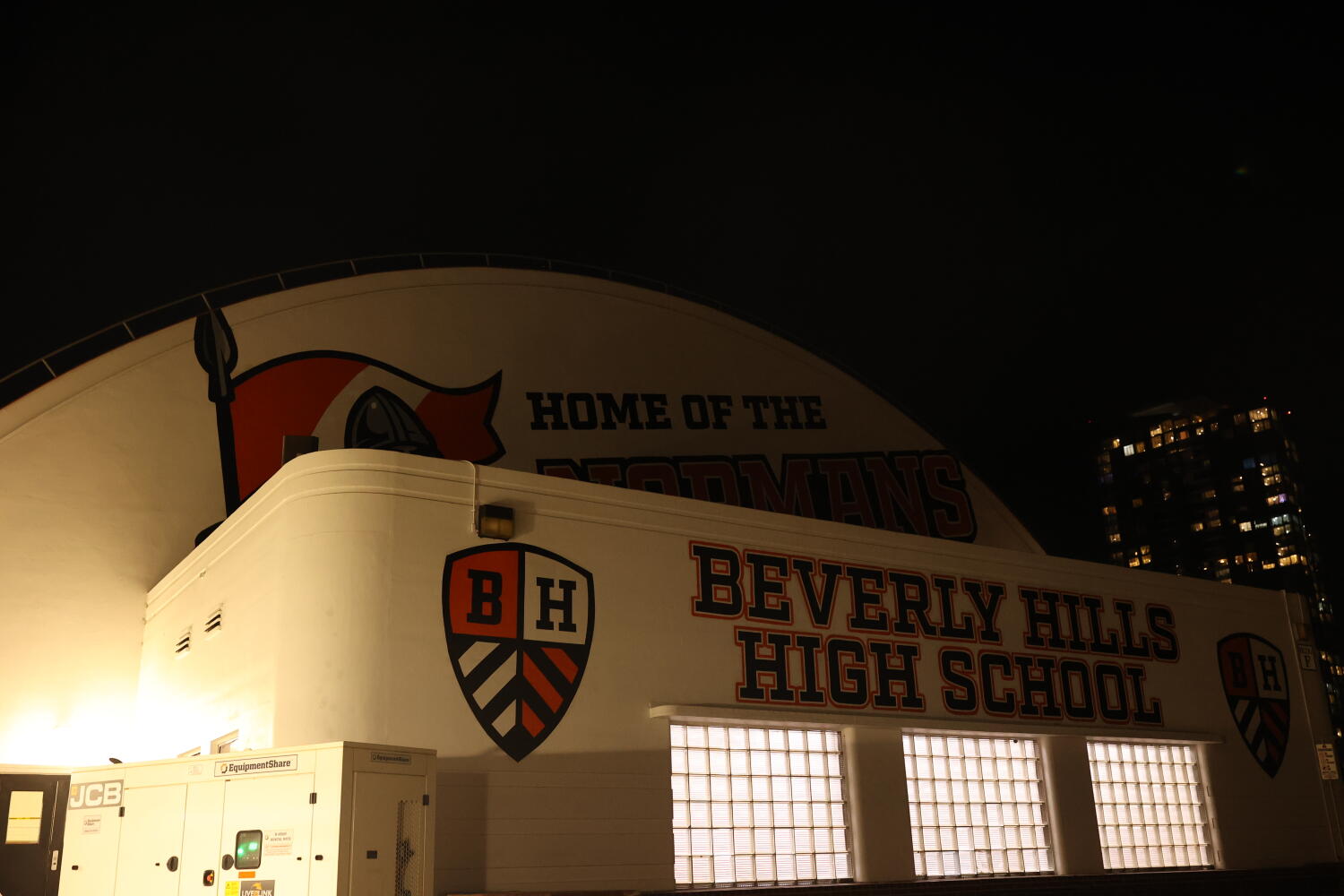
A brutal lunchtime attack on a Beverly Hills High School student didn't just leave a teenager injured—it triggered a major negligence lawsuit against the Beverly Hills Unified School District. When parents drop their kids off at a wealthy, well-funded public campus, they assume basic physical safety is a given. That assumption fell apart on a crowded quad during a standard midday break.
You might think a district with massive property tax resources would have airtight campus security. It doesn't. The lawsuit centers on a violent pummeling that unfolded in plain sight while school personnel allegedly failed to intervene, prevent, or properly respond to known risks. And if you look closer at how California school liability law actually works, this case exposes a massive gap between what parents expect schools to do and what administrators actually prioritize. For an alternative view, see: this related article.
Why the Beverly Hills Unified School District Is Being Sued
Public school districts aren't automatically liable every time two teenagers get into a fistfight. Under California law, specifically California Education Code Section 44807, school districts have an affirmative duty to supervise students during school hours and enforce rules necessary for their protection. To win a lawsuit like the one filed against the Beverly Hills Unified School District, a plaintiff has to prove the district breached that duty of care and that this specific failure led directly to the student's injuries.
The core allegation here isn't just that a fight happened. It's that the pummeling was foreseeable, preventable, and allowed to continue without timely adult intervention. Lunchtime is universally recognized by school safety experts as the highest-risk window of the entire school day. Hundreds of students congregate in open spaces with minimal structure, social tensions flare, and supervision ratios drop dramatically compared to inside a classroom. Related reporting on this trend has been shared by The New York Times.
When a student gets severely beaten during lunch, attorneys immediately look at two things. First, they examine staffing levels and physical placement of campus supervisors at the exact moment of the assault. Second, they dig into whether the administration had prior warnings—such as previous threats, documented bullying, or escalating conflicts involving the aggressors—and chose to ignore them.
Foreseeability Is the Legal Battlefield
School districts almost always defend these lawsuits by claiming an attack was a sudden, spontaneous outburst that no reasonable amount of supervision could have stopped. Courts actually buy that argument pretty often if a punch comes completely out of nowhere.
Plaintiffs beat that defense by showing a paper trail or a pattern of neglect. Did the student or their parents report harassment days or weeks earlier? Were campus security guards clustered together chatting instead of patrolling blind spots? Did administrators fail to follow their own safety protocols after the assault began? In high-profile California school litigation, discovery frequently uncovers emails, incident logs, and surveillance footage showing that staff knew trouble was brewing and did nothing.
The Reality of Lunchtime Campus Supervision
Let's be honest about how lunch supervision works at most large public high schools, even in affluent enclaves like Beverly Hills. Administrators love talking about "comprehensive safety plans" during school board meetings. On the ground, it often looks very different.
Campus aides are frequently underpaid, stretched thin across sprawling campuses, and given vague instructions on how to physically break up violent altercations. Many districts enforce strict "hands-off" policies out of fear that a staff member will get hurt or sued for touching a student. The result? When a violent pummeling starts, adults sometimes stand back and yell verbal commands while a kid takes repeated blows to the head.
Consider what happens in the first fifteen seconds of a severe assault:
- Delayed recognition: In a noisy lunch courtyard, a crowd forming around a fight looks a lot like a crowd watching a street performer or a viral prank until someone is already on the ground.
- Bystander paralysis and filming: Instead of fetching a teacher or campus supervisor, dozens of students immediately pull out smartphones to record the beating for social media.
- Communication bottlenecks: If campus aides rely on slow radio channels or lack direct line-of-sight to central quads, response times stretch from seconds into minutes.
Minutes feel like an eternity when someone is being kicked or punched on concrete. Traumatic brain injuries, broken facial bones, and severe psychological trauma happen in the first ten seconds of an unstopped attack.
What Most People Get Wrong About Wealthy School Districts and Safety
There's a persistent myth that high-income public school districts automatically have safer campuses than underfunded ones. Money buys newer facilities, better laptops, and higher teacher salaries. It doesn't automatically buy competent crisis management or administrative accountability.
In fact, affluent districts sometimes suffer from a unique brand of institutional denial. Administrators face intense pressure from parents, real estate interests, and local officials to maintain an image of prestige and calm. Nobody wants headlines about violent beatings at Beverly Hills High School. That pressure can create a culture where warning signs get downplayed, disciplinary records get softened, and serious behavioral threats are brushed under the rug to protect the school's reputation.
When a district prioritizes optics over aggressive early intervention, students pay the price. A kid with a history of aggressive behavior might get a slap on the wrist or an informal "talk" with a counselor instead of a formal safety plan or separation from targeted peers. Then, when that same student snaps during lunch, the district acts shocked.
How California Law Handles Negligent Supervision Claims
If you're trying to understand the legal mechanics behind the Beverly Hills lawsuit, you have to look at the California Government Claims Act. You can't just march into court and sue a public school district the day after an injury.
First, the injured student's family must file a formal government tort claim with the district within six months of the incident. This puts the school board on official notice and gives them 45 days to either accept, settle, or reject the claim. Almost every school district automatically rejects these claims at the administrative stage, forcing the family to file a civil lawsuit in Superior Court.
Once the lawsuit is filed, the legal standard comes down to negligent supervision under California Government Code Section 815.2 and 820. Under these statutes, a public entity is vicariously liable for injuries caused by the acts or omissions of its employees within the scope of their employment.
Key Elements Plaintiffs Must Prove
To hold the Beverly Hills Unified School District financially responsible, the legal team has to establish four specific elements:
- Duty of care: Easy to prove, since California law explicitly requires schools to supervise students on campus.
- Breach of duty: Showing that the school failed to provide adequate supervision, ignored prior threats, or violated its own safety procedures during the lunchtime attack.
- Causation: Proving that proper supervision would have prevented the pummeling or significantly reduced the severity of the injuries.
- Damages: Documenting actual physical injuries, medical bills, emotional distress, and long-term educational impacts.
District lawyers usually fight hardest on breach and causation. They will argue that even if a security guard had been standing twenty feet away, a sudden punch couldn't have been prevented. That's why surveillance video, witness statements from other students, and internal school emails become the most valuable evidence in the entire case.
The Role of Prior Bullying and Administrative Warnings
Very few severe lunchtime beatings happen in a vacuum. Almost always, there's a backstory. Maybe it started in a group chat over the weekend, escalated during third period, and boiled over at noon. Or maybe it was months of unchecked bullying that school officials failed to stop.
Under California's Safe Place to Learn Act (Education Code Section 234), schools are legally obligated to investigate complaints of bullying and harassment promptly and take steps to stop them. When parents notify a principal or counselor that their child is being threatened, the school's legal duty shifts dramatically. The danger is no longer hypothetical. It's documented.
If a school receives credible warnings and fails to implement basic protective measures—like schedule changes, escorts during passing periods, or targeted monitoring during lunch—a subsequent attack looks a lot like gross negligence to a jury. Juries have very little sympathy for school administrators who had written notice of a threat and chose to do nothing.
What Parents Should Do Immediately After a Campus Assault
If your child is ever assaulted at school, the steps you take in the first 48 hours determine both their physical recovery and your ability to hold the district accountable. Most parents make the mistake of trusting the school's internal investigation. Don't do that. School administrators work for the district, not for you, and their primary instinct after a violent incident is legal self-preservation.
Take these concrete steps right away:
- Get an independent medical evaluation immediately: Take your child to an emergency room or urgent care clinic the same day, even if they say they feel fine. Concussions, internal bruising, and jaw fractures often mask themselves behind adrenaline for hours. Medical records create an indisputable timestamp of the injuries.
- File a police report directly: Don't let the school convince you to handle a violent assault "internally." Contact the local police department (not just a school resource officer) and insist on filing a formal criminal battery report.
- Demand preservation of surveillance footage: School security cameras frequently overwrite footage every 7 to 30 days. Send a formal written preservation demand—via email and certified mail—to the principal and district superintendent ordering them to preserve all video from the area, inside and outside, covering at least two hours before and after the attack.
- Document everything in writing: Write down the exact names of every administrator, nurse, security guard, and witness your child remembers. Stop having phone calls with school officials; insist that all communication happen over email so you have a permanent record.
- Consult a specialized education or personal injury attorney: Deadlines under the California Government Claims Act are strict and unforgiving. Missing the six-month claim window can permanently destroy a valid case, regardless of how badly a student was hurt.
Why These Lawsuits Force Real Change
School districts rarely overhaul broken security protocols out of sheer goodwill. Policy changes happen when negligent supervision hits their insurance pools and public budgets. When districts like Beverly Hills Unified face public lawsuits over lunchtime violence, it forces school boards to answer uncomfortable questions about how many campus supervisors are actually on duty, where they're stationed, and why warning signs get missed.
Parents shouldn't have to worry that sending their teenager to eat lunch on a public high school campus carries the risk of a life-altering beating. Until school districts treat unstructured lunch periods with the same seriousness they apply to classroom instruction and campus perimeter security, families will keep turning to the courts to force basic accountability.