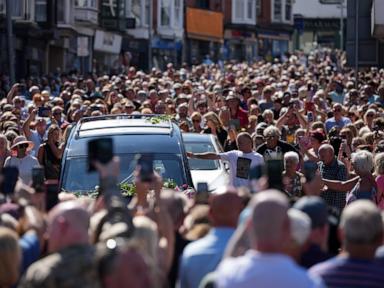
The streets of Mumbles didn't just greet a passing hearse on a Saturday afternoon; they erupted into song.
Hundreds of people packed Newton Road in the seaside Welsh village, waiting for the coffin of Gaynor Hopkins—better known to the world as Bonnie Tyler—to come home. When the vehicle crept past, draped in a Welsh flag and accompanied by a framed photograph, the crowd didn't stay silent. They broke into an open-air, tearful chorus of "Total Eclipse of the Heart."
That is how you measure a true icon. Not by stadium headcounts or chart peaks, but by how deeply a local community claims you as their own long after you've conquered global stages.
From Skewen Coal Pits to Global Stardom
Most people know the raspy powerhouse behind "It's a Heartache" and "Holding Out for a Hero", but they forget where the grit in that voice actually came from. Tyler wasn't manufactured in a corporate boardroom. She was born Gaynor Hopkins, a coal miner's daughter raised in public housing in Skewen, just outside Swansea.
Growing up with five siblings in a home with an outside toilet gave her a working-class tenacity that never left her. When she exploded onto the international music scene in the late 1970s and 1980s, she brought that exact unpolished authenticity with her. That signature raspy growl? It was the result of vocal cord surgery in 1977, a physical quirk that she turned into one of the most recognizable instruments in rock history.
Her 1983 masterpiece, "Total Eclipse of the Heart," written by Jim Steinman, didn't just top the charts in the UK and US—it became an eternal anthem. Even decades later, streaming numbers spike massively every time a real solar eclipse sweeps across the globe.
Why Wales Never Let Go
Tyler passed away at the age of 75 in a hospital in Portugal, where she maintained a home after years of international touring. But her heart always stayed anchored in South Wales.
Fans traveled from as far as Germany and Austria to stand shoulder-to-shoulder with locals on Saturday, a testament to her broad reach. Yet the most poignant voices in the crowd were the locals who knew her simply as a neighbor who never put on airs. As local resident Sarah Thomas put it, Tyler was fundamentally a normal person who happened to be famous.
She received an MBE from Queen Elizabeth II in 2022 for her services to music, yet she remained fiercely grounded in her roots. She regularly returned to Wales, supporting local causes and making sure she stayed connected to the communities that raised her.
The Final Journey Home
The homecoming procession marked the beginning of her final farewell. Following Saturday's emotional gathering in Mumbles, a celebration of life service is scheduled at Swansea Minster. Afterward, the cortege will make a final pass through her hometown of Skewen, bringing her story full circle from the coal mining village where it all started.
Her family has asked that instead of floral tributes, supporters donate to charities she passionately championed, including Noah's Ark Children's Hospital for Wales and Cerebral Palsy Cymru.
The music will keep playing, and the streams for her billion-plus hit ballads will keep climbing. But the real legacy of Bonnie Tyler isn't locked in Spotify metrics or Grammy nominations. It lives in the streets of Swansea, carried by the people who loved her best because she never forgot who she was.