The sun was sinking behind the jagged peaks of the Simien Mountains, casting long, bruised shadows across the valley floor. I remember standing there, years ago, watching a young man named Abebe try to mend a fence. It was a flimsy thing made of thorn bushes and scrap wood, intended to keep his neighbor’s goats from grazing on his meager patch of teff. He worked with a feverish intensity, his knuckles raw from the dry heat. When I asked him why he was so worried about a few goats, he didn't talk about the grain. He talked about "his" land versus "their" land.
He was defending a line drawn in the dirt.
We spend our entire lives defending lines. We draw them in the soil, we stitch them into flags, and we etch them into our identities until they become scars. We call it heritage. We call it sovereignty. We call it "us" and "them." But when you strip away the maps and the anthems, you’re left with a cold, hard truth: the walls we build to keep others out eventually become the walls of our own prison.
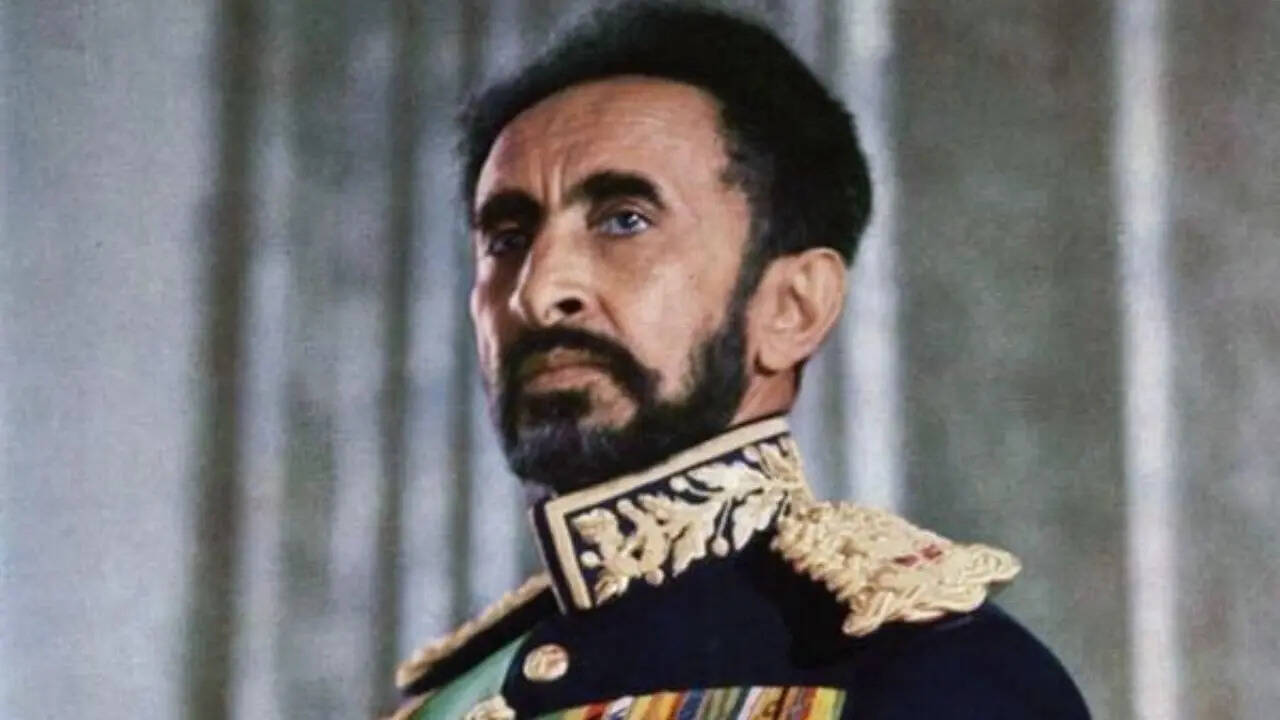
Haile Selassie, a man who sat on a throne while the world was tearing itself apart at the seams, saw this trap better than most. He lived through the invasion of his country, the failure of international bodies, and the agonizing friction of a world trying to modernize without losing its soul. He didn't just offer a quote; he offered a survival manual for the human spirit. He argued that we have to become bigger than we have been.
But what does "bigger" actually look like when you’re standing in the dust, exhausted and afraid?
The Anatomy of Smallness
To understand greatness, you have to look at the anatomy of smallness. Smallness is comfortable. It’s the instinct to huddle with people who look like us, pray like us, and hate the same things we do. It’s the "petty prejudice" Selassie warned about—the tiny, daily choices to assume the worst of a stranger because of the zip code they live in or the accent they carry.
Imagine a woman named Clara. She lives in a bustling city, surrounded by millions, yet she feels like she is under siege. Every news notification is a threat. Every person on the subway who doesn't fit her mental "template" of a neighbor is an interloper. Clara isn't a villain; she’s just small. Her outlook has shrunk to the size of her own porch. When your world is that small, every shadow looks like an invader.
Smallness is a defense mechanism. We shrink because we think it makes us harder to hit. If I only care about my nation, my family, and my tribe, I don't have to feel the weight of the child starving ten thousand miles away. I can sleep. I can ignore the tectonic shifts of history because I’ve convinced myself they don't apply to my little corner of the earth.
Selassie challenged this cowardice. He called for a "new race." He wasn't talking about biology. He was talking about a mutation of the consciousness—a leap in evolution where we stop seeing ourselves as isolated islands and start seeing the interconnected root system that binds us.
The Courage to Be Greater
Courage is often misunderstood as the absence of fear or the presence of a weapon. In reality, the most terrifying thing you can do is let go of a grudge.
Being "more courageous" means having the guts to be wrong. It means looking at a lifelong enemy and admitting that their grief is just as heavy as yours. This is the "greater spirit" Selassie championed. It’s the ability to expand your lung capacity until you can breathe the air of a different perspective without choking.
Think of the invisible stakes here. If we remain small, we stay trapped in a cycle of reactive violence and economic tribalism. We fight over the same scraps of dirt while the atmosphere burns and the oceans rise. Smallness is a death sentence. To be greater in spirit is to recognize that our ultimate allegiance cannot be to a piece of colored cloth or a line on a map. These things are inventions. They are useful for filing taxes, perhaps, but they are useless for saving a soul.
Our ultimate allegiance belongs to the human community.
This sounds like a lofty, shimmering ideal—the kind of thing printed on posters in high school guidance offices. But it is actually a brutal, practical necessity. In a world where a virus in one hemisphere can shut down a city in another within weeks, or where a market crash in a distant capital can erase a grandmother’s savings in a small town, "isolation" is a fairy tale. We are already one body. We just haven't figured out how to stop the left hand from stabbing the right.
Larger in Outlook
A large outlook is like climbing a mountain. At the base, you can only see the trees immediately in front of you. You might get into a fight with a neighbor over a specific branch. But as you climb, the perspective shifts. You see the forest. You see how the river feeds the valley. You see that the fence Abebe was building didn't actually separate two different worlds; it just cut a single ecosystem in half.
Expanding your outlook requires a deliberate, often painful, stretching of the mind. It means seeking out the stories that make you uncomfortable. It means acknowledging that the "other" side of any conflict is populated by people who love their children just as much as you do.
Consider the hypothetical case of a diplomat tasked with negotiating a water treaty. If he views his job through a small lens, he wins by taking more water for his people, even if it means the people downstream die of thirst. He goes home a hero. But if he has a large outlook, he realizes that a thirsty neighbor is a desperate neighbor, and a desperate neighbor is a threat to his own security. By ensuring everyone drinks, he ensures his own peace.
Self-interest, when expanded far enough, becomes altruism.
The Human Community
We often treat "humanity" as a cold statistic. We talk about the "global population" or "demographics." But the human community is made of skin, bone, and memory. It is the collective sum of every lullaby ever sung and every final breath ever drawn.
When Selassie spoke of overcoming petty prejudice, he was asking us to stop being distracted by the costumes we wear. Our nationalities, our religions, our political affiliations—these are just costumes. Underneath, there is a universal architecture of longing. We all want to be seen. We all want to be safe. We all want our lives to have meant something more than a series of transactions.
The struggle to become "members of a new race" is the struggle to recognize yourself in the eyes of a stranger.
I think back to Abebe and his fence. Years later, a flood tore through that valley. It didn't care about the thorn bushes or the scrap wood. It didn't ask who owned the teff or where the property line started. The water took everything.
In the aftermath, the fences were gone. Abebe and his neighbor weren't "us" and "them" anymore. They were just two men standing in the mud, sharing a single shovel. They worked together because the alternative was to perish alone. They became bigger because the circumstances demanded it.
The question for us is whether we will wait for the flood to force our hand, or if we will choose to grow now, while we still have the chance to build something that lasts.
The Weight of Allegiance
Allegiance is a heavy word. It implies a debt. Most of us feel we owe our lives to the place we were born. We feel a debt to the soil, to the history, to the ancestors. And that’s fine, as far as it goes. But Selassie’s point was that there is a higher debt.
We owe a debt to the future.
If we keep our allegiances small, we hand our children a world of borders and bitterness. We hand them a map covered in "no-go" zones. But if we shift our allegiance to the human community, we hand them a world of possibility. We give them the permission to be courageous. We give them the tools to be great.
This isn't about erasing our differences. A garden is beautiful because of the variety of the flowers, not because every plant is a clone. The "new race" isn't a monoculture; it’s a symphony. It’s the realization that my flourishing is tied to yours. It’s the end of the zero-sum game.
It’s hard. It’s the hardest thing we will ever do. It requires us to kill the part of ourselves that feels safe in hatred. It requires us to look at the person we were taught to fear and say, "I see you."
The sun has long since set on the Simien Mountains, and the empires of the past have crumbled into the dirt. But the choice remains as fresh as it was the day Selassie spoke those words. We can stay small, huddled behind our thorn-bush fences, waiting for the goats or the floods to take what we have. Or we can stand up, stretch our spirits until they ache, and finally, for the first time, become truly human.
The border is not in the dirt. It is in the mind.
Cross it.