The chalk dust always settled in the same corner of the classroom, catching the weak afternoon slanted light like suspended diamonds. I remember staring at it for hours, convinced that if I could just track a single speck long enough, it would float straight out the window, past the corrugated iron roofs of Kowloon, and keep going until the air turned cold and thin.
Children look up because the ground is too crowded. In a city where buildings lean inward to share the sky, every open patch of blue feels like a borrowed luxury.
Then came the voices from two hundred and fifty miles above.
There is a strange, heavy quiet that descends on a school hall when twenty rows of children simultaneously forget how to fidget. It is the silence of an entire room holding its breath, collective lungs compressed by the realization that someone from their exact streets, someone who grew up eating the same pineapple buns and dodging the same summer monsoons, was currently looking back down at them through a pane of quartz glass while traveling at seventeen thousand miles an hour.
Space used to belong to grainy television footage of American boots and distant Russian accents. It was a museum piece. A textbook chapter. Something that happened to other people in deserts far away.
That illusion fractured the moment the live video feed stabilized.
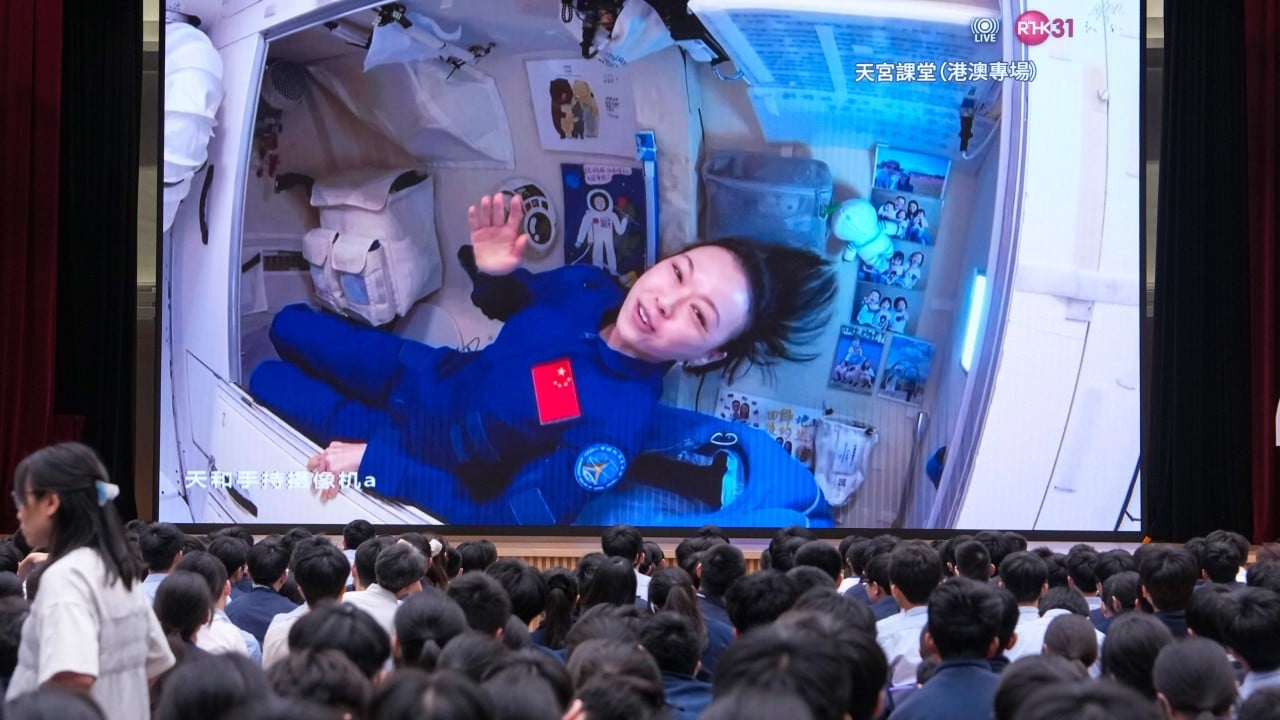
On the projection screen, a figure in a stiff blue flight suit floated effortlessly sideways, untethered by gravity, performing a slow, lazy somersault that drew an audible gasp from a dozen front-row third-graders. It wasn't just a lecture. It was a magic trick executed by physics.
Let us be honest about what inspires a child. It is rarely a pie chart or a government white paper on STEM education initiatives. It is the undeniable, slightly terrifying proof that ordinary limits are negotiable. When a payload specialist or a visiting taikonaut looks into a high-definition lens from low Earth orbit and speaks Cantonese with that familiar local cadence, the distance between a desk in Tsuen Wan and the International Space Station collapses.
The mechanics of it are dizzying if you stop to trace the lines. Radio waves bouncing off tracking stations, leaping across atmospheric layers, routed through fiber-optic cables buried beneath Victoria Harbour, finally blooming onto a projector screen bought with PTA funds. But the kids didn't care about the latency. They cared about the floating pen. They cared about the way hair behaved like an underwater anemone in zero-G.
One hypothetical student—let us call him Marco, sitting in the fourth row with a chewed-up pencil and a notebook covered in messy sketches of rockets—probably felt a sudden, sharp jolt in his chest. You know the feeling. It is the precise second your internal horizon shifts. Before the broadcast, Marco wanted to be an architect or perhaps a professional gamer. After the broadcast, staring at the grainy image of the curvature of the Earth, Marco’s universe quietly widened. The ceiling of his ambitions simply vanished.
This is the hidden currency of historic live lectures. They are not academic exercises. They are cultural detonations.
Governments spend billions on aerospace programs, launch pads, telemetry systems, and docking modules, treating space as a theater of geopolitical muscle or economic resource extraction. Yet the most profound return on investment might actually happen in a damp auditorium in Hong Kong when a teenager realizes that the equations on the chalkboard are not just homework punishments. They are the keys to the door.
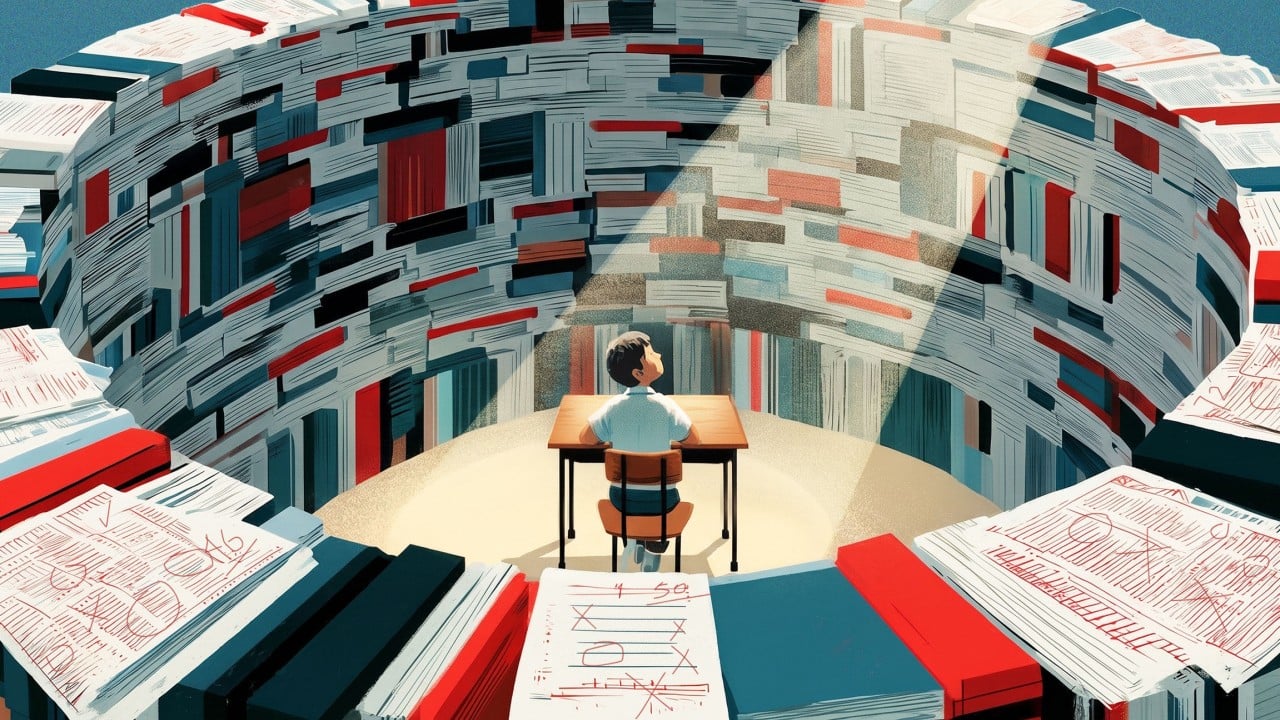
For decades, the narrative surrounding Asian youth in high-achieving metropolitan hubs has been suffocatingly narrow. Drill, test, rank, repeat. The pressure to conform to an industrial-grade educational conveyor belt leaves little room for cosmic daydreaming. Efficiency is prized; wonder is treated as an inefficient use of study time.
Yet wonder is precisely what keeps the engine turning. Without the initial spark of irrational fascination, no one stays up until two in the morning wrestling with orbital mechanics or thermodynamics.
When the live feed flickered and died, returning the auditorium to the flat, fluorescent glare of normal school lighting, the room didn't instantly erupt into cheers. There was a pause. That heavy, delicious pause where young minds readjust to the pull of the floor. Then came the questions. Hands shot into the air like spring-loaded traps. How do you sleep without falling off the wall? What does water taste like up there? Can you see my neighborhood from the window?
The astronaut answered them calmly, bridging the chasm between celestial mechanics and playground curiosity. No talking down. No rehearsed political platitudes. Just direct, human transmission across the dark void.
We underestimate the fragility of inspiration. It is a tiny ember. Left alone in a drafty room, it dies out beneath the weight of tomorrow’s math quiz or next week's exam results. But if it catches something dry—a genuine spark of curiosity, a lingering image of a floating pen—it can burn for forty years. It can turn a reluctant student into an aerospace engineer, a materials scientist, or simply an adult who refuses to stop looking up when everyone else is staring at their shoes.
The school hall has long since emptied. The chairs are stacked against the back wall. The janitor has swept up the chalk dust. But somewhere out there in the sprawling concrete grid of the city, a kid is still looking at the ceiling, waiting for the stars to answer.