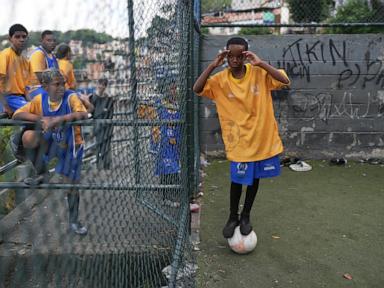
Walk through the narrow, steep alleys of Rio de Janeiro's favelas and you'll hear a constant sound. It's the rhythmic thud of a worn-out soccer ball hitting a concrete wall. For decades, outsiders viewed these informal communities solely through the lens of poverty and violence. That's a mistake. The real story of the favela is one of unmatched resilience, and nothing captures that spirit quite like the local soccer pitches, known as terrões.
Young Brazilian players from a Rio favela find hope and opportunities through soccer because the sport operates as a massive, informal social development engine. It's not just about chasing a multi-million dollar contract in Europe. For the vast majority, the local pitch is where they learn leadership, escape the pull of organized crime, and access formal education. Soccer is the social ladder that actually works when other institutions fail. In similar news, we also covered: The Night Aryna Sabalenka Wanted to Leave the Court Forever.
The Reality Behind the Scouting Myth
Everyone knows the fairytale. A scout spots a kid playing barefoot in the dust, signs them to a major club like Flamengo or Vasco da Gama, and the family moves into a luxury mansion overnight. It happens. But relying on that narrative is like using the lottery as a retirement plan.
The true impact of favela soccer is much more grounded. Organizations like Central Única das Favelas (CUFA) have shifted the focus from merely minting superstars to building citizens. Through initiatives like the Taça das Favelas, the largest tournament for favela youth in the world, the goal is visibility in a broader sense. Sky Sports has also covered this critical issue in extensive detail.
When a teenager puts on a jersey to represent their community, everything changes. They aren't just a statistic anymore. They are an athlete representing their neighborhood on a national stage.
This visibility opens doors that have nothing to do with professional sports contracts. Scouts from universities, managers of local businesses, and coordinators of social projects watch these games. The pitch becomes a networking hub. A player might not get signed by Real Madrid, but they frequently land a sports scholarship or a job interview because a local business owner saw their discipline and leadership on the field.
How the Pitch Competes with the Streets
Favelas often lack basic public infrastructure. Safe parks, well-funded schools, and recreational centers are rare. In this vacuum, drug trafficking factions sometimes become the default employers for youth who see no other financial path.
Soccer creates an immediate, highly competitive alternative.
The structure of a local soccer project provides something crucial that teenagers crave: belonging and status. When a young person joins a disciplined team, they get a community that holds them accountable. Coaches in these projects usually double as social workers and mentors. They enforce strict rules. If your school attendance drops, you don't play. If you get into trouble on the streets, you're off the team.
Consider the environment of complexos like Maré or Alemão. The pressure on young people is intense. Soccer projects give them a physical sanctuary. For three hours a day, the outside world stops. The focus shifts entirely to tactics, teamwork, and physical exertion. This structured environment builds psychological resilience. It teaches kids how to handle failure, how to communicate under pressure, and how to trust the person next to them. Those traits are highly transferable to regular life.
The Economic Ripple Effect of Community Tournaments
Soccer in the favelas isn't just a game. It's an economy. When a major tournament happens on a local pitch, the entire community experiences a financial lift.
Street vendors sell food and drinks. Local tailors sew uniforms. Aspiring commentators and content creators stream the matches on YouTube, building portfolios that can lead to media careers. The ecosystem surrounding the sport provides immediate, legal income opportunities for families.
Furthermore, professional clubs have begun to realize that their traditional scouting networks missed incredible talent by ignoring the deepest parts of the favelas. Now, partnerships between grassroots projects and professional academies are more structured. Clubs frequently fund the maintenance of local pitches in exchange for first access to top talent. This corporate social responsibility keeps the local infrastructure alive, benefiting even the kids who just play for fun on weekends.
What Outsiders Get Wrong About Favela Soccer
People look at a dusty pitch in Vidigal or Rocinha and see deprivation. They think the kids playing there are desperate to escape their homes. That's a fundamental misunderstanding of the culture.
Favela residents are fiercely proud of their neighborhoods. The goal for many of these young players isn't to leave the favela behind forever; it's to bring resources back into it.
Look at the players who made it out. Many establish their own foundations right back where they started. They fund computer labs, English schools, and medical clinics inside their old neighborhoods. The soccer pitch acts as the initial incubator for a cycle of community reinvestment.
The sport changes the narrative from the inside out. It proves to the youth that their origin story isn't a liability. It's a source of strength. The grit, quick thinking, and adaptability required to play on a crowded, uneven concrete pitch are the exact skills that make them successful in the formal job market later in life.
If you want to support this ecosystem, stop looking at it as a charity case. Look at it as an investment in raw human capital. Support the independent media outlets covering grassroots tournaments. Buy merchandise from local social enterprises that fund these pitches. The next generation of Brazilian leaders is running on those dusty fields right now, and they don't need pity. They just need a level playing field.