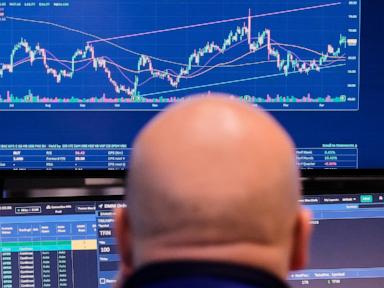
The floor of the New York Stock Exchange is rarely quiet, but it possesses a specific kind of silence that precedes a storm. It isn't a lack of sound. It is a suspension of breath. Traders call it the "smell of ozone."
Usually, when the world feels like it is tilting on its axis—when a central bank pivots or a geopolitical border blurs—there is a single number that everyone watches to measure the collective pulse of fear. It is the CBOE Volatility Index, or the VIX. For thirty years, it has been the stock market’s thermostat. When anxiety rises, the VIX spikes. When investors feel invincible, it drifts into a sleepy, low-digit malaise.
But something is wrong with the thermostat.
The house is burning, yet the dial says the temperature is a cool 68 degrees. This is the story of how the market’s primary way of measuring its own sanity stopped working, and why that makes the current moment more dangerous than a standard crash.
The Ghost in the Machine
Consider a man named Elias. He’s hypothetical, but he represents thousands of institutional desks from London to Hong Kong. Elias spends his mornings staring at six monitors. His job is to manage risk. For a decade, his playbook was simple: if the VIX is low, buy more stocks. If the VIX climbs, sell. It was a symbiotic relationship between a number and a human reflex.
Recently, Elias has been sweating. He looks at the headlines—inflationary jitters, erratic consumer spending, and a jagged political climate—and then he looks at the VIX. It’s sitting at a multi-year low. It looks like a flatline on a heart monitor.
In the past, a low VIX meant a "Goldilocks" economy. Today, it means something entirely different. The mirror isn't reflecting the room anymore; it’s stuck on a photo of how the room looked three hours ago.
The technical reason for this disconnect involves a shift in how people bet on the future. Historically, the VIX was calculated using monthly options—bets that played out over thirty days. It was a medium-term forecast of stormy weather. Now, the market has become obsessed with "0DTE" (Zero Days to Expiration) options. These are bets that expire in hours, not weeks. They are the financial equivalent of a lottery ticket or a hit of pure adrenaline.
Because the VIX doesn't track these hyper-fast, same-day bets, it is effectively blind to the most volatile part of the market. We are flying a plane into a thunderhead while looking at a weather report from yesterday morning.
The Architecture of Indifference
To understand why this matters to someone who doesn't trade for a living, you have to understand the "short volatility" trade. It sounds like jargon, but it’s actually a very human habit: selling insurance to people who are scared.
When the market is calm, big funds make money by "selling volatility." They are the insurance companies of Wall Street. They bet that tomorrow will be just as boring as today. As long as the VIX stays low, they collect their "premiums" and everyone stays happy.
But there is a dark side to this insurance business. To stay balanced, these funds have to sell stocks whenever the market dips, and buy them whenever it rises. This creates a feedback loop. It forces the market into a state of artificial stillness. It’s like a lake that looks frozen solid, but the ice is only an inch thick. You can walk on it for a long time, feeling perfectly safe, until the exact moment you can't.
This suppression of movement is what traders call "the big short vol trade." It’s a collective agreement to pretend everything is fine. The VIX remains low not because there is no fear, but because the machinery of the market is currently designed to hide it.
A Fever Without a Thermostat
Why should you care if a bunch of numbers on a screen are lying to each other? Because when fear is suppressed rather than processed, it doesn't disappear. It moves.
When the VIX was a reliable gauge, it acted as a pressure valve. When things got hairy, the VIX jumped, people hedges their bets, and the market found a bottom. It was a painful but necessary process of discovery. Now, because the gauge is broken, we are losing our ability to see a crisis coming.
Imagine driving a car where the speedometer is stuck at 55 mph. You feel the wind rushing faster past your ears. You see the trees blurring into green streaks. You press the pedal, and the engine roars, but the needle doesn't budge. You are going 90, but the dashboard insists you are cruising.
Eventually, you will hit a curve. And because you didn't know your true speed, you won't have time to brake.
This is the "unusual" behavior the headlines are whispering about. The VIX is no longer rising when the S&P 500 falls. The two have become "decoupled." In the psychological landscape of the market, this is the equivalent of a person who no longer flinches when you swing a hand toward their face. It’s not bravery. It’s a neurological failure.
The Illusion of Control
We live in an era that prizes the "robust" and the "seamless"—words we use to convince ourselves that we’ve engineered the risk out of life. We believe that if we have enough data and enough algorithms, we can prevent the crash.
But the crash is a human phenomenon. It is the result of sudden, collective realizations.
History is littered with periods where "volatility was dead." In the mid-2000s, right before the Great Financial Crisis, the VIX was famously low. People talked about the "Great Moderation," a new era where central banks had finally solved the problem of the business cycle. We had mastered the sea. We had built unsinkable ships.
We all know what happened when the iceberg appeared.
The danger today isn't that the market will go down. Markets always go up and down; that is their nature. The danger is the "gap risk." Because no one is paying for insurance—because the VIX is so cheap and the perceived risk is so low—everyone is positioned for perfection. When reality eventually fails to meet that standard, there will be no one on the other side of the trade to catch the fall.
The Sound of the Snap
If you listen to the veterans—the guys who survived 1987 and 2008—they don't talk about the VIX. They talk about liquidity. They talk about the ability to get out of a room when someone screams "fire."
Right now, the exit doors are narrow, and the room is packed with people who are convinced there is no need for a fire drill. They are watching a gauge that says "Safe," while the carpet under their feet is starting to smolder.
We have traded real stability for the appearance of it. By moving the gambling to the "0DTE" world and relying on automated systems to keep the VIX suppressed, we have created a market that is brittle. It won't bend. It will simply snap.
Elias, our hypothetical trader, knows this. He sees the "fear gauge" doing something unusual, and he realizes he’s playing a game where the rules were changed in the middle of the night. He isn't worried about a 1% dip. He’s worried about the day the dashboard finally catches up to the speed of the car.
On that day, the VIX won't just rise. It will explode. And the silence on the floor of the Exchange won't be the smell of ozone anymore. It will be the sound of a mirror shattering, finally showing us exactly what we’ve become.
There is a certain honesty in a crash. It strips away the pretension and the "robust" projections. It forces us to look at the value of things rather than the price of bets. Until that moment arrives, we continue to walk on the thin ice, watching a thermostat that says it’s a beautiful summer day, even as the first snowflakes begin to fall.