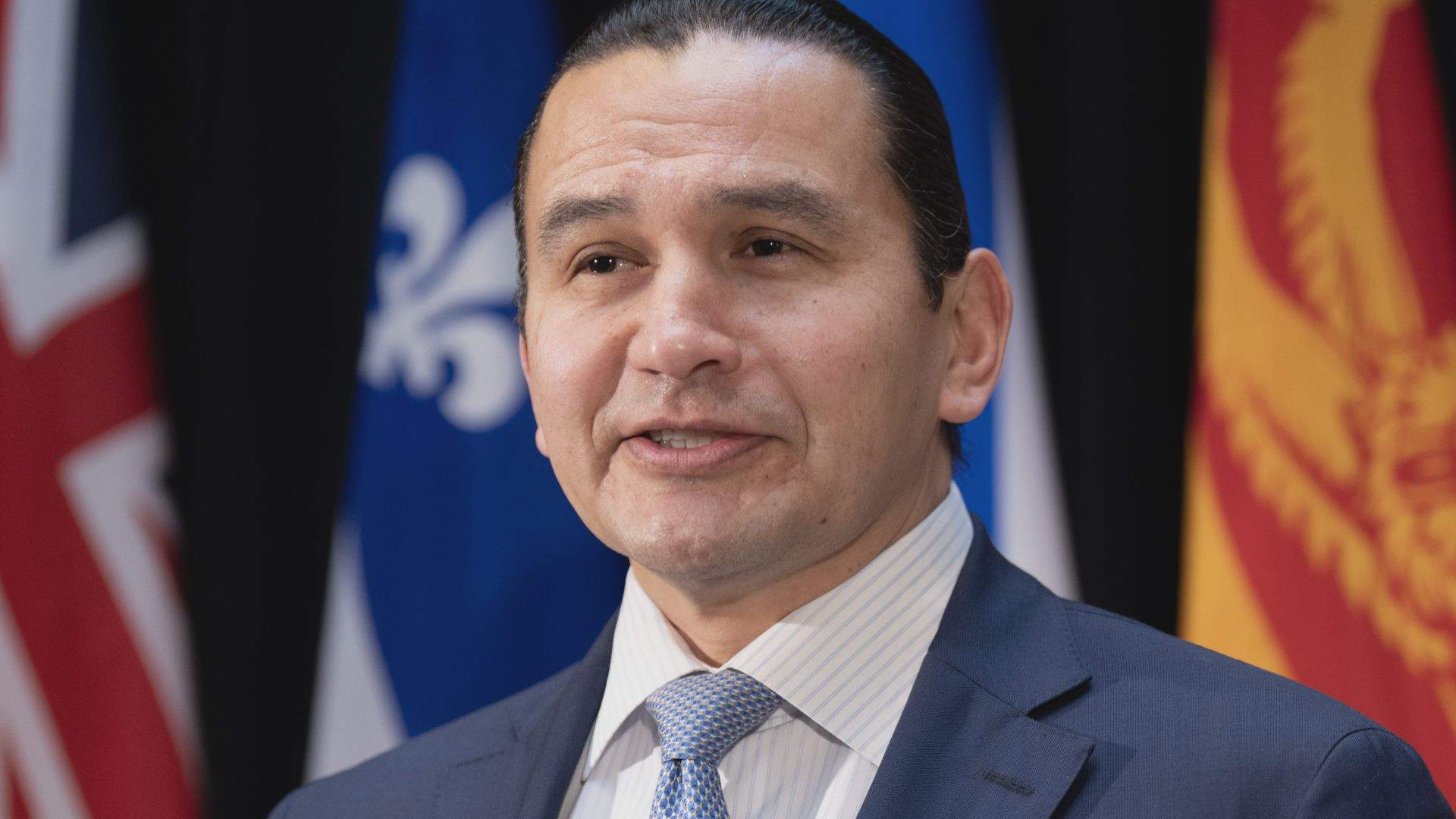
Manitoba is officially drawing a line in the digital sand. Premier Wab Kinew announced that the province will become the first in Canada to implement a sweeping ban on social media and artificial intelligence chatbots for children under 16. This is not a suggestion or a parental advisory. It is a legislative strike against what Kinew describes as the "surveillance capitalism" that has turned the developmental years of a generation into a profit center for Silicon Valley.
By moving to block minors from platforms like TikTok, Instagram, and even generative AI tools like ChatGPT, Manitoba is following a trail blazed by Australia and several US states. The core of the policy is simple. The province intends to mandate age verification to ensure that children are not accessing platforms designed to harvest their data and exploit their neurological reward systems.
The Psychological Siege
The push for this ban stems from a growing body of evidence that these platforms are not passive conduits for information. They are engineered. Kinew’s rhetoric at a recent party fundraiser focused heavily on the biological "hacking" of children’s brains. He argued that the algorithms are optimized to create loops of outrage and comparison that contribute to record-high rates of anxiety and depression among Manitoban youth.
It is a sobering reality. For years, the industry operated under a "move fast and break things" ethos, but the things being broken were the attention spans and self-esteem of teenagers. The government's stance is that the duty of care has been ignored by tech giants for too long. If the companies won’t build safe digital parks, the province will simply close the gates.
The AI Chatbot Problem
Perhaps the most aggressive part of this proposal is the inclusion of AI chatbots. While social media has been under the microscope for a decade, ChatGPT and its peers are new targets. The province's concern was sharpened by recent tragedies, including a shooting in British Columbia where an 18-year-old perpetrator allegedly circumvented OpenAI's bans to use the tool for "worrisome interactions" without law enforcement ever being notified.
Manitoba’s inclusion of AI suggests they view the threat as broader than just "scrolling." They see a future where unmonitored, persuasive AI could radicalize or manipulate vulnerable minds just as effectively as a viral video. It is a radical expansion of the definition of online harm.
The Enforcement Mirage
Good intentions often collide with technical reality. This is where the Manitoba plan faces its steepest climb. How does a provincial government, with limited jurisdiction over international entities, actually stop a 14-year-old in Brandon or Winnipeg from opening an account?
Australia’s recent attempt at a similar ban offers a cautionary tale. Reports indicate that months after their law took effect, up to 70% of children who had accounts before the ban still have them. Kids are tech-savvy. They use VPNs, fake birthdays, or their parents’ devices.
If Manitoba relies on the platforms to police themselves, the results will likely be toothless. The alternative is a centralized provincial age-verification system—essentially a digital ID for the internet. This raises massive privacy alarms. To prove a user is not a child, the government or a third party might require a driver’s license scan or biometric data. The irony is thick. To protect children from data harvesting, the state might require more data harvesting.
Political Chess and the National Wave
Kinew is not acting in a vacuum. Prime Minister Mark Carney and the federal Liberals have been eyeing a national ban, but Ottawa moves slowly. By jumping ahead, Manitoba is forcing the federal government’s hand.
Other provinces are watching. Saskatchewan Premier Scott Moe has signaled interest in a 16-and-under ban, though he prefers a federal solution to avoid a patchwork of rules across the country. Quebec has previously suggested a cutoff at 14 with parental consent. Manitoba is effectively the lab rat for this social experiment.
Public Sentiment vs. Practicality
The polling data suggests Kinew has the wind at his back. Recent studies show that 75% of Canadians support a full ban for those under 16. The concern over misinformation, cyberbullying, and sexual extortion is near-unanimous.
However, the "how" remains the sticking point. Even among those who support the ban, a majority believe parents—not the government—should be the primary regulators. There is a deep-seated tension here. We want the protection of the law, but we are wary of the state sitting at the dinner table.
The Resistance from the Ground
Not everyone is applauding. Teenagers themselves point out that social media was a lifeline during the isolation of the pandemic. For marginalized youth or those in rural communities, these platforms provide a sense of belonging that physical geography cannot. An outright ban could inadvertently cut off support networks for the very children the government aims to protect.
Furthermore, there is the question of digital literacy. If we simply block the tools, do we lose the opportunity to teach children how to navigate them safely? A ban is a blunt instrument. It stops the bleeding, but it doesn't heal the wound.
The Economic Conflict
There is also a quiet economic war happening. Kinew’s language regarding "tech oligarchs" who don't share Canadian values is a direct shot at the business models of Meta and Alphabet. These companies thrive on engagement. If you remove the youth demographic, you remove the future of their advertising base.
We should expect a fierce legal challenge. Tech companies will likely argue that a provincial ban violates free speech or exceeds provincial authority over telecommunications. This will not be a quick legislative win. It will be a years-long battle in the courts.
The Reality of the "Freedom" Promise
Wab Kinew framed this as a promise of "freedom"—freedom from screens, freedom from surveillance. It is a romantic notion of returning to a pre-digital childhood. But you cannot put the toothpaste back in the tube.
The success of this ban will not be measured by whether the law is passed, but by whether the province can solve the identity verification puzzle without creating a surveillance state of its own. Without a foolproof, privacy-respecting way to verify age, the ban remains a powerful piece of political theater rather than a functional shield.
Manitoba has made its move. The legislature sits for four more weeks before the summer break. The clock is ticking on whether this becomes a landmark shift in Canadian law or just another unenforceable headline. Parents should prepare for a world where the government is the new digital gatekeeper, but they should also keep their own house rules in place. The law can limit the app, but it cannot replace the parent.