Microsoft shares routinely face downward pressure on Friday trading sessions following major service outages because institutional traders immediately price in the twin threats of enterprise churn and contractual Service Level Agreement credits. When Azure, Microsoft 365, or underlying Windows infrastructure goes dark, Wall Street does not just see an engineering hiccup. Traders see a direct hit to high-margin cloud operating income, an opening for rivals like Amazon Web Services and Google Cloud, and a stark reminder that systemic concentration risk cuts both ways.
The stock market hates uncertainty more than it hates bad news. An outage delivers pure, concentrated uncertainty right before the weekend bell.
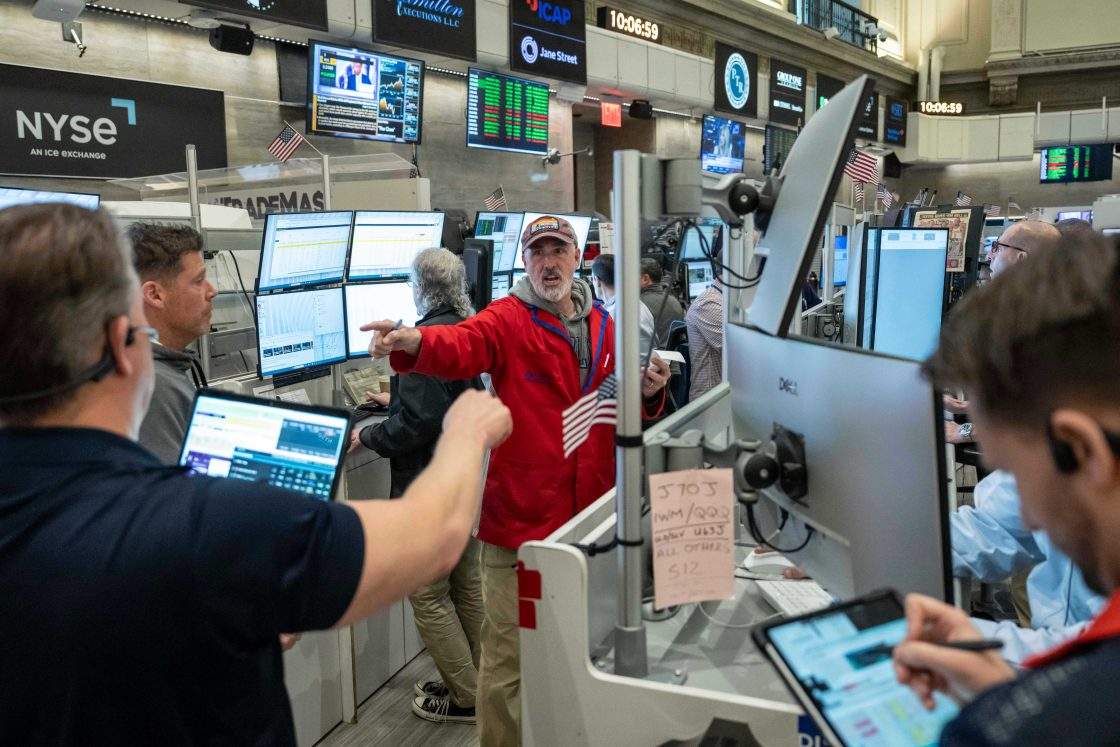
Consider the mechanics of an institutional sell-off during an infrastructure failure. Algorithms scan headlines for keywords like "Azure down," "Microsoft 365 disruption," or "global IT outage." Within milliseconds, automated trading desks trim exposure to mega-cap tech. Human portfolio managers follow closely behind, calculating the potential fallout before the weekend closes the markets. Nobody wants to hold an overweight position in a software giant when an unresolved root-cause analysis might balloon into a multi-day crisis by Monday morning.
The Anatomy of a Friday Sell-Off
Wall Street operates on a deeply ingrained calendar psychology. Friday is de-risking day. When a major outage hits Microsoft’s infrastructure on a Thursday night or Friday morning, traders face a compressed window to assess damage before liquidity dries up for forty-eight hours.
During normal trading weeks, Microsoft enjoys a reputation as the ultimate defensive tech stock. Enterprise customers rarely rip out Active Directory or migrate away from Exchange on a whim. Switching costs are astronomical. Yet, when global terminals flash blue screens or cloud portals return 503 errors, that perceived invulnerability cracks.
Institutional desks look at three immediate metrics when selling into outage news:
- Duration and Blast Radius Is the failure isolated to a single regional data center, or has a faulty configuration update cascaded across global authentication servers?
- Third-Party Entanglement Does the outage stem from Microsoft’s native code, or did a third-party kernel-level security vendor trigger the collapse?
- Regulatory and Legal Exposure Are airlines grounded, hospitals diverting ambulances, and stock exchanges halting trades?
If the answer to that third question is yes, the sell-off accelerates. High-profile disruptions invite congressional hearings, European Union antitrust scrutiny, and enterprise demands for contract renegotiations. Traders understand that while one bad Friday will not bankrupt a company sitting on tens of billions in cash, it can compress valuation multiples that rely on the narrative of flawless execution.
How Service Level Agreements Eat Into Cloud Margins
To understand why a few hours of downtime rattles equity analysts, you have to look at the fine print of enterprise cloud contracts. Microsoft sells reliability. Its commercial cloud agreements are built around Service Level Agreements, commonly known as SLAs, which guarantee uptime percentages ranging from 99.9 percent to 99.999 percent depending on the architectural tier.
When Microsoft misses those thresholds, it owes customers money. These payouts rarely take the form of direct cash refunds, instead arriving as service credits applied toward future billing cycles.
Here is where the accounting reality bites. Suppose a hypothetical enterprise pays Microsoft one million dollars a month for dedicated Azure compute capacity. If a severe outage drops availability below 95 percent for that billing period, the SLA might trigger a 25 percent credit. Microsoft loses $250,000 in recognized revenue the following month, while its fixed costs—data center real estate, power purchase agreements, server depreciation, and engineering payroll—remain completely unchanged.
In cloud computing, incremental revenue carries extraordinary gross margins. Conversely, SLA credits drop straight to the bottom line as pure margin erosion.
Multiply that hypothetical enterprise by thousands of Fortune 500 clients, global banks, and government agencies. Suddenly, a four-hour outage translates into tens of millions of dollars in foregone quarterly revenue. Equity analysts covering Microsoft build complex discounted cash flow models around Azure’s sequential growth rate. Even a fifty-basis-point drag caused by widespread SLA credits can trigger downward earnings revisions, which explains why traders shoot first and ask engineering questions later.
The Monoculture Trap and Systemic Risk
For decades, chief information officers operated under an unspoken rule. Nobody ever got fired for buying Microsoft. Consolidating operating systems, productivity suites, identity management, and cloud infrastructure under a single vendor simplified procurement and lowered licensing overhead.
That consolidation has created an unprecedented digital monoculture.
When an update goes wrong inside a fragmented ecosystem, a few companies suffer. When an update goes wrong inside a deeply integrated Microsoft environment, global supply chains freeze. We saw this dynamic play out vividly during the historic July 2024 CrowdStrike kernel update failure, where a single defective file bricked millions of Windows machines across aviation, healthcare, and banking, as well as during subsequent Azure networking and DNS disruptions that knocked major retail and travel platforms offline.
Wall Street analysts have begun treating concentration risk as a tangible liability rather than an academic theory. Enterprise risk committees are asking hard questions about single-vendor dependency.
Why Multi-Cloud Remains Harder Than It Looks
Whenever Microsoft stumbles, pundits predict a mass exodus toward multi-cloud architectures. In theory, splitting workloads across Azure, Amazon Web Services, and Google Cloud insulates a business from any single provider's failure.
In practice, true multi-cloud resilience is brutally expensive and technically punishing.
- Data Egress Fees Moving massive datasets between competing cloud providers incurs steep bandwidth charges that quickly erase bulk licensing discounts.
- Talent Scarcity Engineering teams fluent in Azure Resource Manager templates, AWS CloudFormation, and Google Cloud Deployment Manager cost a fortune to recruit and retain.
- Lowest Common Denominator Architecture Designing applications to run seamlessly across disparate cloud environments forces developers to abandon proprietary, high-efficiency platform tools in favor of generic container orchestration.
Because ripping out core Microsoft infrastructure is nearly impossible in the short term, enterprises rarely leave after a single outage. Instead, they weaponize the outage during renewal negotiations. Procurement officers demand steeper discounts on Microsoft 365 E5 licenses, free Azure migration credits, or capped price increases. Traders know that quiet discounting erodes average revenue per user long after the servers come back online.
The Kernel Access Dilemma and Regulatory Blowback
Digging deeper into the technical root causes of major Windows and cloud disruptions reveals a structural conflict that Microsoft has struggled to resolve for twenty years. To protect enterprise endpoints from ransomware and state-sponsored malware, cybersecurity vendors demand deep, privileged access to the Windows operating system kernel—known as Ring 0.
Ring 0 is the inner sanctum of the operating system. Code running at this level has unrestricted access to hardware and memory. If an application in user mode crashes, Windows closes the window and moves on. If a driver in Ring 0 crashes, the entire machine halts immediately to prevent data corruption, producing the infamous Blue Screen of Death.
Why does Microsoft allow third-party security firms into Ring 0 in the first place? Because regulators forced its hand.
Following a 2009 antitrust agreement with the European Commission, Microsoft committed to giving third-party security developers the exact same level of access to Windows APIs and kernel hooks that it gave its own internal security products. The goal was to prevent Microsoft from monopolizing the antivirus market. The unintended consequence was architectural fragility.
Every time a major outage traces back to kernel-level conflicts or core networking updates, Microsoft faces an impossible balancing act. Locking down Windows like Apple locks down macOS would dramatically improve system stability, yet doing so invites immediate antitrust litigation in Brussels and Washington. Leaving the doors wide open preserves regulatory peace while exposing global commerce to catastrophic single points of failure. Experienced tech investors understand this trap, and they discount the stock whenever regulatory pressure threatens Microsoft's architectural control.
The Hidden Operational Cost of Outage Response
Beyond SLA credits and lost stock market capitalization, major outages inflict severe internal friction on Microsoft’s engineering organization. When a high-severity incident—classified internally as a Sev 0 or Sev 1 event—erupts, thousands of engineers are pulled off product development to join war-room bridges.
Feature roadmaps stall. Deployment pipelines freeze.
In the hyper-competitive artificial intelligence race, velocity is everything. Microsoft has poured tens of billions of dollars into capital expenditures to build out AI data centers, custom silicon, and Copilot integrations. Investors tolerate that massive CapEx burn only because they expect rapid AI monetization to supercharge Azure growth rates.
Every week that senior infrastructure engineers spend auditing BGP routing tables, rewriting deployment rollbacks, or testifying before compliance boards is a week they are not optimizing GPU clusters or shipping new enterprise AI features. Following high-profile security breaches and service disruptions, Microsoft leadership has repeatedly been forced to mandate company-wide security and reliability sprints, explicitly prioritizing resilience over new feature velocity.
Wall Street applauds reliability initiatives in press releases, yet traders quietly sell the stock when they realize those initiatives delay high-margin software rollouts.
Reading the Tape Like an Institutional Desk
Retail investors often panic when they see red arrows next to Microsoft’s ticker during an outage, assuming the company's foundational business model is broken. Conversely, blind bulls dismiss every crash as a meaningless buying opportunity. Both reactions miss how professional desks actually trade infrastructure disruptions.
Institutional traders separate outages into two distinct categories based on root-cause pathology:
- External or Configuration Errors A mistyped command in a load balancer, an expired SSL certificate, or a faulty third-party software push. These events cause sharp, dramatic Friday sell-offs because the immediate visual impact looks terrifying. However, once engineers roll back the change and publish a transparent post-mortem, the stock typically recovers its losses within five to ten trading sessions.
- Architectural or Capacity Failures Thermal throttling in overloaded data centers, systemic power grid bottlenecks, or deep software bugs that require weeks of code refactoring. These outages trigger sustained institutional distribution because they signal underlying capital expenditure miscalculations or structural limits to cloud scaling.
Watching how options markets react during the first two hours of an outage tells you everything you need to know about which category Wall Street believes is unfolding. If implied volatility spikes solely in weekly contracts expiring that Friday afternoon, traders are simply hedging weekend headline risk. If institutional buyers sweep up out-of-the-money puts expiring three to six months out, smart money is betting that the outage has exposed a deeper financial or competitive wound.
The Illusion of Infinite Uptime
Modern finance runs on an unspoken fantasy that digital infrastructure is weightless, frictionless, and immortal. Traders sit in climate-controlled towers executing multi-billion-dollar algorithms without ever thinking about undersea fiber optic cables, transformer substations, liquid cooling loops, or millions of lines of legacy C++ code holding the global economy together.
An outage shatters that illusion in seconds.
Microsoft has spent a decade transforming itself from a boxed-software vendor into the foundational utility of global enterprise computing. Utilities enjoy immense pricing power and sticky customer bases, which is precisely why Microsoft commands a multi-trillion-dollar valuation. Yet utilities also live under a harsh covenant with the markets. Nobody notices the power grid when the lights stay on, and nobody forgives the operator when the city goes dark on a Friday afternoon.
Until software engineering eliminates human error from hyperscale infrastructure—a milestone that remains purely theoretical—every major cloud disruption will trigger the exact same reflex on Wall Street. Traders will hit the sell button before the post-mortem is written, pricing in the reality that in an interconnected economy, absolute dominance means owning every single point of failure.