The frost arrives without permission in Frankfurt. It crawls across double-paned glass, etching delicate, frozen ferns while inside, a small household calculator sits on a kitchen table.
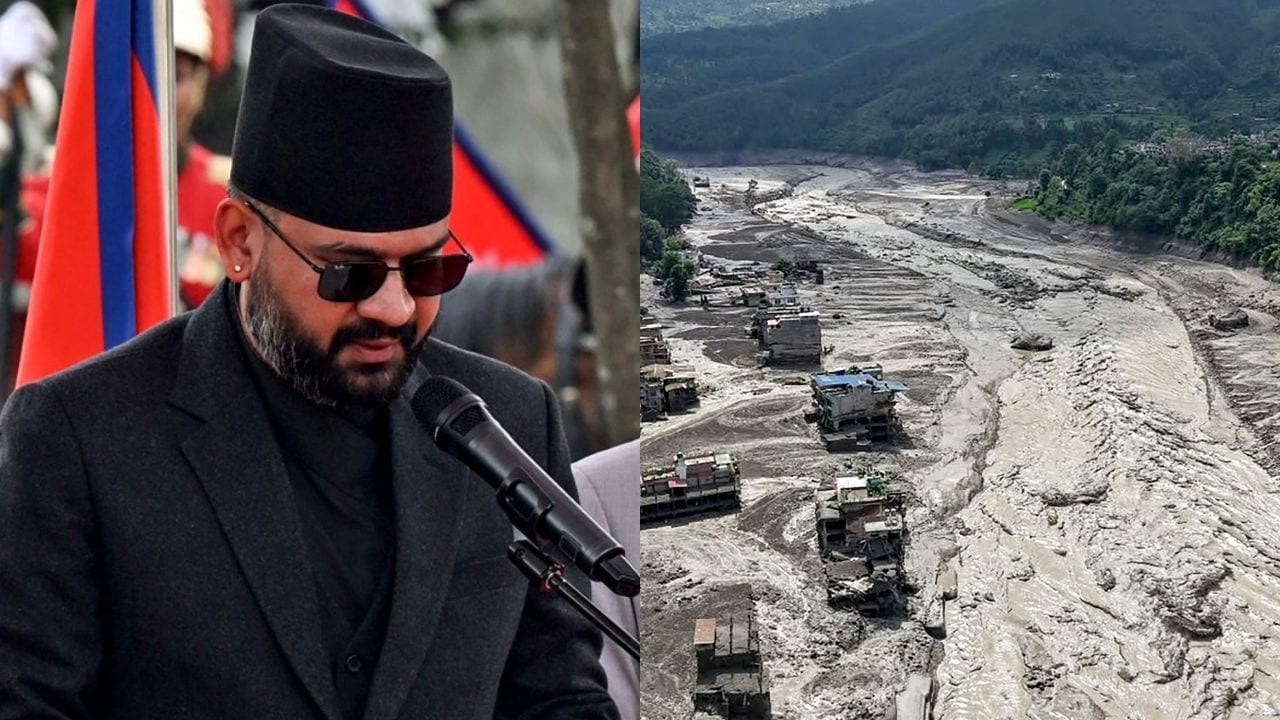
Elena presses the buttons again. She already knows what the screen will say. The numbers do not care about her exhaustion, nor do they care that her salary has stayed stubbornly flat while the cost of keeping her two children warm has doubled over the past three winters. The gas meter outside spins with a quiet, predatory rhythm. It is a mechanical heartbeat measuring how fast a family's financial security evaporates into heat. In related updates, take a look at: Nepal Floods The Brutal Mechanics Behind the Himalayan Catastrophe.
Across the continent, from the wind-swept flats of northern Germany to the limestone apartments of Milan, millions of households are running the exact same calculation. They are staring down a silent hazard that rarely makes the breaking news ticker until it crosses a psychological threshold: the creeping exhaustion of Europe's subterranean energy vaults.
The Hollow Vaults Beneath Our Feet
To understand why winter feels heavier this year, you have to look down. Deep underground, carved into ancient salt domes and depleted natural gas reservoirs, lie the strategic reserves that shield European cities from total freeze. These subterranean chambers are civilization's shock absorbers. When the wind howls from Siberia and heating demands spike, these reserves empty their lungs into the pipeline network, keeping pressure stable and radiators humming. NPR has analyzed this critical topic in extensive detail.
Right now, those vaults are exhaling faster than they can fill.
Current storage inventories are draining beneath seasonal averages, leaving the continent vulnerable to the whims of weather patterns and global supply bottlenecks. It is a slow-motion squeeze. When storage levels dip too low heading into the critical heating months, wholesale market panic sets in. Traders look at the diminishing safety cushions and watch futures contracts climb toward a terrifying benchmark: wholesale gas prices threatening to eclipse one hundred euros per megawatt-hour.
One hundred euros. To an algorithm in a trading terminal, it is a line on a chart. To Elena, it is the difference between buying winter boots for her daughter and paying the utility bill.
Consider what happens next when those wholesale costs spike. Energy providers do not absorb the blow; they pass it down the line with the cold efficiency of gravity. The local municipal utility sends out a revised tariff notice. Small bakeries calculate whether they can keep their ovens hot through the morning rush. Greenhouse operators in the Netherlands weigh the cost of artificial lighting against the price of tomatoes, quietly deciding whether to dim their lights and let crops wither.
Energy is the invisible blood of modern life. When the pressure drops, everything slows down.
The Anatomy of a Vulnerability
How did we get here? The narrative is often simplified into political soundbites, but the reality is an intricate web of supply shocks, shifting global liquefied natural gas lanes, and structural dependency.
For decades, the continent enjoyed an unspoken luxury: cheap, reliable pipeline gas delivered directly from the East. It was an arrangement built on convenience. When that pipe network fractured, Europe was forced into an expensive, frantic scramble. Suddenly, every country was competing for the same floating tankers of liquefied natural gas bobbing across cold oceans.
Liquefied natural gas is the nomadic cousin of pipeline gas. It has to be super-cooled to minus one hundred sixty-two degrees Celsius, loaded onto specialized mega-ships, sailed across thousands of miles of open water, and regasified at specialized coastal terminals before it can enter domestic heating grids. It is flexible, yes. But it is also desperately expensive, subject to fierce global bidding wars with Asian economies that can often out-pay European buyers.
When Asian demand surges during a cold snap in Tokyo or Seoul, LNG tankers alter course mid-ocean. They chase the highest bidder. And Europe is left holding an empty container, watching spot prices spike overnight.
This is the structural trap. Europe has diversified its import routes, investing billions into new regasification terminals and ramping up renewable generation. Solar panels gleam across Spanish rooftops and offshore wind farms churn off the coast of Denmark. Yet, the energy transition is a relay race, and we are currently fumbling the baton in the dark winter sector. Wind doesn't always blow when the temperature drops to negative five. The sun sets early in December, just as millions of electric heat pumps kick on simultaneously, straining local substations and driving up instantaneous demand.
Gas remains the heavy lifter of the grid. When wind and solar fall short, gas-fired power plants must fire up instantly to balance the load. Without sufficient gas in storage to feed those peaker plants, the entire system wobbles.
The Human Cost of the Spot Market
We talk about energy security as a macro-level chess match between nations, but the pieces are flesh and blood.
In a quiet suburb of Lyon, a retired machinist named Henri wraps himself in a woolen blanket indoors to save a few euros on his monthly bill. He remembers when energy was something you didn't think about. You turned the dial on the wall, and warmth arrived like magic. Now, every flick of the switch comes with an invisible price tag. He worries less about himself and more about his grandchildren, wondering what kind of world they are inheriting—one where the basic elements required for survival are treated as volatile luxury commodities traded by speculators thousands of miles away.
This is the emotional core of the energy crunch. It breeds a quiet, pervasive anxiety. It changes how people live within their own homes. Thermostats are dialed down from a comfortable twenty-one degrees to a chilly seventeen. Extra layers become indoor apparel. Rooms that used to be lived in are sealed off with draft stoppers to concentrate body heat into a single space.
It is a retreat. A contraction of daily life driven by market forces that feel entirely out of reach.
Economists call this demand destruction. It sounds clinical, neat, and bloodless. On paper, demand destruction means that when prices climb high enough, consumers simply use less energy, bringing supply and demand back into balance. But what demand destruction actually looks like in practice is a bakery closing its doors after forty years because its gas bill tripled. It looks like families choosing between groceries and heating. It looks like small manufacturing plants pausing operations during peak hours because the energy arithmetic no longer pencils out.
The Narrowing Margin for Error
Meteorologists are watching the polar vortex with furrowed brows. The atmosphere above the North Pole is unstable this year, prone to sudden stratospheric warming events that can send plunges of Arctic air crashing south into the heart of Europe.
If December and January bring sustained, bitter cold, the remaining gas in storage will vanish at an alarming rate. Storage withdrawals will outpace replenishment capabilities, and panic will grip the markets once more. Prices will spike. Governments will be forced into emergency rationing protocols, prioritizing residential heating while quietly squeezing industrial users.
Yet, there is resilience in the human spirit that raw data fails to capture.
Across Europe, communities are organizing. Neighborhood associations are mapping out warm hubs for elderly residents who cannot afford their heating bills. Engineers are rushing to finalize grid interconnections that allow surplus energy to flow smoothly across borders from regions with excess capacity to those running dry. Homeowners are insulating attics, installing smart thermostats, and adopting micro-habits of conservation not out of abstract environmentalism, but out of stark, pragmatic necessity.
We are learning, the hard way, that energy is not an infinite background condition of modern civilization. It is a fragile, finite chain. Every link matters. Every cubic meter stored in a salt cavern in northern Germany represents a shield against the dark.
The math of winter is unforgiving. But as the frost thickens on the windowpanes of Frankfurt, Lyon, and beyond, the people huddled inside are not merely victims of a market cycle. They are adapting. They are enduring. And as the pressure mounts, they are watching the gas meters spin, waiting for the first signs of a thaw that cannot come soon enough.