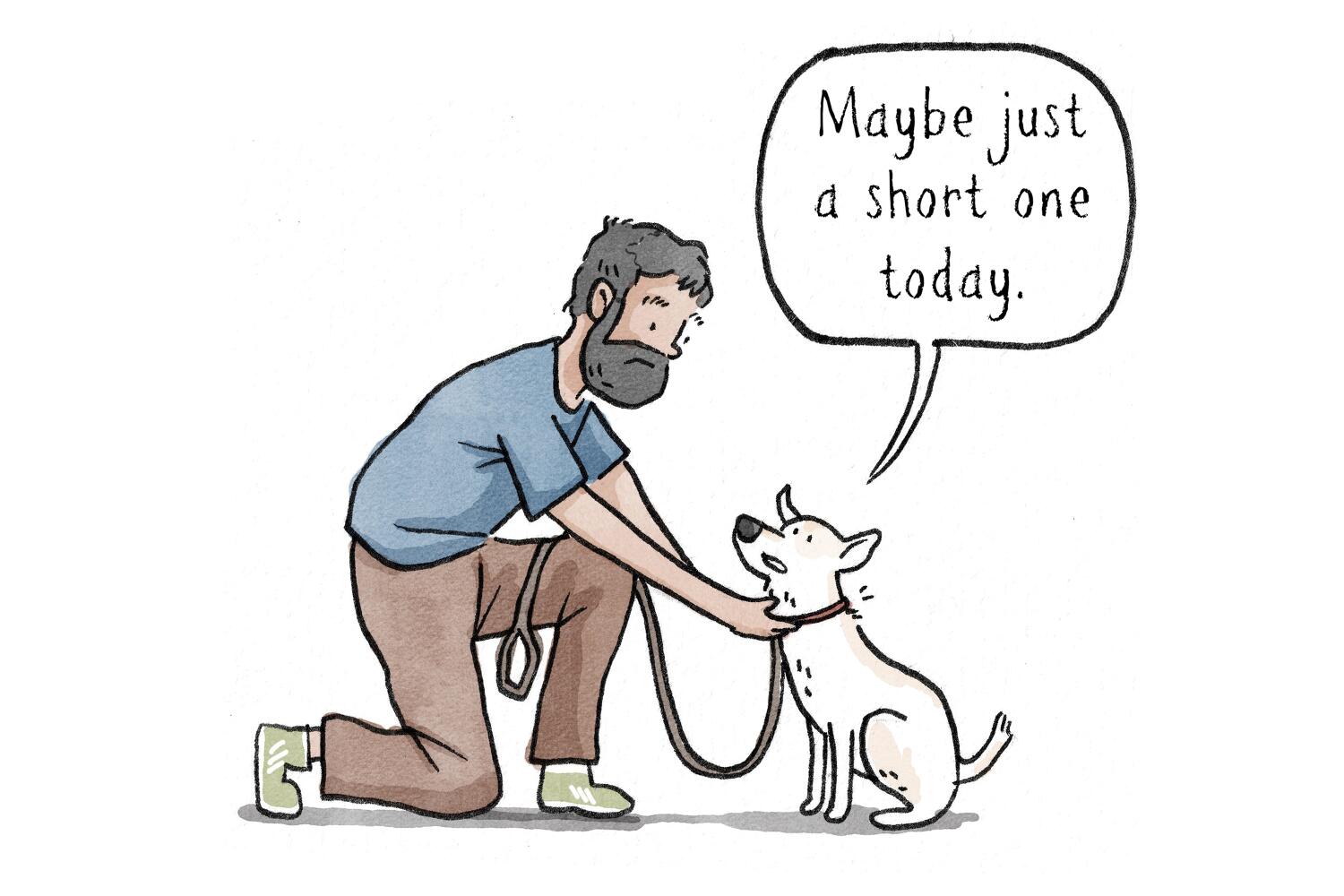
Every pet owner loves the comforting fiction. You have a rough day at the office, spill coffee on your white shirt, or receive bad news from your bank, and your golden retriever trots over, rests a heavy chin on your knee, and lets out a soft sigh. The lazy consensus across popular science journalism is clear: dogs possess a profound, almost mystical emotional intelligence. Headlines blare that studies show dogs can read human facial expressions, distinguish joy from sorrow, and actively empathize with our internal psychological states.
It is a comforting narrative. It sells treat subscriptions and makes us feel less lonely in a fractured world.
It is also fundamentally wrong.
Your dog is not a miniature therapist in a fur coat. They are opportunistic scavengers reading your biometrics, not your soul. When you project human emotional complexity onto a canid, you do not elevate the animal; you misunderstand it entirely. Let us dismantle the comforting myth of canine empathy and look at the brutal, mechanical reality of how dogs actually interact with human moods.
The Empathy Trap and Anthropomorphic Bias
Humans suffer from a chronic addiction to anthropomorphism. We look at a chimpanzee smiling and think it is happy, ignoring that bared teeth in primates often signal fear or aggression. We look at a dog tilting its head and assume deep cognitive processing, when it is merely adjusting its outer ear flaps to pinpoint the source of a high-frequency rustle that might indicate a dropped piece of cheese.
Behavioral scientists love to point to functional magnetic resonance imaging studies showing that dog brains light up when they hear human vocalizations. They use this as proof of emotional contagion. But brain activation is not emotional resonance. When a dog hears a distressed human sound, its brain registers a change in environmental baseline data. It notes a shift in pitch, volume, and cadence.
Think of it this way. Imagine a scenario where you are sitting in a living room and the smoke detector starts chirping an intermittent, low-battery warning. You do not stop and feel profound existential empathy for the plastic box. You recognize a disruptive auditory stimulus that demands mitigation so you can return to peace and quiet.
That is your dog when you sob on the couch.
They do not share your grief over a lost promotion or a breakup. They detect a novel, potentially unstable stimulus in their immediate territory and run a cost-benefit analysis on how to neutralize the annoyance.
Olfactory Manipulation Over Emotional Resonance
The core flaw in the emotional contagion theory is its complete erasure of the olfactory superpower that defines the canine species. Humans are visual creatures. We read faces, micro-expressions, and posture. We assume dogs do the same because we are arrogant enough to think our sensory modality is the universal standard.
It is not. Dogs live in a scent universe that humans cannot begin to conceptualize.
When you get angry, your adrenal glands flood your bloodstream with epinephrine and cortisol. Your sweat glands open. The chemical composition of your skin oils alters within seconds. Your dog does not need to decode your furrowed brow or interpret the tonal variation of your grumbles. They smell your internal chemistry changing.
To a dog, an angry human smells different than a calm human. A terrified human emits a distinct chemical signature compared to a relaxed one.
This is not empathy. This is chemosensory detection. It is the biological equivalent of a smoke detector smelling burning toast. The dog reacts to the chemical shift because, historically, erratic human chemical profiles correlated with unpredictable environmental outcomes—ranging from flying objects to dropped food scraps.
Let us look at the data from cognitive ethology labs. When researchers isolate these variables—testing whether dogs respond to human emotional sounds when visual cues are removed, or vice versa—the picture shatters. Dogs respond to stress pheromones and acoustic distress markers. They do not care about the narrative context of your sadness. They care that the apex predator controlling their food supply is currently operating at an erratic chemical frequency.
The Conditioning Loop That Built the Myth
If dogs are not feeling our feelings, why do they crawl into our laps when we weep?
Operant conditioning.
You trace back the behavioral history of any adult dog that reliably approaches a crying owner, and you find a clean, repeatable loop of reinforcement.
- Human experiences distress.
- Human makes high-pitched vocalizations and cries.
- Human instinctively reaches out, grabs the nearest furry body, and squeezes it tightly while offering high-value verbal praise, soft strokes, and frequently, treats or table scraps.
- Dog learns: Distress sounds from human equal a concentrated burst of physical attention and positive reinforcement.
Dogs are brilliant economy-of-action machines. They calculate the path of least resistance to a reward. If whining on the rug yields a pat on the head and a slice of turkey, the dog will run that script every single time. It is not emotional altruism. It is transactional conditioning.
I have watched owners spend small fortunes on behavioral consultants to fix separation anxiety, completely missing the fact that they reward their dogs for panicking. Every time you coddle a whimpering animal, you reinforce the exact neurological loop you claim to hate. You train them to perform distress because distress pays dividends.
Why This Misconception Harms Dogs
This is not just an academic semantic argument about animal cognition. This widespread delusion actively harms the animals we claim to love.
When you treat a dog like an emotional peer, you fail to provide the structured, predictable environment they actually require to thrive. Dogs do not want an emotional equal; they want a stable, unshakeable anchor.
In nature, pack leaders do not collapse into emotional heaps when the environment turns hostile. They assess threats, manage resources, and maintain operational stability. When a human falls apart and expects their dog to provide emotional validation, the psychological burden on the animal is severe.
This dynamic is a primary driver of canine behavioral pathology. Dogs subjected to constant human emotional volatility—owners who use them as furry emotional support sponges while cycling through manic highs and depressive lows—show chronic cortisol elevation. They exhibit displacement behaviors, excessive licking, resource guarding, and unprovoked aggression. They are stressed out because their primary environmental stabilizer is behaving like an erratic loose cannon.
You are not comforting your dog by making them the witness to your existential breakdowns. You are stressing them out by forcing them to monitor an unstable asset.
What to Do Instead of Seeking Canine Validation
Stop looking to your pet to validate your emotional state. It is lazy, and it reverses the hierarchy of care.
If you need emotional processing, call a friend, hire a professional, or write in a journal. Leave your dog out of your psychological processing loops.
- Maintain emotional neutrality: When you experience a high-stress event, practice calm, measured body language. Do not immediately seek out your dog to dramatisize your feelings.
- Reward calm independence: Stop reinforcing clingy, reactive behaviors. When your dog ignores your minor freakouts and calmly chews on a bone in the corner, that is the behavior you should reward with quiet approval.
- Respect their species-specific needs: Provide physical exercise, scent-work games, and clear boundaries. Let your dog be a dog, driven by instinct, biology, and clear rules, rather than forcing them into the exhausting role of a canine therapist.
Your dog loves you in the way a dog can love: as a provider, a protector, and a central fixture of their domestic ecosystem. That bond is profound enough without inventing a Hollywood script of mutual emotional telepathy to embellish it.
Quit waiting for your dog to feel your pain. Feed them, walk them, keep your own house in order, and let them rest in peace without expecting them to carry your emotional baggage.