Donald Trump doesn't just break the rules of polite society. He sets them on fire and dances in the ashes. While traditional politicians spend millions trying to look like the kind of person you’d trust with your lawnmower, Trump leans into being the villain. It’s a strategy rooted in what some call "ostentatious vice," and it’s arguably the most effective rebranding of character flaws in modern history.
Most leaders try to hide their greed, their anger, or their vanity. Trump wears them like a designer suit. He isn't being "bad" by accident. He’s doing it because it works. For a huge slice of the electorate, his willingness to be "mean" isn’t a bug—it’s the primary feature.
The End of the Polished Politician
For decades, the American political machine produced cardboard cutouts. Candidates were vetted for every minor indiscretion. One wrong word or an old photo of a wild party could tank a career. Then came 2016. Trump didn't just survive scandals that would have buried anyone else; he thrived on them.
He tapped into a deep-seated resentment toward "performative virtue." Many voters started to feel that the more "perfect" a politician looked, the more they were probably lying. When Trump displays "vice"—whether it’s a public feud with a celebrity or a blunt insult directed at a rival—it feels authentic to his base. It’s a "what you see is what you get" philosophy that bypasses the usual filters of political correctness.
Why Being the Bad Guy Wins
There's a psychological trick at play here. When someone openly admits to being a "shark" or "ruthless," they gain a weird kind of trust. You might not like a shark, but you know exactly what a shark is going to do. Trump’s brand of ostentatious vice signals a lack of hypocrisy. By being "honestly" mean, he makes his opponents look "dishonestly" nice.
This creates a tribal bond. When he attacks a common enemy with "meanness," his supporters feel a vicarious sense of power. They don't want a saint to fight for them in Washington; they want a street fighter. They want someone who’s willing to get his hands dirty. The "badness" becomes a proxy for strength.
- The Hero-Villain Dynamic: He positions himself as the only one willing to say what everyone else is thinking.
- The Shield Effect: By being constantly under fire for his behavior, he portrays himself as a martyr for his followers.
- Dominance Displays: High-conflict behavior serves as a signal of dominance that resonates with voters who feel overlooked.
Money Power and the Aesthetic of Excess
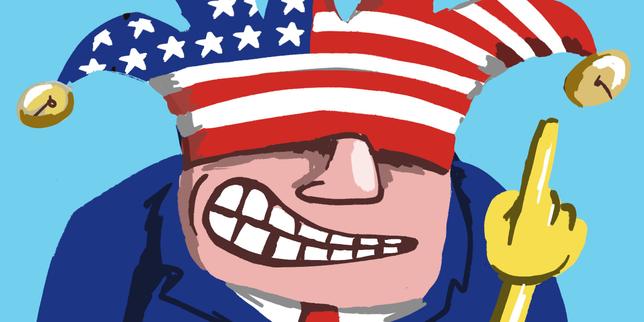
Ostentatious vice isn't just about being rude. It’s about the gold curtains. It’s about the private jets and the steak with ketchup. It’s an unapologetic embrace of "too much." In a world where elite culture often prizes "quiet luxury" and understated sophistication, Trump’s aesthetic is a loud, middle finger to the establishment.
He doesn't try to blend in with the old-money billionaires of Manhattan or the tech bros of Silicon Valley. He stayed "Queens" even when he moved to the penthouse. This version of wealth is aspirational for people who don't want to be told how to spend their money or how to act "classy." It’s a rebellion against the experts and the taste-makers.
The Cruelty is the Point
Adam Serwer famously wrote in The Atlantic that "the cruelty is the point." This idea suggests that the harsh rhetoric isn't a byproduct of the movement—it’s the glue holding it together. Sharing in the mockery of "the other" creates a powerful in-group identity. It turns politics into a contact sport.
When Trump uses nicknames like "Low Energy Jeb" or "Crooked Hillary," he’s using a playground tactic that simplifies complex political landscapes into a winner-takes-all drama. It’s entertaining. It’s visceral. And honestly, it’s hard for a policy-heavy opponent to compete with.
Reclaiming the Narrative of Vice
We’ve seen this before in pop culture. Think of Tony Soprano or Walter White. We know they’re doing "bad" things, but we’re fascinated by their agency. Trump has successfully moved that anti-hero archetype from the TV screen to the White House. He isn't asking for your moral approval. He’s asking for your vote in exchange for results.
Critics often miss the mark because they try to shame him. They point out the lies or the insults as if they’re revealing a secret. But his followers already know. They’ve factored it in. You can't shame someone who has turned his "shameful" traits into his biggest selling points.
The Long Term Impact on the Political Landscape
This shift has permanently altered how candidates communicate. We’re seeing a rise in "mini-Trumps" across the globe who use the same playbook: attack the media, insult the establishment, and embrace the role of the disruptor. The barrier for what is considered "presidential" has been lowered, or perhaps just moved to a different neighborhood.
The lesson for future strategists isn't necessarily to be "mean." It's that authenticity—even an ugly version of it—is currently more valuable than polished perfection. People are tired of being lectured. They’re tired of the "proper" way of doing things when they feel the system isn't working for them anyway.
Breaking the Cycle of Moral Outrage
If you want to understand why the "meanness" works, stop looking at it through the lens of traditional ethics. Start looking at it as a branding exercise. Every time the media reacts with shock to a new "vice," they reinforce the very image Trump wants to project. He’s the guy who doesn't care what they think.
To navigate this new reality, it’s essential to look past the theater of the "vice" and focus on the underlying grievances that make that behavior so attractive in the first place. Dismissing his supporters as simply liking "badness" is a mistake. They like what that badness represents: a refusal to play by the rules of a game they think is rigged.
Keep an eye on the language used in the next election cycle. Notice how many candidates try to manufacture their own "unfiltered" moments. The era of the curated statesman is over, replaced by the era of the raw, the loud, and the unapologetically flawed. If you're looking for the next big move in politics, don't look for the person with the best resume. Look for the person who isn't afraid to be the villain in someone else's story.