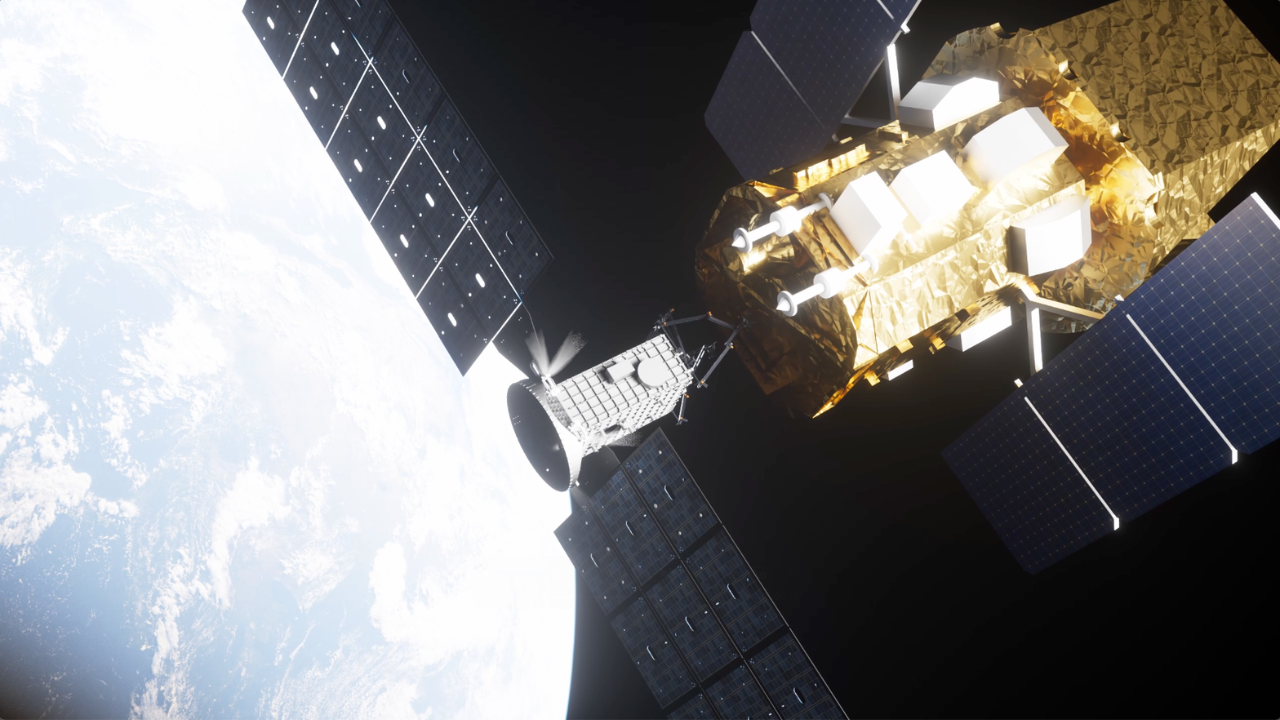
The physical reality of operating high-value assets in Low Earth Orbit (LEO) is governed by an unyielding constraint: atmospheric drag. When an unpropelled spacecraft faces an accelerated orbital decay profile, the traditional aerospace paradigm dictates asset abandonment and controlled destructive reentry. The launch of the Swift Boost mission on June 27, 2026, marks the first formal systemic rejection of this disposal model. By attempting an uncooperative robotic docking and orbital raise of the 22-year-old Neil Gehrels Swift Observatory, NASA and its commercial partner, Katalyst Space Technologies, are testing a novel capital-preservation mechanism in orbital mechanics.
Evaluating the viability of this intervention requires transitioning away from sensational narratives of an "orbital race" and toward a rigorous analysis of the engineering tolerances, aerodynamic variables, and financial trade-offs driving the mission. For a deeper dive into similar topics, we recommend: this related article.
The Core Problem: Solar Maxima and Dynamic Pressure Vectors
The degradation of the Swift Observatory’s orbit is not a linear failure of the hardware, but a direct consequence of variable upper-atmospheric density. Launched in 2004 into an initial altitude of approximately 600 kilometers, the unpropelled 500 million dollar telescope has experienced a structural decay down to a critical altitude threshold.
The primary catalyst for this accelerated decay is the heightened solar activity associated with the recent solar maximum. Solar flares and coronal mass ejections deposit massive thermal energy into Earth's thermosphere. This localized heating causes the upper atmosphere to expand outward, dramatically increasing the density of the ambient gas particles encountered by spacecraft at altitudes between 300 and 500 kilometers. For further context on this development, comprehensive coverage is available at The Verge.
The drag force ($F_d$) acting on an orbiting body is defined by the classical aerodynamic relationship:
$$F_d = \frac{1}{2} \rho v^2 C_d A$$
Where:
- $\rho$ represents the atmospheric density.
- $v$ represents the orbital velocity vector (approximately 28,000 kilometers per hour).
- $C_d$ represents the drag coefficient of the spacecraft geometry.
- $A$ represents the cross-sectional area perpendicular to the velocity vector.
Because velocity ($v$) in a stable orbit remains essentially fixed for a given altitude, any order-of-magnitude increase in atmospheric density ($\rho$) scales the drag force linearly. This increased dynamic pressure strips the satellite of its kinetic energy, forcing it into a downward spiral. Left unaddressed, Swift is projected to breach the critical limit of 300 kilometers by October 2026, below which the aerodynamic forces overcome the structural and rotational control of both the target and any attempting rescue craft, leading to an irreversible, uncontrolled destructive reentry by the end of the year.
Operational Mitigation: The Cross-Sectional Area Reduction Strategy
To defer the terminal threshold and expand the mission's operational window, engineers at NASA’s Goddard Space Flight Center executed an aggressive drag-minimization protocol on February 11, 2026. This tactical pivot highlights the relationship between spacecraft orientation and orbital longevity.
The engineering team deactivated the primary science instruments and relaxed the rigid pointing constraints of the solar arrays, which previously demanded an alignment within ten degrees of the Sun. By reorienting the entire spacecraft structure parallel to the velocity vector—effectively using the solar panels as thin blades cutting through the residual atmosphere rather than sails catching it—NASA reduced the average cross-sectional area ($A$) in the direction of flight by approximately 30%.
This 30% reduction in area directly translated to a 30% reduction in the instantaneous drag force, arresting the rate of altitude loss. This optimization extended the projected survival timeline of the satellite past its initial mid-summer expiration into late autumn, creating the necessary schedule slack to complete the assembly and testing of the rescue vehicle.
The Servicing Architecture: Mechanics of Uncooperative Capture
The rescue vehicle, designated LINK, represents a radical departure from traditional military or institutional satellite servicing programs. Developed by Arizona-based Katalyst Space Technologies under a 30 million dollar Phase III Small Business Innovation Research (SBIR) contract awarded in September 2025, the 937-pound (425-kilogram) spacecraft was built in an condensed nine-month timeline.
The fundamental technical hurdle of the mission is that the Swift Observatory was engineered in the early 2000s as a closed system. It features no docking rings, no magnetic capture latches, no visual targets for automated tracking, and no refueling valves. It is an "uncooperative target."
The LINK capture sequence relies on a three-pillared mechanical and software architecture to overcome these limitations.
1. Autonomous Relative Navigation
LINK will be deployed into a lower insertion orbit by Northrop Grumman’s air-launched Pegasus XL rocket. Once initial system checkouts are complete, LINK must execute a series of orbital maneuvering burns to match the 20.6-degree inclination and decaying altitude of Swift. The terminal rendezvous demands a closed-loop Guidance, Navigation, and Control (GNC) system utilizing optical cameras and LiDAR to calculate the relative position, velocity, and rotation rates of the target down to centimeter-level tolerances while both objects travel at hypersonic speeds.
2. Multi-Point Robotic Manipulation
Because there is no standard interface, LINK is equipped with three specialized robotic arms. Rather than latching onto a dedicated port, these arms are designed to clamp onto the structural rings or load-bearing brackets of Swift's frame. This approach carries severe risk: applying excessive clamping force can deform structural components, while insufficient force can lead to a slip, creating an uncontrolled multi-axis tumble for both vehicles.
3. Integrated Propulsion Management
Upon successful capture, the combined stack becomes a single rigid body governed by a new center of mass. LINK features three main Hall-effect krypton thrusters and 16 reaction control thrusters. The primary operational objective is to execute sustained, low-thrust burns over several months to raise the altitude from the degraded sub-400-kilometer zone back up to a stable 600-kilometer regime. The control software must continuously adjust the thrust vector to account for the offset center of gravity of the combined stack, preventing torque imbalances from spinning the vehicles out of control.
Macroeconomic Analysis: Institutional Risk vs. Capital Preservation
The financial logic underlying the Swift Boost mission signals a deeper shift in the economics of space asset management. The historical model for dealing with degrading institutional satellites has been replacement—a cycle driven by the high technical risk of orbital servicing and the lack of commercial capability. The cancellation of NASA's in-house OSAM-1 (On-Orbit Servicing, Assembly, and Manufacturing) mission in 2024 due to severe cost overruns and schedule slippage seemed to confirm the fiscal unviability of government-led servicing.
The Swift Boost mission replaces that top-heavy institutional model with an agile, fixed-price commercial procurement structure.
| Metric | Traditional Paradigm (Replacement / OSAM-1) | Commercial Servicing Paradigm (Swift Boost) |
|---|---|---|
| Direct Capital Cost | $500M+ (New Build & Launch) / $800M+ (OSAM-1) | $30 million contract value |
| Development Cycle | 7 to 12 Years | 9 Months (Katalyst Space Technologies) |
| Launch Infrastructure | Heavy Vertical Lift Class (Dedicated) | Pegasus XL (Air-Launched, Minimal Footprint) |
| Asset Yield Strategy | Write-off at end of life; accept data gaps | Immediate asset life extension (5+ years) |
From a portfolio management perspective, risking 30 million dollars to preserve an active asset valued at 500 million dollars yields an asymmetric risk-reward ratio. If LINK fails during approach or capture, NASA loses an asset that was already structurally destined for destruction within four months, alongside a relatively small capital expenditure. If the mission succeeds, NASA reclaims a fully functional, irreplaceable gamma-ray burst observatory for a fraction of its replacement cost, while validating a commercial servicing ecosystem that can be leveraged for other legacy systems.
Strategic Play: The Operational Blueprint for Orbital Life Extension
The success of the Swift Boost mission rests on a critical operational sequence that leaves zero margin for software or mechanical variance. The strategic playbook for the coming months will unfold across three distinct phases, each presenting a binary failure point.
First, during the post-launch phase from Kwajalein Atoll, LINK must demonstrate full three-axis stabilization and thruster calibration within its host orbit. Any early component degradation or communications lock failure terminates the mission before rendezvous maneuvers can begin.
Second, the proximity operations phase requires a methodical, multi-day approach vector. LINK must transition from absolute GPS-based navigation to relative sensor-based tracking. The critical moment occurs when the robotic arms make initial contact with Swift's structural frame. The control loop must damp out any residual momentum transfer instantly; a rigid impact could easily fracture aging solar array mounts or rupture internal components on the telescope.
Finally, the orbital raise phase requires continuous, micro-thrust management. Because Hall thrusters operate via low, steady acceleration rather than high-impulse chemical explosions, LINK will spend months pushing Swift back to its 600-kilometer destination. Throughout this period, the combined spacecraft must maintain an attitude that satisfies both the thermal constraints of Swift's scientific instruments and the power-generation requirements of LINK's solar arrays.
If this sequence is executed flawlessly, the immediate result will be an additional five to ten years of time-domain astrophysics data from a telescope capable of re-pointing to cosmic explosions within minutes—a capability current flagship observatories like Hubble or James Webb cannot replicate. Beyond the scientific yield, the definitive strategic outcome of this mission is the commercialization of satellite life extension. A successful deployment proves that the lifespan of space infrastructure is no longer bound to its initial fuel capacity or birth-era aerodynamics, but is a fluid variable managed by commercial market capabilities.