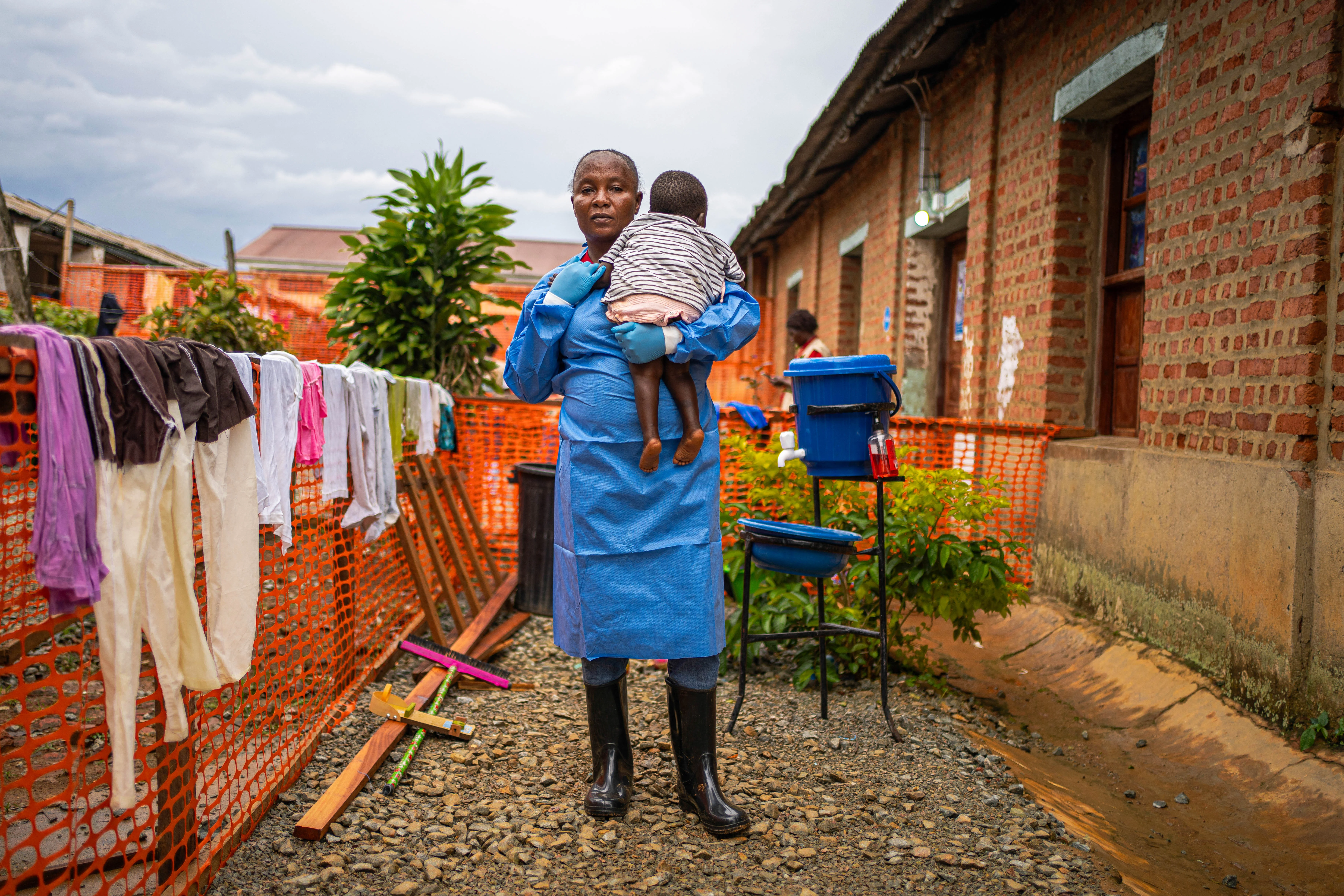
Epidemiological containment failures are rarely anomalies of viral biology alone; they are systemic outputs of friction within operational networks, human mobility vectors, and resource allocation loops. The propagation of the Bundibugyo virus strain across the Democratic Republic of the Congo and neighboring regions has surpassed five thousand fatalities within a broader caseload exceeding eleven thousand infections, establishing a structural benchmark for how modern filovirus outbreaks bypass traditional containment frameworks. Deconstructing this expansion requires moving past descriptive casualty tallies and analyzing the underlying operational variables that dictate pathogen velocity.
The Transmission Velocity Function
The rate at which an outbreak expands is governed by the vector between known contact chains and unmonitored transmission events. Data from the Africa Centres for Disease Control and Prevention indicates that approximately eighty percent of new infections originate outside monitored contact lists. This metric highlights a critical systemic vulnerability. When four-fifths of transmissions occur via unknown pathways, contact tracing ceases to function as a containment mechanism and becomes a lagging indicator.
The mathematical and logistical implications of this gap are stark. Transmission chains left invisible to public health surveillance amplify the basic reproduction number ($R_0$) within localized clusters. Human mobility acts as the primary multiplier. Spatial reconstruction models demonstrate that regional displacement, commercial transit routes, and daily population flows across provincial borders accelerate viral dissemination faster than localized health infrastructure can establish treatment perimeters.
Operational Impediments and Resource Bottlenecks
The structural capacity to suppress an outbreak relies on three interdependent variables: personnel security, supply chain integrity, and community trust. When any of these variables degrade, the entire response architecture fails.
Security Deficits and Healthcare Delivery
Frontline healthcare operations in the eastern provinces operate under acute security constraints. Armed group activity and civil unrest create persistent access vacuums. Treatment centers, transit units, and mobile burial teams frequently face physical obstruction, arson, and targeted violence. This operational hostility forces health workers to retreat or suspend operations, instantly widening the window for untreated infectious individuals to circulate within population centers.
Economic Friction and Institutional Attrition
Operational degradation is exacerbated by internal labor friction. Strikes by healthcare personnel over delayed compensation introduce severe vulnerabilities into treatment facilities. When staff at isolation and treatment units down tools due to unpaid wages, patient triage stalls, infection control protocols deteriorate, and institutional credibility collapses. An unpaid workforce cannot maintain the rigorous, high-risk safety standards required to suppress a hemorrhagic fever.
The Societal Trust Deficit
Epidemiological interventions frequently collide with pre-existing humanitarian crises, including acute food insecurity affecting millions across the region. When populations face overlapping catastrophes of conflict, displacement, and starvation, viral containment measures can be perceived as secondary threats or misallocated priorities. Resistance to safe burial protocols and avoidance of treatment centers are rational adaptations by communities that distrust institutional actors or view external interventions as disconnected from their immediate survival needs.
Medical Countermeasure Gaps
The absence of fully licensed vaccines or targeted therapeutics specifically optimized for the Bundibugyo strain during the initial phases of the epidemic created a clinical deficit. While ongoing clinical trials incorporating candidate vaccines represent an essential adaptive measure, therapeutic interventions remain primarily supportive.
A substantial fraction of patients who succumb to the virus receive zero clinical care prior to death, reflecting persistent barriers in health-seeking behavior and rapid diagnostic deployment. Without early supportive care—such as aggressive fluid resuscitation and electrolyte balancing—case fatality rates remain tied directly to baseline physiological vulnerability rather than medical intervention efficacy.
Strategic Allocation of Intervention Capital
To reverse the trajectory of widespread transmission, response architectures must transition from reactive containment to proactive structural stabilization.
- Secure Access Corridors: Establish neutral operational zones with local security guarantees to ensure uninterrupted logistics for medical supplies and personnel deployment.
- Dynamic Workforce Stabilization: Automate and prioritize hazard pay disbursement for frontline responders to eliminate labor strikes and preserve institutional continuity at treatment hubs.
- Decentralized Community Integration: Shift surveillance and treatment design from centralized units to community-led structures, aligning epidemic response with local security and nutritional support to rebuild cooperative compliance.