Crude prices are surging following a volatile sequence of retaliatory military strikes between U.S. forces and Iranian-backed militias. While mainstream financial coverage chalks this up to temporary jitters, the reality is far more entrenched. Wall Street is currently pricing in a superficial "risk premium," yet the actual threat lies in a structural, long-term disruption of maritime logistics and energy infrastructure that cannot be fixed by strategic reserves. This isn't just a brief spike. It is the beginning of a structurally higher baseline for global energy costs.
The Illusion of the Risk Premium
Every time a missile impacts a drone base or a tanker alters course near the Bab el-Mandeb, oil algorithms fire. Traders buy futures, prices jump three percent, and analysts talk about geopolitical anxiety. This reaction misses the point entirely. If you enjoyed this post, you might want to read: this related article.
The market behaves as if peace is the default state and conflict is an anomaly. That assumption is dead. What we are witnessing is a permanent realignment of trade routes that forces physical oil to travel thousands of miles further to reach its destination.
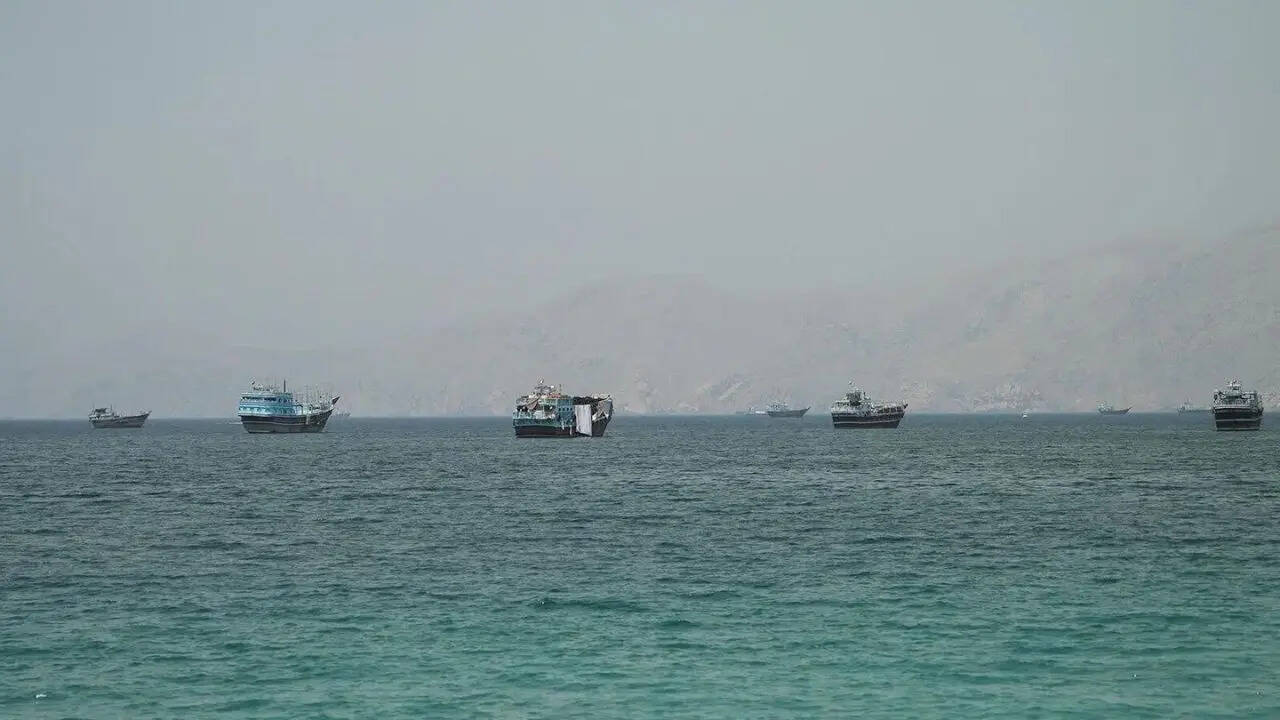
When a supertanker avoids the Suez Canal to circumnavigate the Cape of Good Hope, it adds roughly 10 to 14 days to the voyage. This does not just increase the cost of marine fuel. It effectively traps millions of barrels of crude at sea, removing them from the immediate spot market. For another angle on this story, refer to the recent coverage from NPR.
It is a phantom supply cut. The oil exists, but it cannot be refined or consumed when it is floating off the coast of Africa.
Standard Route (Suez Canal): ~11,500 nautical miles
Cape of Good Hope Route:    ~14,500 nautical miles
Net Delay:                  10–14 Days per transit
This structural delay creates a compounding bottleneck. Refining margins are already tight, and European processors dependent on Middle Eastern crude must pay top dollar to secure prompt deliveries from alternative sources like West Africa or the United States. This triggers a localized bidding war that ripples across global benchmarks, dragging West Texas Intermediate and Brent higher regardless of domestic production levels.
Tehran's Asymmetric Calculus
To understand why this cycle will not stop, one must look at the economic asymmetry of the conflict. The United States deploys multi-million-dollar air defense systems to intercept low-cost, mass-produced drones. This imbalance is mirrored exactly in the energy markets.
Iran does not need to shut down the Strait of Hormuz to win this economic war. A total blockade of the Strait would be a declaration of absolute conflict, inviting an overwhelming kinetic response that Tehran prefers to avoid. Instead, the strategy relies on calibrated friction.
By maintaining a baseline level of threat through proxy forces, Iran forces insurance underwriters to re-evaluate the risk of the entire region.
- War Risk Insurance Premiums: These costs have risen exponentially for vessels traversing the Red Sea.
- Freight Rates: Ship owners demand a premium to send their hulls into contested waters, costs passed directly to the end consumer.
- Vessel Scarcity: Fewer captains are willing to make the run, shrinking the pool of available tonnage and driving shipping rates higher.
This is a highly effective tax on Western economies. While Washington attempts to deter attacks through targeted airstrikes on launch sites, these actions only validate the risk model used by maritime insurers. The strikes prove the area is a active combat zone.
Consequently, every American counter-strike intended to restore deterrence actually cements the higher shipping rates and insurance premiums that keep oil prices elevated.
The Myth of the American Supply Cushion
A common counter-argument among energy economists is that surging non-OPEC production, particularly from American shale basins, will cap any geopolitical rally. This view is dangerously outdated.
American shale is no longer the swing producer it was a decade ago. The era of "drill, baby, drill"—characterized by debt-fueled production growth regardless of capital returns—has been replaced by strict corporate discipline. Shareholders demand dividends and stock buybacks, not expensive exploration campaigns in tier-two acreage.
Public exploration and production companies are actively managing their inventories to prolong the lifespan of their best wells, meaning they cannot—and will not—flood the market to rescue Western consumers from a Middle Eastern supply shock.
Furthermore, the composition of American crude matters. The Permian Basin produces light, sweet crude. Global refining infrastructure, particularly in Europe and Asia, is heavily geared toward processing medium and heavy sour crudes—the exact grades that flow from the Persian Gulf.
You cannot simply swap a barrel of Texas condensate for a barrel of Saudi Arabian Medium without degrading the yield of diesel and aviation fuel. The structural mismatch ensures that a disruption in the Middle East cannot be fully neutralized by drilling more wells in New Mexico.
The Choke Point Vulnerability Matrix
The international energy architecture relies on a handful of geographic bottlenecks. Mainstream analysis treats these choke points as binary—either open or closed. The current crisis demonstrates that partial degradation is far more insidious.
| Choke Point | Daily Oil Flow (Barrels) | Primary Risk Factor | Market Vulnerability |
|---|---|---|---|
| Strait of Hormuz | ~21 Million | Direct state seizure / Mine warfare | Extreme; no viable alternative routes for the volume |
| Bab el-Mandeb | ~8.8 Million | Drone and anti-ship missile strikes | High; forces long detour around Africa |
| Suez Canal | ~9.2 Million (incl. SUMED pipeline) | Transit halts due to southern bottlenecks | Moderate to High; directly impacts European product markets |
If the conflict escalates to include direct attacks on production facilities within the Persian Gulf—similar to the 2019 drone strikes on Saudi Aramco’s Abqaiq processing plant—the conversation shifts from transit delays to structural destruction.
Modern air defense systems are excellent, but they are not impenetrable. A synchronized swarm of low-altitude cruise missiles and loitering munitions can overwhelm localized batteries. The repair time for specialized stabilization columns and gas-oil separation plants is measured in months, if not years, due to long lead times on industrial components.
China's Strategic Arbitrage
While Western economies bear the brunt of rising freight costs and elevated benchmarks, Beijing is exploiting the chaos to fortify its own strategic position. China has consistently imported record amounts of discounted sanctioned crude from Iran and Russia.
This trade bypasses Western banking systems, insurance networks, and standard maritime routes, operating entirely within a shadow fleet ecosystem that is immune to U.S. sanctions or Red Sea security risks.
This creates a dual-tier energy market. Western refineries buy legally compliant, heavily taxed, and logistically burdened crude, while Chinese independent refiners—known as "teapots"—process cheap feedstocks secured via long-term, off-the-books agreements.
This structural advantage lowers China's domestic manufacturing costs, offsetting the broader economic slowdown and leaving Western central banks in a vice. Western policymakers are forced to combat sticky inflation driven by energy inputs, while their primary industrial competitor enjoys an insulated supply chain.
The Inevitable Monetary Collision
Central banks are trapped. The Federal Reserve and the European Central Bank have spent years fighting inflation with aggressive interest rate hikes. Just as they attempt to orchestrate a soft landing, this energy friction threatens to re-ignite consumer price indices.
Energy is the fundamental input for all economic activity. When crude rises, it is not just gasoline at the pump that becomes expensive. Fertilizer production costs tick up, agricultural transport grows pricier, plastic manufacturing demands more capital, and cross-border supply chains adjust their fuel surcharges.
This is supply-side inflation. It cannot be tamed by raising interest rates without causing a severe economic contraction.
If the U.S. and Iran continue this kinetic exchange, the market will eventually stop viewing these incidents as isolated headlines. They will realize that the security umbrella that guaranteed free trade across the global commons for eighty years is fracturing.
When the safety of a trade route is no longer guaranteed by an empire, the price of everything traveling along that route must reprice permanently. The current rally in crude isn't a speculative bubble; it is the market factoring in the costly reality of a fractured world.