Political pundits love a pearl-clutching headline. Whenever a campaign gets caught using hardball tactics, the commentary class acts like someone just invented dirty tricks.
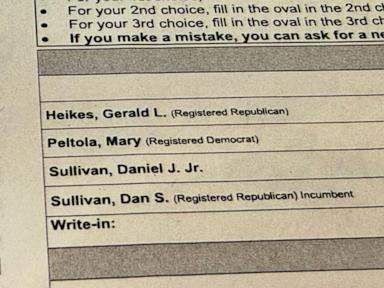
According to political analysts and news reports covering the Alaska U.S. Senate race, the Mary Peltola campaign faced intense criticism following reports that her team recruited a second candidate named Dan Sullivan to run against incumbent Republican Senator Dan Sullivan. Critics framed the move as a cynical, voter-confusing stunt designed to siphon votes away from the sitting senator by exploiting identical names on the ballot.
That reaction is predictable. It is also completely detached from how modern elections actually work.
If you want to understand why this controversy is largely performative outrage, you have to strip away the Sunday-show morality play and look at the mechanics of ballot access, voter behavior, and Alaska's specific electoral rules. The pundits treating this as a fatal moral failing are asking the wrong question. They are asking whether the tactic is polite. The only question that matters in a high-stakes Senate race is whether it is legal, rational, and effective under the rules both sides agreed to play by.
The Lazy Consensus Around Ballot Confusion
The standard media narrative around duplicate-name candidates follows a rigid script. First comes the leak or the investigative report exposing the recruitment effort. Next come the quotes from opposing strategists calling it an insult to the intelligence of voters. Finally, editorial boards chime in to warn that such maneuvers erode public trust in democratic institutions.
Political observers who criticized the Peltola campaign argued that recruiting a second Dan Sullivan undermines the spirit of fair competition and attempts to win through confusion rather than persuasion. From the perspective of traditional good-government advocates, the ballot should be a clean, straightforward test of policy and character, free from decoys.
Here is what that consensus misses.
American political history is packed with strategic candidate recruitment, spoiler operations, and ballot-line manipulation. Both major parties have spent decades funding third-party candidates, encouraging primary challengers to weaken incumbents, and recruiting namesake candidates in tight races from Florida to Illinois. Treating a single campaign as uniquely wicked for using a tactic that sits in every veteran operative's playbook is pure selective amnesia.
More importantly, the outrage relies on a deeply patronizing assumption about Alaska voters—specifically, that they cannot tell the difference between a sitting two-term U.S. Senator and an unheralded newcomer sharing the same name, even when the ballot explicitly provides distinguishing details.
How Alaska's Election System Changes the Math
To evaluate whether a second Dan Sullivan actually moves the needle, you have to look at the specific structure of Alaska elections. Alaska does not use traditional partisan primaries. Under the system approved by voters in 2020, all candidates run on a single open primary ballot, and the top four vote-getters advance to the general election, which is decided by ranked-choice voting.
This structure alters the strategic calculus in three critical ways.
- Primary crowding works differently in a top-four system. In a traditional partisan primary, splitting a candidate's vote by 3 or 4 percent can knock them out of the race entirely. In Alaska's top-four primary, a major incumbent like Senator Dan Sullivan is virtually guaranteed to finish among the top four regardless of how many namesake challengers enter the race. The primary is not a knockout punch for an established incumbent; it is a seeding round.
- Ballot labels eliminate pure anonymity. On an Alaska ballot, candidates are not listed as bare names in a vacuum. Voters see party affiliations or nonpartisan designations right next to the candidate's name. If one Dan Sullivan is listed as a registered Republican and the other is listed as nonpartisan, undeclared, or affiliated with a different party, any voter looking for the Republican incumbent has an immediate visual cue.
- Ranked-choice voting neutralizes accidental spoilers. This is the single biggest flaw in the "vote-siphoning" panic. In a plurality-takes-all election, a voter who accidentally marks the wrong Dan Sullivan has wasted their vote, permanently subtracting one tally from the incumbent's total. Under ranked-choice voting, a voter who ranks one Dan Sullivan first and the other Dan Sullivan second ensures their ballot still transfers to their intended choice once the lower-performing candidate is eliminated.
When commentators claim a namesake candidate automatically steals a decisive bloc of votes in Alaska, they are applying 20th-century plurality math to a 21st-century ranked-choice system.
The Real Reason Campaigns Recruit Spoilers and Decoys
If a second Dan Sullivan is unlikely to knock the incumbent out of the top four or permanently trap ranked-choice ballots, why would any campaign bother recruiting one?
Seasoned campaign operatives know that elections are won at the margins—not just on Election Day, but in the months leading up to it. The value of a decoy or spoiler candidate is rarely about raw ballot confusion. It is about resource allocation and narrative friction.
Think about what happens inside an incumbent's campaign headquarters the moment a namesake candidate files for office.
- Legal and opposition research budgets get diverted. Instead of spending every dollar on voter persuasion and turnout, the incumbent's legal team has to scrutinize filing paperwork, residency requirements, and signature petitions to see if the rival can be knocked off the ballot.
- Paid media requires clarification. Campaign ads can no longer just say "Vote for Dan Sullivan." Creative teams have to adjust messaging to emphasize "Senator Dan Sullivan" or "Republican Dan Sullivan," burning valuable seconds in 30-second television spots to prevent even a fraction of a percent of drop-off.
- Earned media cycles get hijacked. Every news cycle spent debating ballot logistics, filing deadlines, and candidate backgrounds is a news cycle not spent attacking the opposing candidate's voting record or legislative priorities.
In a state where federal races are frequently decided by a few thousand votes, forcing an opponent to spend time, money, and mental bandwidth playing defense on basic name recognition is a calculated tactical play. Campaigns do not make these moves because they think voters are stupid; they make them because they know opponents are risk-averse.
What Critics Get Right—And Where the Strategy Backfires
Acknowledging the tactical logic behind recruiting a namesake candidate does not mean the strategy is free of severe downsides. In fact, the history of political hardball shows that covert recruitment operations often carry a steep price when they come to light.
Supporters of Senator Dan Sullivan and independent political analysts who condemned the reported recruitment pointed to a very real vulnerability: the hypocrisy tax.
Candidates who brand themselves as independent, consensus-building, or above partisan gamesmanship take a direct hit to their brand when linked to behind-the-scenes ballot manipulation. Mary Peltola built her national and statewide appeal largely on an image of pragmatic, Fish-First retail politics that transcended bitter partisan warfare. Reports linking her campaign to a namesake recruitment effort give critics an easy opening to argue that her public persona does not match her private political operations.
There are three distinct risks that make this tactic a double-edged sword:
- Swing-voter alienation. Undecided and independent voters in Alaska—the exact bloc required to win a ranked-choice general election—often harbor deep skepticism toward political insiders. If a tactic smells like a backroom trick, those voters may punish the campaign that orchestrated it far more harshly than any accidental ballot error would ever punish the target.
- Donor and media scrutiny. Once a story breaks about covert candidate recruitment, investigative reporters do not stop at the initial headline. They examine campaign finance disclosures, consulting contracts, and text messages, turning a one-day story into a lingering credibility question.
- Asymmetric motivation. Controversy energizes the opposing base. Republican voters who might have felt complacent about a routine re-election bid suddenly get a visceral talking point about unfair tactics, driving up enthusiasm and fundraising for the incumbent.
Answering the Questions Voters Actually Ask
When stories like this dominate local headlines, voters naturally start asking practical questions about how their ballots work and what the rules actually allow. Cutting through the partisan spin requires blunt, accurate answers.
Is it illegal to recruit someone with the same name to run for office?
No. Under federal and state election laws, any individual who meets the constitutional and statutory qualifications for office—age, citizenship, and state residency—has the legal right to run. Encouraging someone to run, or helping them navigate filing requirements, is protected political speech and organizing unless it involves illegal campaign finance coordination, bribery, or fraudulent petition signatures.
Can a second Dan Sullivan actually win or force a runoff?
Winning a U.S. Senate seat without major party infrastructure, fundraising, or name recognition is virtually impossible. In Alaska's top-four primary system, the realistic ceiling for an unheralded namesake candidate is finishing far behind the major contenders, well short of advancing to the general election.
Does this mean ranked-choice voting is broken?
Critics of Alaska's voting system frequently point to crowded primaries and unusual candidate filings as proof that the system invites chaos. Supporters counter that ranked-choice voting actually protects voters better than traditional systems because it prevents a minor candidate from acting as a permanent spoiler. Both arguments miss the bigger picture: tactical candidate recruitment predates ranked-choice voting by more than a century and occurs in every type of electoral system across the United States.
The Rules of Modern Political Warfare
There is an unspoken rule in American politics that everyone follows in private and denies in public: campaigns will push right up to the legal boundary of every election statute on the books.
When operatives draw congressional districts to lock in safe seats, they call it redistricting. When they fund attack ads through opaque nonprofit groups, they call it issue advocacy. When they challenge thousands of mail-in ballots over minor signature discrepancies, they call it election integrity. And when they recruit a candidate who shares an opponent's name, they call it expanding voter choice.
The language changes depending on which side benefits, yet the underlying reality never shifts. Campaigns are not civic education seminars. They are zero-sum competitions for power operating inside a strict legal framework.
If lawmakers and voters genuinely want to eliminate namesake candidates, phantom challengers, or strategic spoilers, moralizing in newspaper columns will accomplish nothing. You change the behavior by changing the rules—raising signature thresholds for ballot access, requiring longer residency periods before filing, or adding mandatory biographical identifiers like current occupation directly onto the ballot.
Until those rules change, campaigns will continue to exploit every inch of terrain the law leaves open. Pundits can spend all week debating whether recruiting a second Dan Sullivan was beneath the dignity of the Senate race. Meanwhile, the people actually running campaigns are already looking at the next filing deadline, checking the voter rolls, and asking what else the rulebook allows.