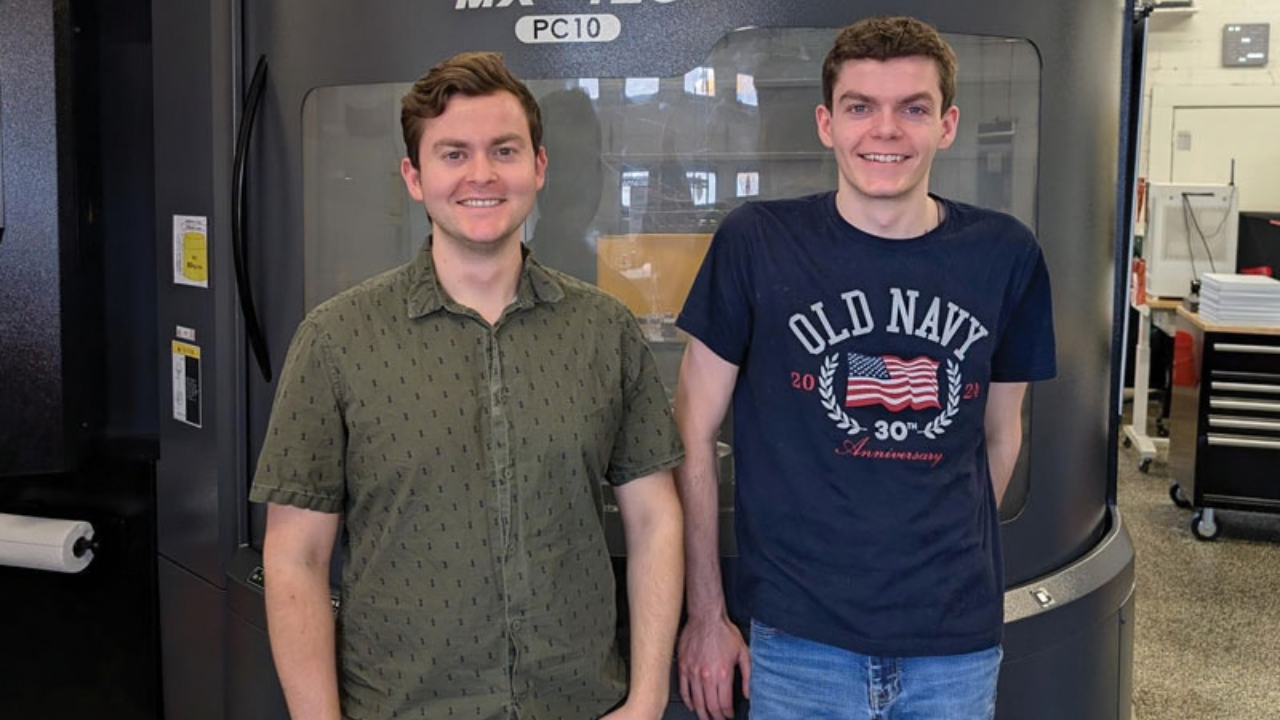
Grease smells like home when you are twelve. It is thick, metallic, and clings to your skin long after the sun goes down and the overhead fluorescent bulb starts to hum its tired tune.
In a modest suburban garage in New York, two brothers spent their evenings breathing that smell. They were not building treehouses. They were wrestling with scrap metal, discarded motors, and a relentless curiosity that refused to let them sleep. The air was cold, the concrete floor bit into their knees through thin jeans, and the machine before them looked less like a technological marvel and more like a pile of junk waiting to collapse.
Yet, that pile of junk was alive.
The Hum of the Spindle
Most people see a finished product in a store window and think of magic. They see the sleek curve of aerospace aluminum or the precise geometry of a custom medical implant and assume it arrived fully formed, whispered into existence by a designer in a sunlit office.
They do not see the sawdust. They do not hear the screech of a carbide bit biting into steel at ten thousand revolutions per minute.
The brothers—let us call them Mark and David, because brothers always have names like that, rooted in ordinary soil—did not start with venture capital or a sleek patent attorney. They started with an itch. They needed a part for a personal project, something small, a bracket that held a custom gear in place. When they looked at the market price for custom computer numerical control machining, the numbers made them wince. Industry gatekeepers wanted small fortunes for single runs.
So, they looked at each other, looked at the empty corner of the garage, and decided to build their own.
It sounds romantic in retrospect. It was not. It was freezing, frustrating, and filled with the acrid stench of burned stepper motor wires. The first iteration of their machine shook so violently during its maiden test run that it walked right across the workbench and crashed onto the cement.
They did not quit. They bolted it down.
Bridging the Gap
To understand what happened next, you have to understand the invisible wall that separates invention from production.
For decades, turning a digital blueprint into a physical object was a walled garden. You needed massive industrial floors, three-phase power, and machinery that cost as much as a suburban home. If you were a hobbyist with a brilliant idea, or a small business owner trying to prototype a better bicycle pedal, you hit a brick wall. You mailed your files to a faceless machine shop three states over, waited three weeks, and hoped they interpreted your tolerances correctly.
The brothers realized that the bottleneck was not technology. The bottleneck was accessibility.
They tore down the traditional model by treating precision not as an exclusive luxury, but as a basic utility. By stripping away unnecessary industrial bloat and focusing on raw engineering integrity, they engineered a compact, high-performance system that could live in a modest workshop without tripping circuit breakers or requiring an engineering degree to calibrate.
Imagine standing in front of a block of solid aluminum. You press a button. A tiny, diamond-coated finger screams to life, descending with terrifying speed. It does not smash or mold; it carves. Shavings curl away like silver ribbons, falling in a soft, rhythmic clatter. Within minutes, a form emerges from the chaos.
That is what the brothers built into a box.
Beyond the Garage Door
Word travels fast in communities that live on forums and late-night YouTube rabbit holes. First, it was local fabricators who dropped by to see the rattling machine in the driveway. Then came small-scale inventors, robotics clubs from nearby high schools, and eventually, aerospace contractors looking for rapid prototyping solutions.
The garage had to go.
They moved into a modest industrial park with actual heating and a loading dock that didn't flood when it rained. But the spirit remained stubborn. They refused outside capital for years, keeping their hands dirty, answering support calls themselves, debugging control boards at two in the morning.
When you ask them about their growth now, they do not talk about revenue milestones or supply chain optimization. They talk about a kid in Ohio who used their machine to build an affordable prosthetic hand. They talk about a retired carpenter who launched a bespoke furniture hardware line out of a spare bedroom.
Technology only matters when it extends the reach of human hands.
The Metric of Grit
We live in an era obsessed with overnight sensations, software apps that scale to millions of users in a weekend, and digital abstractions that vanish if the Wi-Fi drops.
This company is the antidote to that fleeting noise. It is heavy. It is grounded in metallurgy, physics, and the stubborn refusal to accept that manufacturing should be reserved for conglomerates.
The brothers still keep a piece of that very first, violent, garage-built prototype on a shelf near the front entrance of their headquarters. It is dented, scorched around the control panel, and held together by zip ties and sheer stubbornness.
Every new engineer they hire has to stand in front of it on their first day. Nobody has to explain what it means. You can hear it in the silence of the room, broken only by the distant, steady rhythm of a hundred machines running tests in the facility, doing the work, one precise cut at a time.