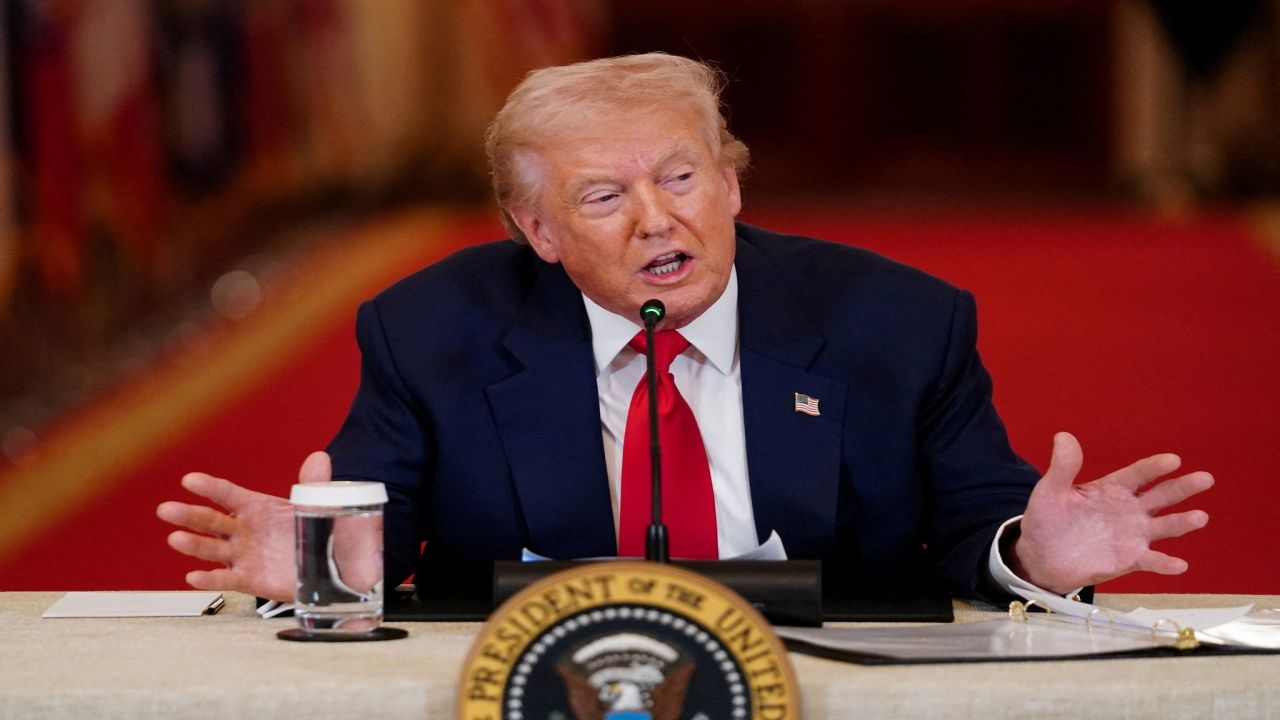
The intersection of populist branding and maritime choke-point diplomacy represents a fundamental shift in how state actors signal territorial intent and strategic hegemony. When a head of state colloquially renames a vital global artery—such as the Strait of Hormuz—after themselves, the action is rarely a mere rhetorical flourish. It functions as a high-stakes deployment of "sovereignty theater." This maneuver attempts to map domestic political identity onto international commons, creating a psychological ownership stake in a region where legal jurisdiction is strictly governed by the United Nations Convention on the Law of the Sea (UNCLOS).
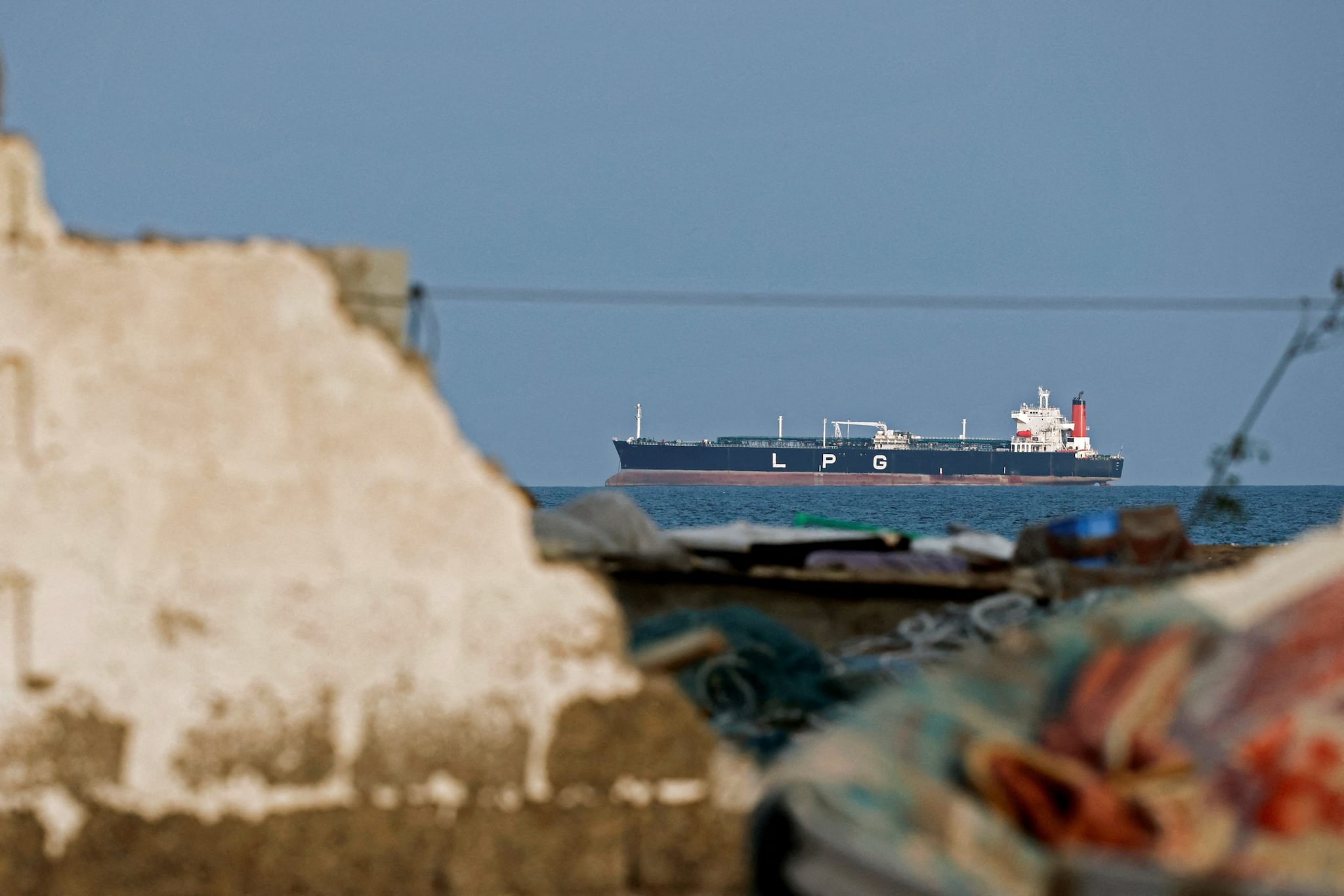
To understand the gravity of such rhetoric, one must first quantify the criticality of the Strait of Hormuz. It is the world’s most significant oil transit point, a 21-mile-wide passage at its narrowest, through which approximately 20% of the world's total petroleum liquids and nearly 25% of global liquefied natural gas (LNG) pass daily. The "Strait of Trump" nomenclature, while framed as a joke, signals a departure from the traditional U.S. role as a neutral guarantor of the "freedom of navigation" toward a model of "transactional protectionism."
The Three Pillars of Navigational Hegemony
The stability of the Strait depends on a delicate equilibrium between three distinct but overlapping forces. Any disruption to these pillars shifts the cost-benefit analysis for global energy markets.
- Legal Continuity (UNCLOS compliance): Even though the United States is not a formal party to UNCLOS, it adheres to its customary international law principles. The Strait consists of territorial waters belonging to Iran and Oman. Under international law, all vessels enjoy the right of "transit passage." Personalized branding of the waterway suggests a shift toward a "might-makes-right" jurisdictional claim, which undermines the legal shield used by commercial shipping to navigate these waters without interference.
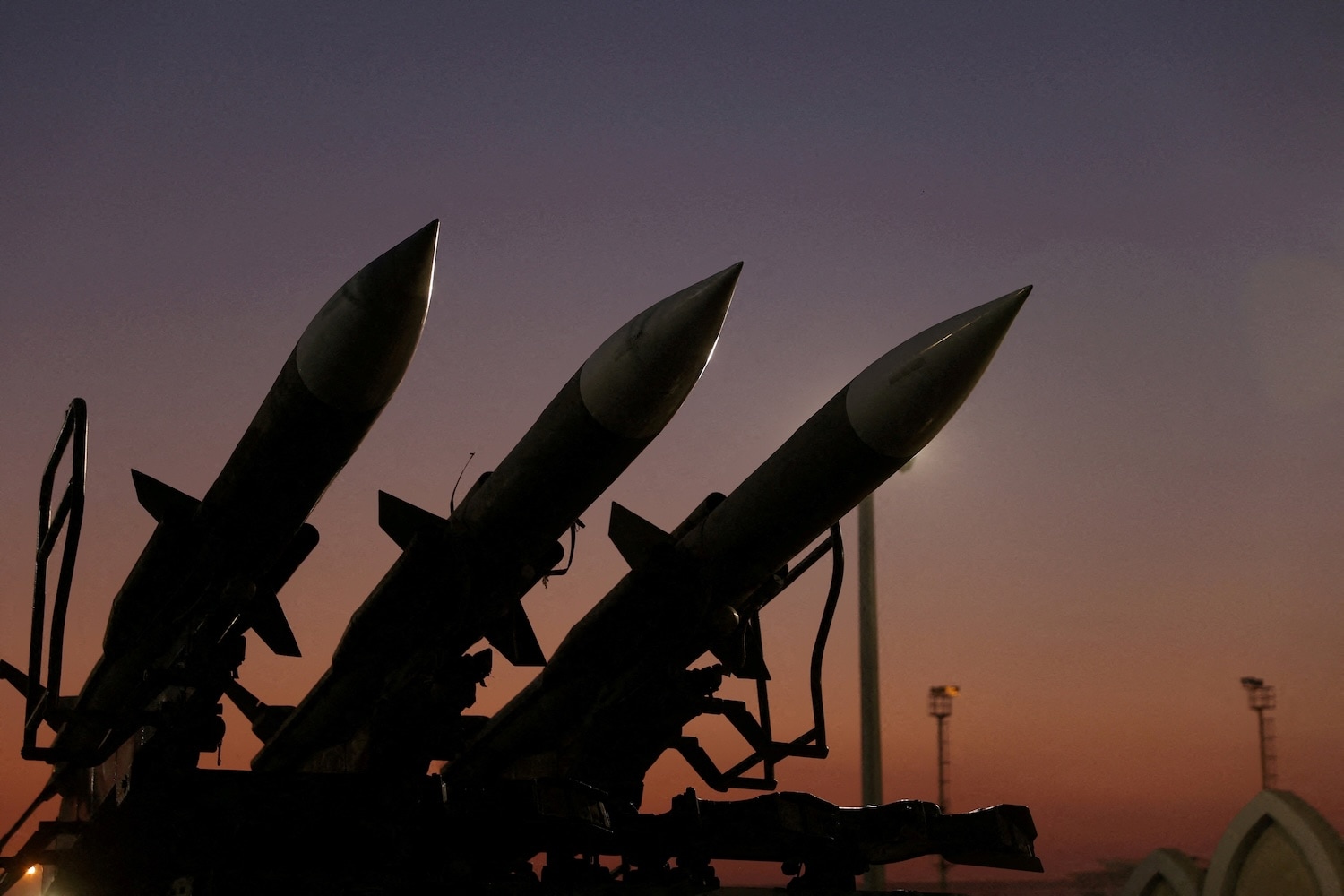
- Military Deterrence (The Fifth Fleet): The U.S. Navy’s presence in Bahrain serves as the kinetic backbone of the region. Deterrence relies on the predictability of response. When the mission profile shifts from "protecting international norms" to "protecting the leader's brand," the risk of miscalculation by adversarial actors like the Islamic Revolutionary Guard Corps (IRGC) increases.
- Market Psychographics: Oil prices reflect not just supply and demand, but the "risk premium" associated with geopolitical stability. Rhetoric that implies the Strait is a personal or partisan asset injects volatility into the Brent and WTI indices. Traders price in the unpredictability of a leader who views a global choke point as a domestic campaign asset.
The Cost Function of Rhetorical Escalation
The transition from institutional diplomacy to personalized branding creates a specific set of negative externalities. We can define the "Cost of Rhetorical Friction" as the sum of increased insurance premiums, naval escort requirements, and diplomatic repair.
- Insurance Risk Premiums: Commercial vessels operating in the Persian Gulf are subject to War Risk Insurance. When a U.S. President claims a personal stake in the waterway, Lloyd’s of London and other underwriters must account for the increased probability of a "tit-for-tat" seizure. Iran has historically used ship seizures as a response to U.S. sanctions or perceived provocations. Personalized rhetoric provides a symbolic target for such asymmetrical responses.
- Operational Strain: If the U.S. posture shifts toward a transactional "pay-to-play" model (implied by the "Strait of Trump" branding), the burden of maritime security shifts. If the U.S. suggests it will only protect the Strait on its own terms, allied nations (the UK, Japan, South Korea) are forced to accelerate independent naval deployments. This fragments the unified command structure of the International Maritime Security Construct (IMSC).
Mapping the Strategic Miscalculation
The competitor’s view of this event focuses on the humor or the audacity of the statement. A structural analysis reveals a deeper erosion of "Soft Power Liquidity." Soft power is the ability to obtain preferred outcomes through attraction rather than coercion. By rebranding the Strait, the administration converts a universal global good (freedom of navigation) into a proprietary political product.
This creates a bottleneck in diplomatic signaling. If every action taken to secure the Strait is perceived as an extension of a personal brand rather than a national security imperative, it becomes impossible for the U.S. to build a broad-based international coalition during an actual crisis. Neutral actors—such as India or China—are less likely to support U.S.-led initiatives in the region if those initiatives are framed through the lens of individual ego rather than collective security.
Asymmetrical Response Vectors
The IRGC (Islamic Revolutionary Guard Corps) utilizes a doctrine of "closeness" and "swarming." They do not need to match the U.S. in tonnage; they only need to disrupt the flow of commerce. The rebranding of the Strait provides Tehran with a propaganda victory. They can frame their presence not as an obstruction of international law, but as a resistance to "American personalization" of regional waters.
- Kinetic signaling: Small boat harassment of commercial tankers.
- Cyber-maritime interference: Spoofing AIS (Automatic Identification System) data to lead ships into disputed territorial waters.
- Mine warfare: The deployment of "limpet mines" which are difficult to attribute but highly effective at raising insurance costs.
The use of the name "Trump" in this context acts as a catalyst for these vectors. It simplifies the adversary's narrative, allowing them to target a specific persona rather than the complex apparatus of the American state.
Structural Recommendation for Stakeholders
Energy firms and maritime logistics operators must de-risk their exposure to this rhetorical volatility. The "Strait of Trump" comment is a leading indicator of a more volatile, less predictable Gulf security environment.
- Diversification of Transit: Accelerate the utilization of pipelines that bypass the Strait, such as the Habshan–Fujairah pipeline in the UAE and the East-West Pipeline in Saudi Arabia. While these cannot currently handle the total volume of the Strait, they provide a vital "release valve" for critical supply.
- Legal Decoupling: Shipping firms should ensure that their charter-party agreements include specific "rhetorical escalation" clauses that allow for route changes without breach of contract when high-level political signaling increases the risk of vessel seizure.
- Independent Security Audits: Relying solely on U.S. Navy "assurance" is no longer a sufficient risk management strategy. Firms must integrate private maritime security and enhanced electronic counter-measures to mitigate the "visibility" created by political grandstanding.
The strategic play is to treat the Strait of Hormuz as a contested brand environment. The nominal change signals that the U.S. may no longer view the "global commons" as a static obligation. Analysts must prepare for a future where maritime security is fragmented, transactional, and increasingly tied to the personal whims of populist leaders. This requires a shift from a "Defense-Centric" model to a "Resilience-Centric" model, where the objective is not to stop the rhetoric, but to insulate the supply chain from its inevitable consequences.