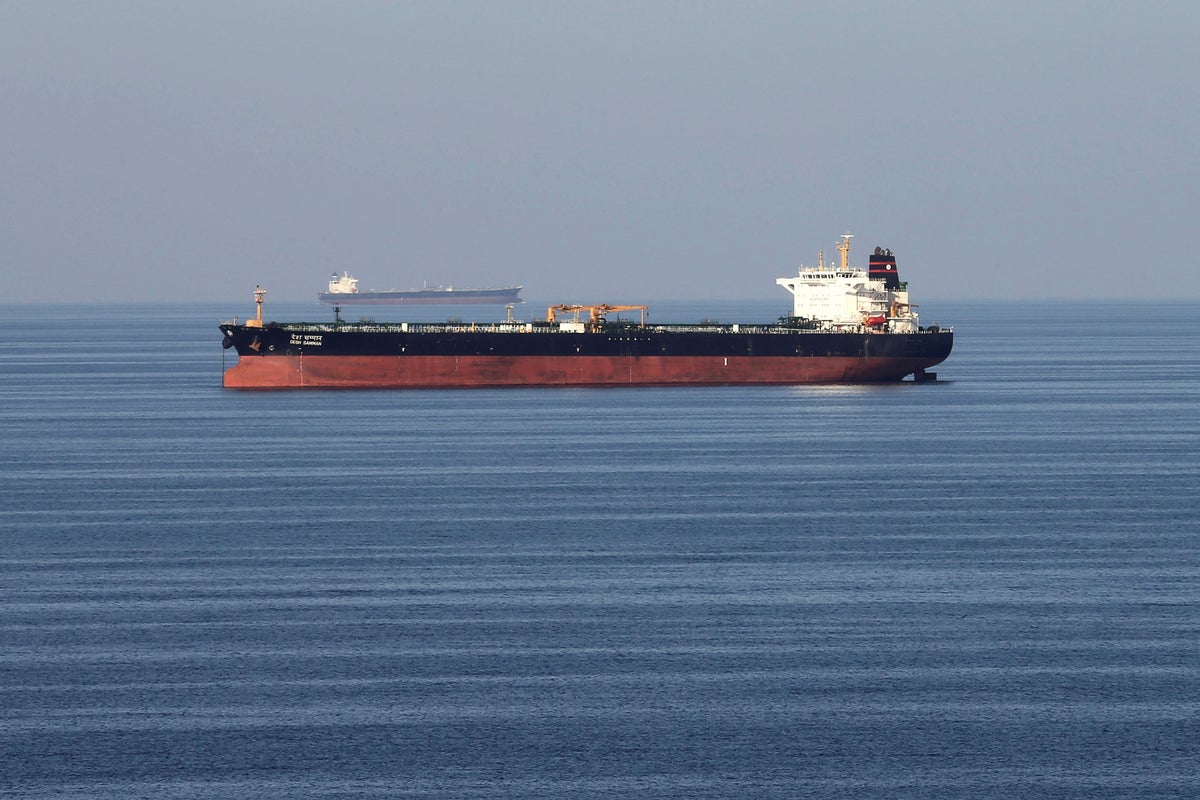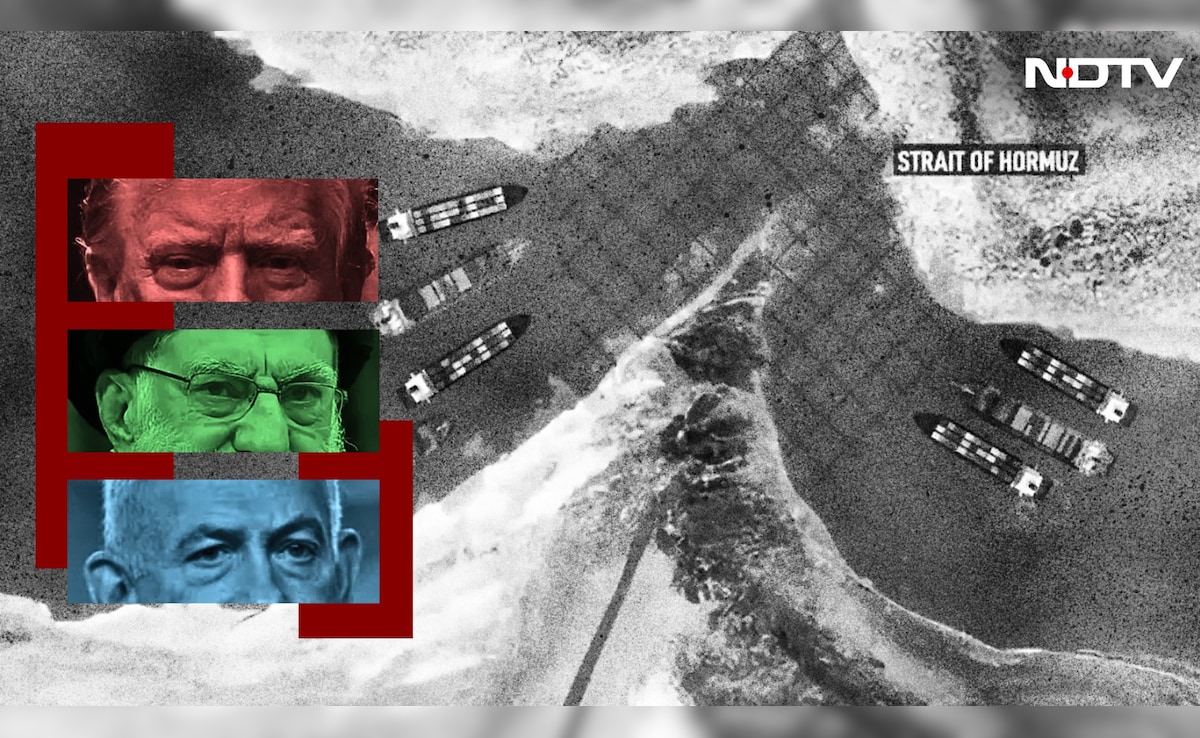
The Strait of Hormuz is frequently analyzed through the lens of naval tonnage and missile batteries, yet the true mechanism of its paralysis exists within the administrative offices of the Lloyd’s Market Association (LMA) in London. Global energy security is not maintained by the presence of a carrier strike group alone; it is maintained by the actuarial willingness of roughly twelve individuals to underwrite risk. When the Joint War Committee (JWC) designates a geographic area as a Listed Area, they effectively terminate the standard insurance coverage for every commercial vessel entering that zone. This creates an immediate, binary choice for shipowners: pay a prohibitive Additional Premium (AP) or cease operations. The "phone call" often cited in geopolitical commentary is the execution phase of a sophisticated risk-assessment architecture that converts political volatility into an unmanageable cost of capital.
The Tripartite Architecture of Maritime Risk
To understand how a small group of insurers can freeze 21 million barrels of oil per day, one must deconstruct the maritime insurance stack. Coverage is not a monolithic product but a layered defense of capital.
- Protection and Indemnity (P&I) Clubs: Mutual insurance associations that provide cover for third-party liabilities, such as environmental disasters and loss of life. These clubs are the backbone of the industry, but they operate on a non-profit basis and are highly sensitive to systemic shocks.
- Hull and Machinery (H&M): This covers the physical asset—the ship itself. In a conflict zone, the H&M policy usually includes a War Risks clause, which is the specific lever used to paralyze a strait.
- The Joint War Committee (JWC): Comprising representatives from both the Lloyd's and International Underwriting Association (IUA) company markets, the JWC does not set prices. Instead, it defines the boundaries of risk. By updating the "Hull War, Piracy, Terrorism and Related Perils Listed Areas," they signal to the global market that standard annual policies are no longer valid within those coordinates.
The Mechanism of the Listed Area Designation
When the JWC adds the Persian Gulf or the Strait of Hormuz to the Listed Area, they trigger a "7-day notice of cancellation" clause present in almost all H&M policies. This is the kinetic moment of the "phone call." After seven days, the shipowner has no insurance for war risks unless they negotiate a specific Additional Premium for a specific voyage.
The impact of this designation follows a predictable economic decay curve:
- T+0 to T+7 Days: Massive uncertainty. Charterers scramble to determine who bears the cost of the impending AP. Freight rates begin to "risk-adjust" upward before the actual cost is even known.
- T+8 Days: The AP becomes a mandatory line item. For a Very Large Crude Carrier (VLCC) valued at $100 million, a 0.5% AP translates to $500,000 for a single seven-day transit.
- The Breaking Point: If the AP climbs to 1% or 2% of the hull value, the voyage becomes economically non-viable for marginal players. The "paralysis" occurs when the cost of insuring the asset exceeds the profit margin of the cargo.
The Calculus of Actuarial Deterrence
Insurers do not need to sink a ship to stop it. They only need to make the probability of loss impossible to price. The JWC operates on a "Probable Maximum Loss" (PML) framework. If a state actor demonstrates the intent and capability to seize or damage vessels—as seen in the 2019 attacks on the Front Altair and Kokuka Courageous—the PML shifts from a manageable statistical outlier to a systemic threat.
The paralysis of Hormuz via London is a demonstration of Financial Kineticism. By altering the cost of insurance, the JWC effectively imposes a blockade without firing a shot. This is not a "conspiracy" of insurers; it is the logical outcome of a market that must remain solvent. If an insurer cannot quantify the risk of a limpet mine or a drone strike, they will simply withdraw capacity. When capacity vanishes, the global supply chain halts.
The Fragility of the "Shadow Fleet" and Insurance Sanctions
A critical counter-move in this geopolitical chess match is the emergence of the "shadow fleet"—vessels operating with non-Western insurance or sovereign guarantees. This creates a two-tiered maritime economy:
- The Compliant Fleet: Adheres to JWC designations, pays APs, and is subject to Western sanctions regimes. This fleet is the primary driver of global price stability.
- The Non-Aligned Fleet: Uses Russian, Iranian, or Chinese "alternative" insurance. These entities lack the deep reinsurance pools of the London market.
The bottleneck here is not just the initial insurance but reinsurance. Even an Iranian insurer needs to offload risk to a larger pool. Because the global reinsurance market is heavily concentrated in London, Zurich, and Munich, the reach of the JWC and Western regulators extends far beyond the vessels flying Western flags. If the "phone call" from London includes a directive that no reinsurer can touch a specific class of risk, the entire "alternative" insurance structure begins to crack under the weight of its own potential liabilities.
Structural Vulnerabilities in Global Energy Transit
The Strait of Hormuz is uniquely vulnerable to this insurance-driven paralysis due to three physical and economic factors:
- Bathymetry and Maneuverability: The shipping lanes are narrow (two miles wide in each direction). A single incident involving a VLCC creates a "blocked artery" effect that elevates the risk profile for every subsequent vessel.
- Absence of Redundancy: Unlike the Red Sea, which has the Suez Canal (itself a chokepoint but with different dynamics), the Persian Gulf has limited pipeline alternatives. The East-West Pipeline across Saudi Arabia can only handle a fraction of the total daily volume.
- Concentration of Value: A single VLCC carries roughly 2 million barrels of oil. At $80 per barrel, the cargo value is $160 million. Add a $100 million hull, and a single incident represents a quarter-billion-dollar loss. Insurers are managing a high-consequence, low-frequency risk environment where one bad day can wipe out years of premiums.
The Shift from Actuarial to Geopolitical Actor
The JWC technically exists to serve the market, but its decisions have the weight of sovereign policy. When the committee meets, they are reviewing intelligence reports that often mirror those seen by the Pentagon or the MoD.
The "phone call" is actually a transmission of a Risk Premium Shift. By the time the call is made, the logic is already baked into the market. The paralysis is the market's way of saying that the geopolitical "noise" has reached a decibel level that drowns out the signal of profit.
Insurers are the ultimate arbiters of what is "normal." By declaring the Strait of Hormuz "abnormal," they recalibrate the global economy's baseline. This power is more effective than a naval blockade because it is self-enforcing. A navy must physically stop a ship; an insurer simply makes the ship's owner stop themselves.
Strategic Recommendations for State and Corporate Actors
For nations dependent on the Strait, the reliance on London-based insurance is a strategic liability. To mitigate the risk of insurance-driven paralysis, three shifts are necessary:
- Sovereign Indemnity Pools: Governments must develop the legal and financial framework to provide state-backed insurance guarantees that bypass the London market during periods of extreme JWC-listed volatility.
- Vertical Integration of Risk: Energy majors should move toward self-insurance models for their own fleets, though this requires massive capital reserves that few besides the "supermajors" can maintain.
- Real-Time Risk Telemetry: The gap between a kinetic event (a drone strike) and the JWC's reaction (the listing) is where the most money is lost. Utilizing AI-driven maritime domain awareness to provide insurers with better data may prevent the "blanket" paralysis that occurs when the JWC lacks granular information.
The next time tensions rise in the Gulf, do not look to the horizon for warships. Look to the Lloyd’s List and the circulars from the Joint War Committee. The true gatekeepers of the Strait are not wearing uniforms; they are wearing suits, and they are looking at a spreadsheet.