The salt on my tongue tasted wrong before the sirens even started.
It was late August, a Tuesday that smelled like wet asphalt and scorching cedar, and I was standing on a wooden porch three hundred yards from a coastline that had been retreating half an inch a year since my father was a boy. The air felt thick. Not the pleasant, heavy warmth of a summer evening where fireflies blink over cut grass, but a suffocating, pressurized heat that refused to leave when the sun went down. My shirt stuck to my ribs. Across the street, a neighbor was taping cardboard over his ground-floor windows—a pathetic, desperate gesture against a storm surge that meteorologists had spent all afternoon screaming about on local radio.
That is the thing nobody tells you about living inside a statistical anomaly. It does not feel like a graph. It does not feel like parts per million, or radiative forcing, or an annual bulletin released from a sleek glass building in Geneva. It feels like sweat pooling in the small of your back at midnight while you listen to the ocean chew away at the dunes.
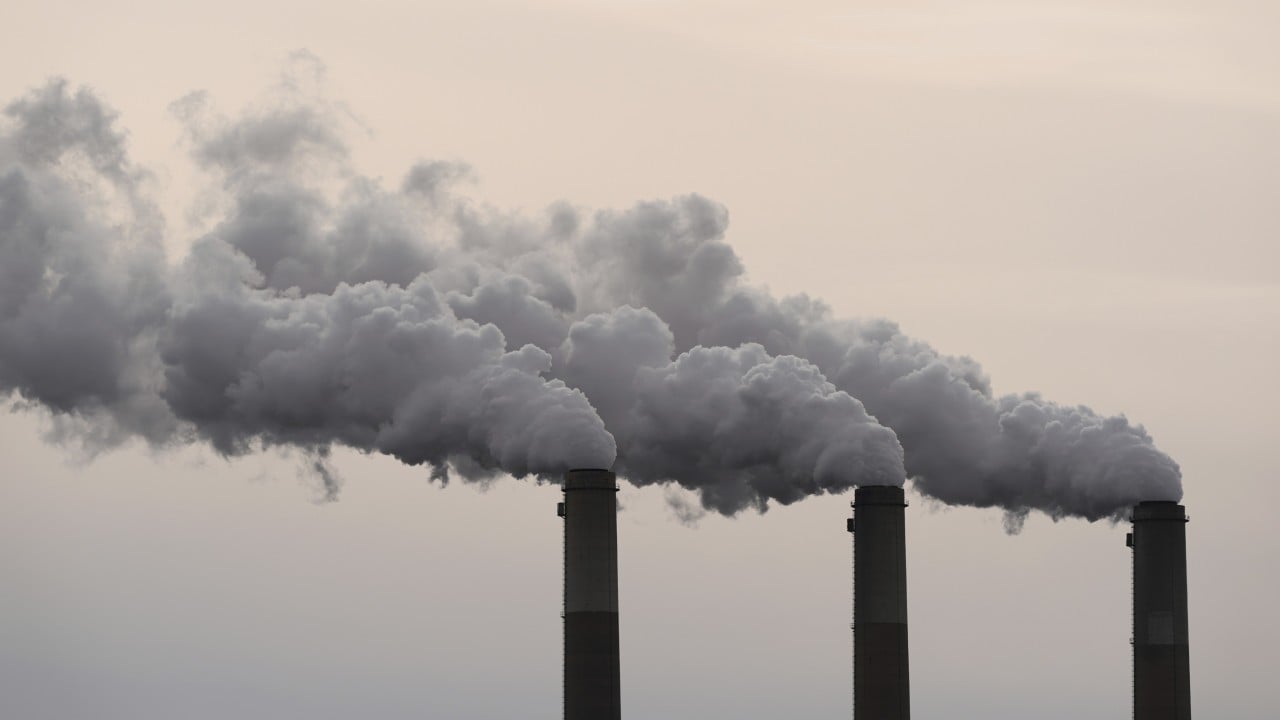
A few months later, the World Meteorological Organization—the United Nations' weather and climate agency—published its annual Greenhouse Gas Bulletin. The headlines were dry, clinical, and almost universally ignored by people rushing to make school drop-offs or beat morning traffic. Greenhouse gas levels hit record highs, climate impact will last centuries. We have read that headline a dozen times in a dozen variations. Our eyes slide right over it. The numbers are too big, the timelines too vast, and the language so sanitized by diplomatic caution that it practically begs you to yawn and scroll past to a story about a celebrity divorce or a fluctuating stock index.
Wait. Stop scrolling.
Because buried beneath that bureaucratic prose is the single most consequential physical reality human beings have ever engineered—a thermal debt we have quietly signed over to people who have not even been born yet.
The Invisible Ceiling Above Your Roof
To understand what those UN scientists actually found, you have to stop thinking of the sky as an infinite blue void. It isn't. Relative to the size of the Earth, our atmosphere is thinner than the skin on an apple.
Consider a hypothetical family—let’s call them the Millers—living in a three-bedroom house in Ohio in the year 1958. That was the year a scientist named Charles David Keeling began measuring carbon dioxide at the Mauna Loa Observatory in Hawaii. Back then, the concentration of carbon dioxide in the air was roughly 315 parts per million. For every million molecules of air the Millers breathed in while grilling burgers in their backyard, 315 were carbon dioxide. The planet was comfortable. Seasons arrived roughly on schedule. Farmers knew when to plant corn, and coastal towns knew where the high-tide line belonged.
Now, picture the Millers' granddaughter, Maya, standing in that exact same backyard today. She is thirty-four, pushing a stroller over grass that has turned brown two weeks earlier than it used to. When she breathes in, that number is no longer 315. According to the latest World Meteorological Organization data, global average carbon dioxide concentrations have surged past 420 parts per million—more than 150 percent of pre-industrial levels. We have not seen this much carbon in the air since the Pliocene Epoch, roughly three to five million years ago, when global temperatures were two to three degrees Celsius warmer and sea levels were ten to twenty meters higher than they are today.
Let that sink in. Ten to twenty meters. That is not a damp basement. That is the erasure of Miami, Shanghai, Mumbai, and Amsterdam.
How does a trace gas—something you cannot see, smell, or hold in your hand—hold enough power to drown entire civilizations? Think of the atmosphere like a wool blanket thrown over a sleeping child. A thin blanket keeps the child warm by trapping a fraction of their body heat while letting the rest escape into the cool room. Carbon dioxide, methane, and nitrous oxide are the threads in that blanket. For ten thousand years of human agriculture and city-building, the blanket stayed the exact same thickness. Then, over the course of roughly two centuries, we began burning coal, oil, and natural gas at an industrial scale, weaving layer after layer of heavy wool onto the bed.
Heat from the sun still passes down through the blanket easily enough, warming the oceans and the soil. Yet when the Earth tries to radiate that heat back out into space at night, those extra greenhouse gas molecules snag the infrared energy and bounce it right back down toward your roof.
We haven't turned up the sun. We have simply prevented the Earth from cooling down.
Why Methane and Nitrous Oxide Are Quietly Accelerating the Clock
Everyone talks about carbon dioxide because it is the heavy lifter, responsible for roughly two-thirds of the warming effect caused by long-lived greenhouse gases. Yet focusing solely on carbon dioxide is like watching a boxer's left jab while ignoring the right hook coming straight for your jaw.
The UN report tracks three primary culprits, and the other two are terrifying in entirely different ways:
- Methane ($CH_4$): It stays in the atmosphere for only about a decade, compared to centuries for carbon dioxide. However, molecule for molecule, methane is roughly eighty times more potent at trapping heat over a twenty-year period. Concentrations have skyrocketed to more than 260 percent of pre-industrial levels, driven by leaking natural gas pipelines, livestock agriculture, landfills, and—most ominously—thawing permafrost in the Arctic.
- Nitrous Oxide ($N_2O$): Often forgotten in public debate, this gas is nearly three hundred times more powerful than carbon dioxide at warming the planet and lingers for more than a century. It pours out of heavily fertilized farm fields and industrial processes, steadily eating away at the ozone layer while cranking up the global thermostat.
Here is where the science stops being neat and starts keeping researchers awake at 3:00 AM.
For decades, the Earth has been saving us from our own worst habits. Roughly half of all the carbon dioxide humanity emits does not stay in the air. About a quarter is absorbed by the oceans, and another quarter is soaked up by forests, grasslands, and soil. Nature has been acting as a massive, unpaid janitor, sweeping up half our mess every single year.
We are pushing that janitor to the point of collapse.
As ocean waters warm, they lose their physical ability to dissolve gas—just like a warm can of soda goes flat faster than an ice-cold one. Simultaneously, severe droughts and historic wildfires across the Amazon, Canada, and Siberia are turning ancient forests from carbon sponges into carbon smokestacks. When a forest burns, centuries of stored carbon rush back into the sky in a matter of days. Scientists call this a positive feedback loop, though there is nothing positive about it. It is a vicious cycle where warming triggers natural responses that cause even more warming, entirely independent of whether humans buy electric cars or shut down coal plants.
I remember talking to a forestry researcher in British Columbia two summers after a series of catastrophic blazes turned millions of acres of spruce and pine into blackened matchsticks. His boots were still grey with ash. He told me that the hardest part wasn't watching the trees burn; it was walking through the soil afterward and realizing the dirt itself had baked into a sterile, water-repellent crust. Nothing was growing back. The sponge was broken.
The Math of Centuries
People often ask a fair, hopeful question: If we stopped burning all fossil fuels tomorrow morning—every car parked, every power plant switched off, every airplane grounded—would the weather go back to normal by next summer?
No.
Not even close.
This is the hardest truth to swallow, and the exact reason the United Nations warned that our current climate impact will last for centuries. Carbon dioxide does not evaporate like rain or settle to the ground like dust. Once a molecule of $CO_2$ enters the upper atmosphere, it stays there, trapping heat, for anywhere from three hundred to one thousand years.
Imagine filling a bathtub with the drain plugged. Even if you turn the faucet down from a roaring torrent to a slow drip, the water level in the tub keeps rising. To stop the water from overflowing onto the bathroom floor, you cannot merely reduce the flow; you have to turn the faucet completely off. And even after the faucet is dry, the tub remains full until you find a way to pull the plug.
Right now, humanity hasn't even turned down the faucet. We are still opening the valve wider every year.
Because of this chemical permanence, the heat we feel today is not even the full bill for the emissions we are releasing right now. The oceans are massive thermal batteries, absorbing over ninety percent of the excess heat trapped by greenhouse gases. Water takes a long time to warm up, which means there is a built-in lag—a decades-long delay between the moment we pump carbon into the sky and the moment the planet reaches its new, hotter equilibrium. We are currently living through the weather consequences of emissions from the 1990s. The carbon you burned on your commute this morning will be warming the oceans when your great-great-grandchildren are learning to walk.
I used to find that fact paralyzing. Honestly, there were nights when reading atmospheric data felt like sitting in the passenger seat of a car hurtling toward a concrete wall while the driver argued about whether seatbelts were bad for the economy. It is completely rational to feel overwhelmed, angry, or tempted to tune the whole thing out. Denial is an anaesthetic, and the pain is real.
Why Every Tenth of a Degree Still Fights for a Life
Yet fatalism is just another form of surrender, and the physics actually argues against giving up.
While we cannot erase the carbon already sitting above us without monumental technological intervention, we hold total control over how much more we add. Climate change is not a cliff where the world is fine at 1.4 degrees of warming and explodes at 1.5 degrees. It is a dimmer switch. Every tenth of a degree we prevent translates directly into concrete, measurable human survival.
Consider what happens next when we look at the difference between 1.5 degrees Celsius of warming and 2.5 degrees. At 1.5 degrees, roughly fourteen percent of the world's population will be exposed to severe heatwaves at least once every five years. At 2.5 degrees, that number jumps to more than a third of humanity. At the lower threshold, some coral reefs survive to seed future oceans; at the higher threshold, virtually all of them bleach and die, stripping hundreds of millions of coastal residents of their primary protein source and natural storm barriers.
We are not helpless passengers. We are the engineers holding the blueprints.
Over the past decade, the economics of energy have quietly flipped on their head. Solar power is now the cheapest electricity in human history in most parts of the world. Battery storage costs have plummeted by nearly ninety percent in fifteen years, dismantling the old complaint that renewable energy fails when the sun sets or the wind stops blowing. From massive offshore wind farms in the North Sea to community microgrids in rural India, the replacement of the fossil fuel engine is no longer a utopian fantasy—it is an industrial reality moving faster than any energy transition on record.
Still, technology alone will not pull us out of the fire. The chemistry of the atmosphere does not negotiate with political compromises, accounting tricks, or corporate pledges set for thirty years in the future. Physics only counts tons of carbon kept underground.
Which brings us back to that wooden porch by the water, and the choices sitting directly in front of us today:
- Demand immediate cuts at the source: Energy policy, utility regulations, and industrial subsidies matter infinitely more than individual guilt over plastic straws. Supporting aggressive grid decarbonization and methane leak crackdowns slashes emissions at a scale personal lifestyle tweaks never can.
- Protect the living sponges: Halting deforestation and restoring wetlands, mangroves, and peatlands keeps billions of tons of carbon locked safely in the dirt where it belongs.
- Build for the weather we have already bought: Because centuries of warming are already baked into the system, reinforcing coastal infrastructure, upgrading electrical grids against extreme heat, and redesigning cities with shade and permeable surfaces is no longer optional—it is basic self-defense.
The View From the Porch
The storm that August night eventually blew past with less destruction than feared, though it left three feet of brackish, oil-slicked water sitting in the ground-floor garages along the beachfront. Two days later, the sun came out fiercely, baking the mud into cracked plates along the road.
I walked down to the edge of the dunes with a cup of coffee. A little boy from two houses down—couldn't have been more than five years old—was crouching near a puddle left behind by the surge, poking a stranded horseshoe crab with a piece of driftwood. His mother stood a few paces back, watching the horizon with that quiet, watchful tension you see in people who live near water now.
The boy laughed when the crab twitched its tail and scuttled back toward the surf. He had no idea what parts per million meant. He didn't know about the Pliocene Epoch, or radiative forcing, or the ink drying on a United Nations report thousands of miles away. He only knew the ocean, the warm morning sun on his shoulders, and the wet sand squishing between his toes.
Above his head, invisible against the pale blue sky, four hundred and twenty molecules out of every million were quietly holding onto the heat of yesterday's sun, waiting to see what we decide to do tomorrow.


