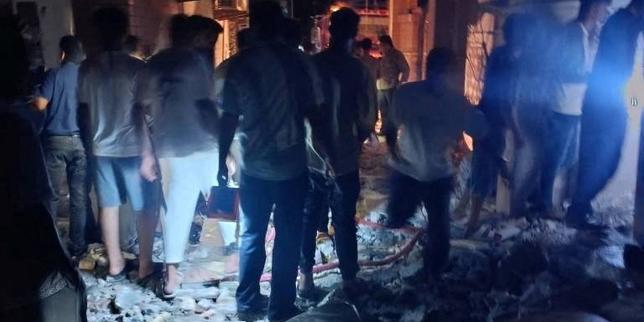
Germany just absorbed a dual-front kinetic strike against its energy backbone, exposing the terrifying fragility of modern European critical infrastructure. Within a single 24-hour window, coordinated attacks targeted transmission lines in the eastern state of Brandenburg and a high-voltage substation near Cologne in the west, abruptly forcing 4,200 megawatts of lignite-fired generation capacity offline. While the general public experienced minimal disruption due to automated grid safeguards, the security establishment is staring down an uncomfortable reality. Hybrid warfare has moved past cyber espionage and disinformation. It is now physical, coordinated, and alarmingly difficult to prevent.
State security forces are scrambling to connect the dots between homemade projectile devices firing conductive material into eastern transmission lines and calculated short-circuit sabotage at western distribution nodes. Investigators in North Rhine-Westphalia and Brandenburg are publicly weighing two distinct threat vectors: state-sponsored sabotage orchestrated by foreign actors like Russia, and domestic kinetic action executed by extremist cells.
This double strike arrived hot on the heels of official Berlin disclosures blaming Moscow for an attempted drone attack at Leipzig/Halle airport, creating a geopolitical pressure cooker. European Union foreign policy chiefs have pointedly characterized these escalations as hallmarks of state-sponsored terror. Yet, the mechanical execution of the grid attacks reveals a troubling truth about asymmetric warfare. You do not need an intercontinental missile or sophisticated cyber weapon to rattle an industrial economy. You need a few modified pyrotechnic devices, a basic understanding of high-voltage transmission nodes, and operational obscurity.
The Anatomy of Vulnerability
Extra-high-voltage transmission networks are vast, linear, and inherently impossible to wall off completely. Spanning thousands of kilometers across open countryside, agricultural fields, and industrial peripheries, these arteries of power rely on geographical dispersion for efficiency. That same dispersion makes them sitting ducks for dedicated saboteurs.
Consider the mechanics deployed at the Jänschwalde power plant connection in Brandenburg. Perpetrators used customized projectile devices—far more advanced than standard celebratory fireworks—to loft conductive materials directly into extra-high-voltage lines. The resulting short circuits triggered immediate, automated safety shutdowns to protect transformers and distribution hardware from catastrophic thermal overloads.
The system worked exactly as designed, yet the economic and psychological ripple effects were immediate. When RWE AG lost five lignite-fired units across the Neurath and Niederaußem plants following the western incident near Bergheim, short-term power trading markets experienced severe dislocation. Preliminary imbalance prices—the penalty costs incurred when supply suddenly detaches from forecasted demand—briefly spiked to 5,000 euros per megawatt-hour.
Energy traders call this a liquidity shock. Grid engineers call it a narrow escape. If these asynchronous strikes had targeted central grid nodes during a period of low renewable output or peak industrial demand, the automated safety shutdowns could have cascaded into a wide-area blackout.
The Convergence of Extremism and Hybrid Warfare
Security analysts tracking the European sabotage beat have long warned about the dangerous convergence of domestic radicalism and foreign state proxy operations. For years, Germany has dealt with sporadic arson attacks on railway and energy infrastructure claimed by radical left-wing fringe groups. These domestic actors utilize low-tech methodology—basic incendiary devices, cut fences, and targeted arson—to protest industrial policy or fossil fuel reliance.
However, the precision and temporal coordination of the recent twin attacks suggest a shift in capability. Investigators are analyzing whether foreign intelligence services are either directly directing these actions or indirectly inspiring domestic radicals through encrypted channels.
The timing aligns too cleanly with geopolitical friction points. With regional state elections looming and domestic political polarization intensifying around energy policy and foreign alliances, critical infrastructure sabotage serves a dual purpose for a hostile state actor. It disrupts economic stability and weaponizes domestic anxiety, driving wedges into the political landscape.
When interior ministers stand before bank microphones to announce that every meter of a crime scene is being scrutinized twice, they are attempting to project control over an environment where the defender's disadvantage is absolute. A saboteur only needs one successful attempt out of a thousand perimeter miles. The state must defend every single pylon, transformer yard, and switching station simultaneously.
Hardening the Unhardening
Protecting a continental power grid against determined kinetic saboteurs requires an expensive, painful paradigm shift in how European utilities view physical security. For decades, substation security consisted of chain-link fences, basic motion sensors, and remote closed-circuit television monitoring designed primarily to deter copper thieves and casual vandals.
Against a backdrop of hybrid warfare, those measures are obsolete. Upgrading thousands of substations with ballistic shielding, advanced acoustic gunshot locators, radar-based drone detection, and automated AI perimeter tracking requires billions of euros in capital expenditure. Who absorbs those costs ultimately trickles down to industrial consumers and retail ratepayers already fatigued by high energy prices.
Furthermore, physical hardening does little to solve the vulnerability of linear overhead transmission lines stretching across hundreds of miles of rural territory. Burying thousands of kilometers of extra-high-voltage lines is an engineering and financial impossibility on any short-term horizon. It takes years of environmental permitting, public consultation, and massive capital outlays just to complete planned transmission corridors, let alone subterranean retrofits for existing grids.
Grid operators are instead leaning into resilience rather than impenetrable defense. By enhancing automated grid re-routing capabilities, expanding localized battery storage buffers, and decentralizing supply nodes, system operators can minimize the blast radius of any single attack. If a transmission line trips due to a saboteur's projectile, software should instantly reroute power flows around the damaged node before human operators even register the alert on their SCADA screens.
The resilience model accepts that an attack will happen. Its entire focus is ensuring the system shrugs it off within seconds.
Yet technology alone cannot outrun persistent human malice. As Europe navigates an era of permanent gray-zone conflict, the security of the light switch in a Berlin apartment is inextricably tied to counterintelligence operations hundreds of miles away. The Jänschwalde and Bergheim incidents are warning shots. The real test will be whether industrial democracies can adapt their security posture before a coordinated adversary decides to move past warning shots entirely.