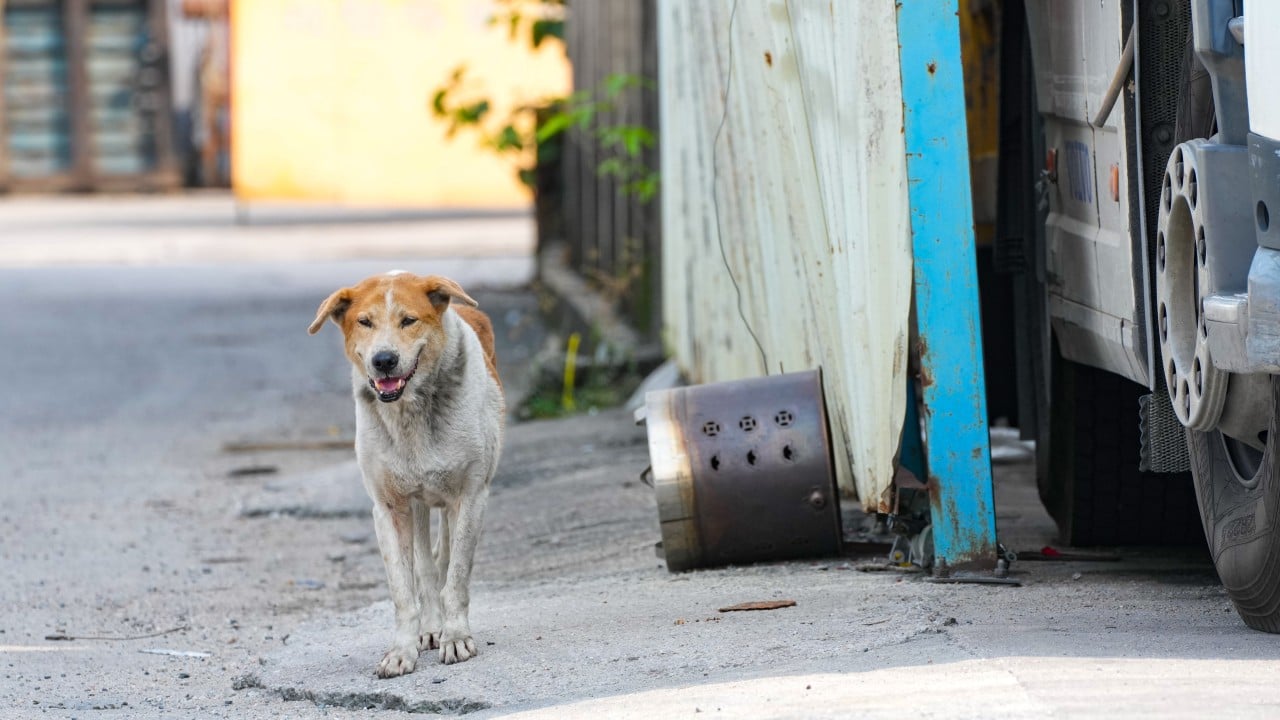
Roughly one in every three unattended dogs captured in Hong Kong has been euthanised this year, exposing a stubborn collision between dense urban living, municipal enforcement rules, and shelter capacity limits. That headline ratio tells only half the story. When an animal lands in a government facility without a microchip or a clear path to rehoming, administrative triage takes over long before public debate catches up.
I have covered public policy, municipal budgets, and civic friction for decades, and animal welfare numbers almost always look cleaner on a spreadsheet than they feel on the ground. Officials point to public health statutes, leash laws, and rabies prevention legacies. Advocates point to kennel turnover, behavioral assessments, and adoption bottlenecks. Both sides are reacting to real pressures inside one of the most tightly packed cities on earth. If you liked this article, you might want to read: this related article.
To understand why unattended dogs in Hong Kong face such steep odds once impounded, you have to look at how the system treats unowned or stray animals from the moment a call comes in. There is no neutral holding space in a city where square footage costs a fortune and public space is heavily regulated. Every empty cage represents a recurring operational cost, and every animal that cannot be safely placed creates a downstream bottleneck for the next intake.
How Municipal Rules Shape Animal Outcomes
Hong Kong enforces strict controls on domestic animals, rooted in decades of public health governance and high-density urban planning. Dogs left unattended in public spaces—whether wandered off from a walk, abandoned by a struggling owner, or living rough on the fringes of neighborhoods—enter an enforcement pipeline designed for rapid processing rather than open-ended care. For another look on this event, see the latest update from The New York Times.
Microchipping is mandatory for dogs in Hong Kong, yet compliance gaps and outdated contact records still complicate reunions. When an animal arrives without scannable identification or a responsive registered keeper, staff face a narrow window to evaluate temperament, health, and rehoming prospects. A dog with severe fear aggression, untreated chronic illness, or deep distrust of strangers faces steep hurdles in a city where most apartments are compact and first-time adopters often lack experience handling reactive animals.
Public perception often treats euthanasia as an arbitrary choice made behind closed doors. In practice, municipal veterinarians and shelter managers operate inside rigid statutory frameworks and finite physical space. If intake spikes faster than adoptions or transfers to partner charities, pressure mounts across the entire network.
Consider a hypothetical example to see how intake math works in a tight facility. Suppose a government holding center has room for sixty dogs and receives twenty-five unattended animals in a single month, while local rescues only have open foster slots for eight. Even if staff work overtime to socialize shy dogs and treat skin infections, the physical ceiling remains fixed. Without enough external outlets or willing adopters for high-need animals, tough clinical and operational decisions become routine rather than exceptional.
The High-Density Squeeze Behind Every Number
Cities built upward rather than outward change the relationship between people and animals. Hong Kong packs millions of residents into high-rises, narrow streets, and compact commercial corridors. Walking a dog in many districts means navigating busy traffic, crowded sidewalks, elevators, and strict building management rules.
Housing constraints directly influence both abandonment and adoption. Not every private landlord or housing estate welcomes dogs, and size restrictions limit options even for committed owners. When a household faces financial strain, illness, emigration, or a sudden change in lease terms, finding a safe landing spot for a pet can become an acute crisis.
High-density cities do not just test infrastructure; they test how much room society leaves for creatures that cannot speak or sign a lease.
Unattended dogs in Hong Kong also include strays and working or rural dogs that roam away from unfenced plots or construction sites. Those animals often have minimal early socialization to urban noise, sirens, crowds, and enclosed spaces. A dog that grew up outdoors or in isolation may freeze or snap when placed under fluorescent lights inside a busy intake ward.
Behavioral evaluation is one of the most contested parts of shelter work. Two observers can watch the same trembling dog and reach opposite conclusions. One sees a terrified animal that needs months of patient decompression in a quiet home; another sees a bite risk that cannot be safely placed into a dense apartment building next door to children and elderly neighbors.
Where Welfare Groups and Policy Collide
Nonprofit animal groups play an indispensable role in Hong Kong, taking in animals, funding medical care, running adoption events, and pushing for policy reform. Yet rescues face their own capacity ceiling. Volunteers burn out. Foster homes fill up. Veterinary bills climb every year.
Tensions often flare over communication and transparency. Campaigners want detailed breakdowns of every animal's history, medical status, and behavioral assessment before euthanasia occurs. Authorities emphasize veterinary judgment, statutory duties, and public safety obligations. When trust is thin, every statistic becomes a flashpoint.
Trap-neuter-return style programs and community management efforts frequently enter the conversation as alternatives to capture-and-remove cycles. In theory, stabilizing populations through neutering reduces future strays over time. In reality, applying those approaches across dense urban neighborhoods raises thorny questions about road safety, nuisance complaints, bites, and local resistance.
No single policy switch solves this overnight. Catch-and-release without community buy-in invites backlash from residents tired of fouling or barking. Unlimited long-term sheltering without funding or adopters simply shifts overcrowding from one room to another. Honest debate requires acknowledging trade-offs instead of pretending easy fixes exist.
What Drives Responsible Ownership Forward
Responsible ownership starts long before a dog ever gets loose. It means keeping microchip registration current whenever a phone number or address changes, using secure collars and harnesses, and never leaving a dog tied outside a shop or unattended in a yard where a gate can slip open.
Adopters also carry real weight in changing these outcomes. Looking beyond trendy breeds or small puppies can open doors for adult or quiet dogs that struggle to stand out at adoption drives. Patience during the first few weeks at home—giving a newly adopted dog space to decompress rather than rushing straight into crowded social outings—makes a measurable difference in whether a placement sticks.
| Factor | Practical Impact on Unattended Dogs | Key Limitation in Practice |
|---|---|---|
| Up-to-date microchips | Speeds up owner reunification after stray capture | Fails if owners move or change numbers without updating records |
| Secure leashes and enclosures | Prevents accidental escapes into traffic or public areas | Does not stop deliberate abandonment or roaming in unfenced spots |
| Foster network expansion | Creates calm decompression space outside crowded kennels | Limited by available foster homes, time, and veterinary costs |
| Realistic behavioral matching | Reduces re-abandonment and bite incidents | Requires specialized training and careful home screening |
Public accountability matters just as much as individual habits. Clearer reporting on intake sources—distinguishing lost pets, surrendered animals, and feral or unowned strays—helps residents see where prevention efforts will actually pay off. When a city tracks why animals enter the system, it can target resources where they do the most good rather than arguing over broad totals.
Every unattended dog picked up off the street represents a breakdown somewhere up the line, whether a snapped leash, a missed phone call, a closed housing door, or a dog left to fend for itself. Changing that ratio takes more than sympathy on social media; it takes steady enforcement, realistic housing rules, well-supported rescues, and owners who treat care as a lifelong commitment rather than a convenient arrangement. Fix the weak links before the dog ever hits the pavement.