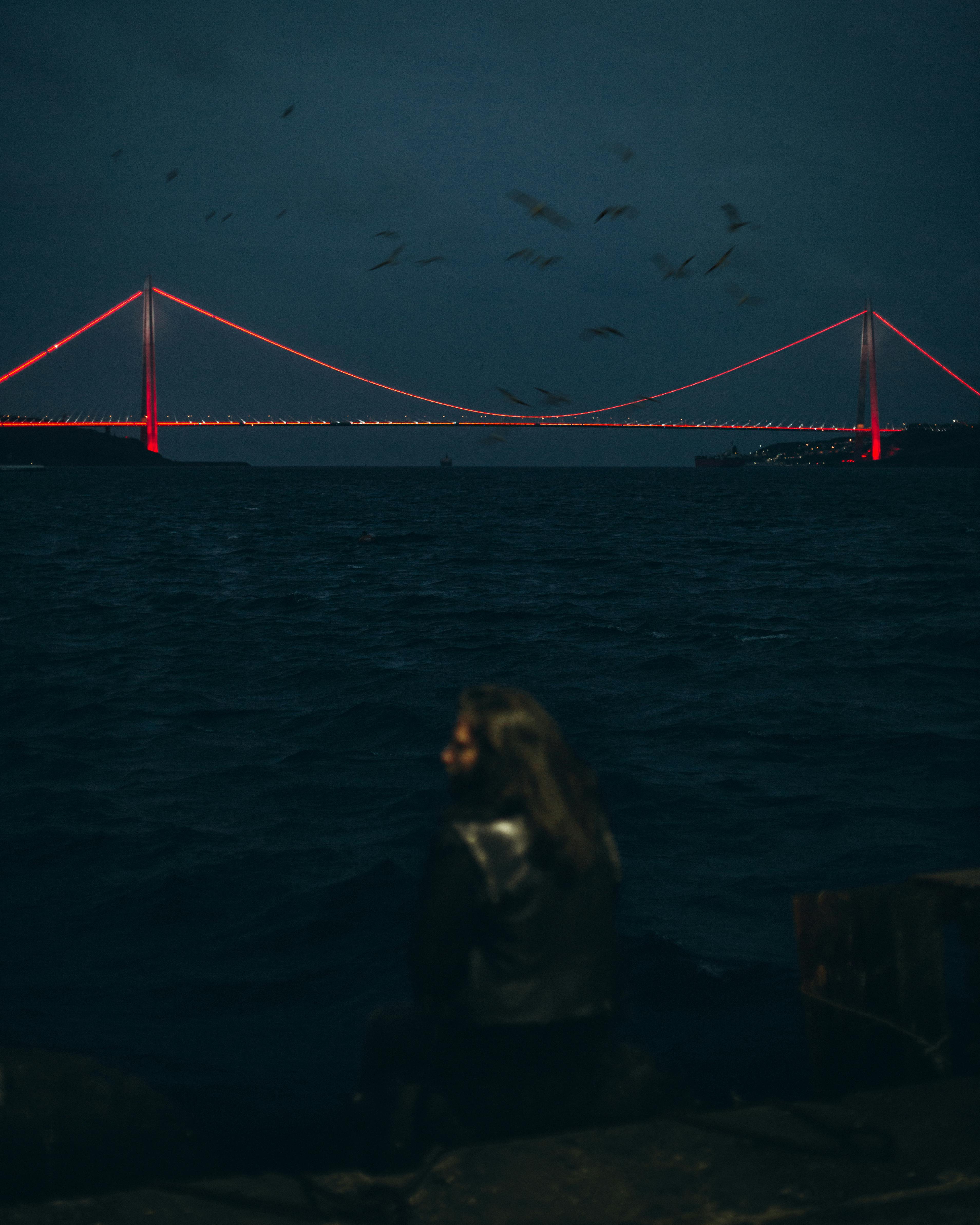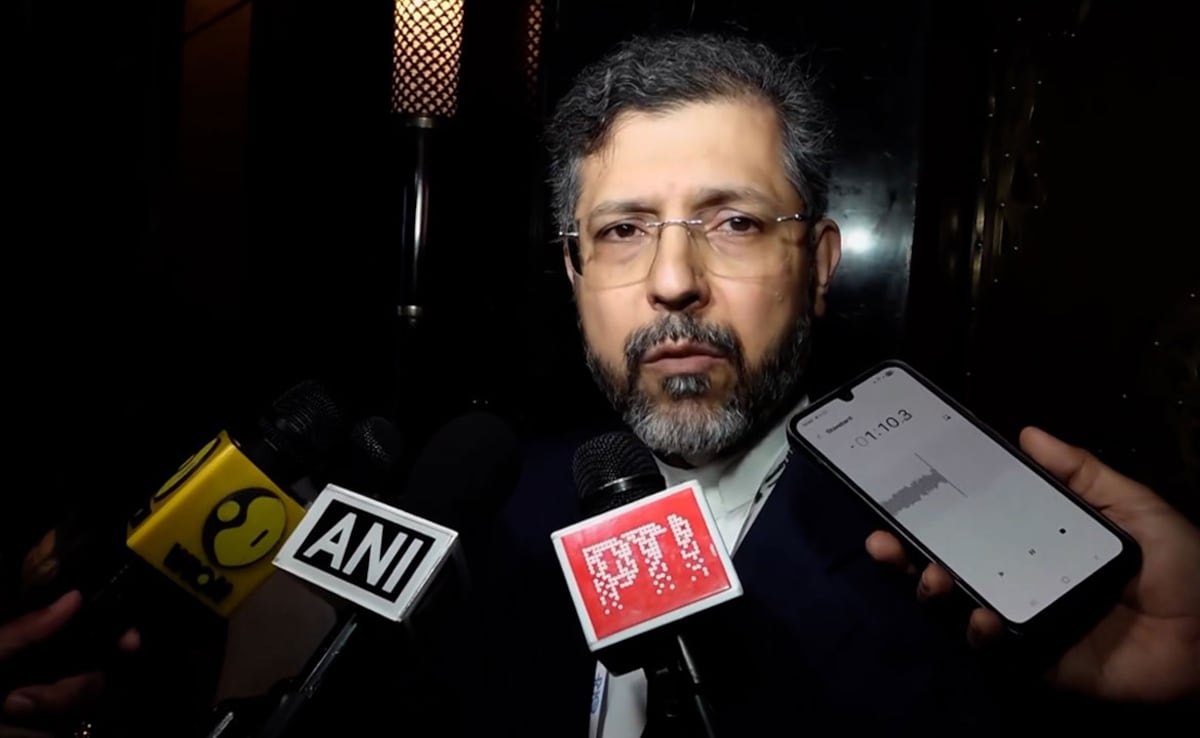
The Strait of Hormuz is technically open, but the global economy is still holding its breath. Iranian Foreign Minister Abbas Araghchi declared on Friday that the world’s most vital maritime chokepoint was fully operational for commercial transit, a move ostensibly tied to a fragile ceasefire in Lebanon. However, the declaration was immediately met with a hammer blow from Washington. President Donald Trump countered that the United States Navy would maintain a total blockade of Iranian ports and vessels until a "100 percent complete" nuclear transaction is finalized.
This is no longer just a regional spat; it is a high-stakes siege of the global energy supply. While Araghchi claims Iran has restored "freedom of movement," the reality on the water is a chaotic mix of naval standoffs, surging insurance premiums, and a U.S. "all or none" policy that effectively treats the Persian Gulf as a closed circuit. Don't forget to check out our recent post on this related article.
The Strategic Mirage of an Open Strait
For decades, the threat of closing Hormuz was Iran’s ultimate deterrent—the "nuclear option" of conventional warfare. In the spring of 2026, that threat became reality. Following the launch of military operations targeting Iranian infrastructure in late February, Tehran deployed sea mines, drones, and ballistic threats to choke off the 21 miles of water that carry 20% of the world’s oil and liquefied natural gas (LNG).
Araghchi’s recent pivot to "reopening" the strait is less an olive branch and more a survival tactic. By announcing the waterway is open to everyone except those at war with Iran, Tehran is attempting to peel away international support for the U.S. blockade. If the world can get its oil, the logic goes, the world will stop supporting the American siege of Iranian ports. To read more about the history of this, The New York Times provides an in-depth summary.
But the U.S. isn't biting. The White House has made it clear that as long as Iran restricts any vessel, the U.S. will restrict everything coming in or out of Iran. This creates a functional stalemate where the strait is "open" on paper but remains a graveyard for commercial shipping. Over 150 tankers are currently anchored outside the mouth of the Gulf, waiting for more than just a press release before they risk a $150 million hull in a combat zone.
The True Cost of the 2026 Crisis
The numbers are staggering. In March alone, oil prices saw their largest monthly increase in history. Brent Crude surged past $120 per barrel, not because of a lack of oil in the ground, but because the machinery of global trade cannot bypass this single point of failure.
| Impact Sector | Reported Consequence |
|---|---|
| Global Oil | 20 million barrels per day (mb/d) removed from market |
| Energy Prices | Brent Crude peaked at $120/bbl |
| Food Security | 80% of GCC caloric intake disrupted; food prices up 40-120% |
| Global LNG | Qatari exports halted under force majeure |
The Grocery Supply Emergency
The most overlooked factor in this crisis isn't the price at the pump in London or New York. It is the literal survival of the Gulf Cooperation Council (GCC) states. Countries like Kuwait, Qatar, and the UAE rely on the Strait of Hormuz for more than 80% of their food imports.
By mid-March, a "grocery supply emergency" had gripped the region. Retailers were forced to airlift basic staples like grain and milk, causing prices to triple overnight. This isn't just a business problem; it is a fundamental threat to the social contract in the Middle East. If the people cannot eat, the stability of the entire region dissolves, regardless of who controls the oil.
The Naval Blockade as a Negotiation Tool
The Trump administration’s use of a naval blockade marks a shift from economic sanctions to active maritime interdiction. Central Command (CENTCOM) reports that since the blockade was implemented, 21 ships have been turned back or redirected away from Iranian ports.
"Control over the Strait of Hormuz has returned to its previous state," the Islamic Revolutionary Guard Corps (IRGC) countered in a Saturday statement.
The IRGC is signaling that they will not tolerate a one-sided blockade. If their ports are closed, they intend to make the entire Gulf unsafe for everyone else. This is the "suicide pact" of maritime strategy. Iran knows it cannot win a conventional naval war against the U.S. Fifth Fleet, but it doesn't have to win. It only has to make the risk of transit high enough that no commercial insurer will cover the voyage.
Why the Ceasefire is Faltering
The Lebanon ceasefire was supposed to be the off-ramp. Araghchi’s announcement was meant to signal that Iran is de-escalating in tandem with its proxies. However, the U.S. demand for a "100 percent complete transaction"—a euphemism for a total overhaul of Iran’s nuclear and missile programs—means the goalposts have moved.
Washington is betting that the economic pain of the blockade will force a domestic collapse in Tehran before the global energy crisis forces the West to blink. It is a gamble with the global economy as the stakes.
The End of Just In Time Energy
This crisis marks the definitive end of the "Just-in-Time" energy era. For thirty years, the world operated on the assumption that the seas would remain open and the oil would always flow. That illusion is gone.
Major importers like India and the European Union are now scrambling for "Energy Sovereignty." We are seeing a desperate push for the India-Middle East-Europe Economic Corridor (IMEC) to bypass the Persian Gulf entirely. But infrastructure takes years; the hunger for energy is immediate.
The situation in the Strait of Hormuz remains a binary trap. Either a comprehensive deal is reached that satisfies the U.S. demand for a total nuclear reset, or the IRGC will eventually follow through on its threat to resume "strict management" of the waterway. In that scenario, the current $120 oil price will look like a bargain.
The strait may be "open" by decree, but until the gray-hulled warships of the U.S. Navy and the fast-attack craft of the IRGC stand down, the world's most important waterway remains a dead end.
The next 48 hours of diplomatic signaling will determine if we are witnessing a de-escalation or the final pause before a much larger storm.