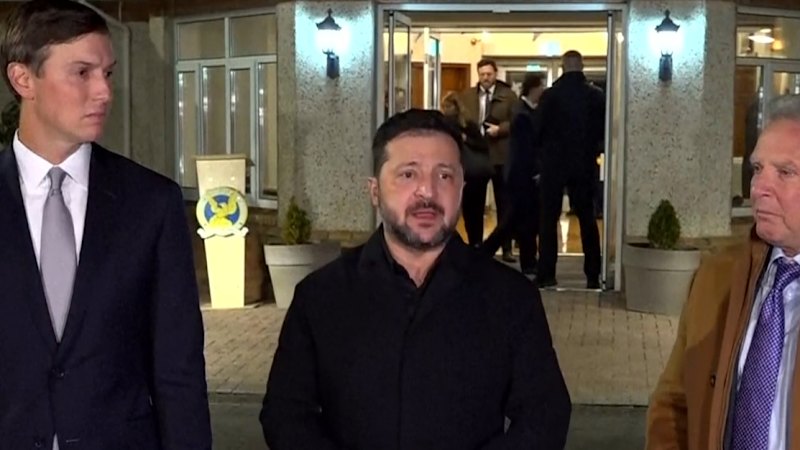
When Ukrainian President Volodymyr Zelenskyy steps onto an international stage to outline a new peace framework, the diplomatic choreography follows a familiar script. Kyiv presents a structured proposal anchored in territorial integrity, security guarantees, and international law, aiming to rally Western allies and sway skeptical nations in the Global South. Yet behind the polished press conferences lies a far more complicated reality. A peace plan in wartime is rarely just a blueprint for ending hostilities; it is a strategic instrument designed to lock in political leverage, sustain foreign military aid, and define the terms of future negotiations before opposing parties ever sit at the same table.
To understand what a Ukrainian peace initiative actually accomplishes—and where it collides with geopolitical friction—you have to look past the bullet points of diplomatic communiqués. Also making news recently: Portugal Priced Out Its Own People And The Streets Are Full.
The Architecture of Wartime Diplomacy
Every modern peace proposal emerging from Kyiv rests on a foundational tension. Ukraine must project openness to diplomacy to satisfy international partners who are weary of open-ended conflict, while simultaneously refusing concessions that would validate Russian territorial gains or compromise national sovereignty.
In public remarks and international summits, Ukrainian officials have consistently framed their approach around core non-negotiables. These typically include the restoration of internationally recognized borders, the withdrawal of foreign troops, accountability for war crimes, and binding security assurances to prevent renewed aggression. From Kyiv’s perspective, anything less than a comprehensive settlement merely freezes the conflict, giving Moscow time to rearm and regroup for a future offensive. Further insights on this are detailed by BBC News.
Strategic signaling sits at the heart of these announcements. By placing a formal plan on the table, Ukraine forces other global actors to respond to its framework rather than allowing external powers to draft a settlement over Kyiv’s head. Diplomatic historians point out that smaller nations fighting larger adversaries frequently use multilateral peace initiatives to internationalize their defense. When dozens of countries endorse a specific set of principles—even non-binding ones—it raises the political cost for any ally considering a push for premature territorial compromises.
Yet announcements alone do not alter facts on the ground. A diplomatic blueprint only carries weight if it aligns with military realities, economic endurance, and the shifting domestic politics of the nations underwriting the war effort.
Why Timing Matters More Than Text
In international relations, when a proposal is unveiled often tells you more than what is written inside it. Peace frameworks rarely appear in a vacuum. They tend to surface during specific inflection points: ahead of major donor conferences, before critical legislative votes on foreign aid in Washington or Brussels, or during periods of battlefield stalemate when international media narratives begin to sour.
Consider the domestic pressures facing Ukraine’s Western backers. Political coalitions in the United States and across Europe operate on election cycles, budget deadlines, and public opinion polls. When lawmakers debate tens of billions of dollars in military and financial assistance, critics inevitably ask what the endgame looks like. An open-ended commitment to "as long as it takes" becomes harder to sell without a tangible political horizon.
By unveiling or updating a peace plan, Kyiv offers its partners a concrete answer to that question. It demonstrates that Ukraine has a defined exit strategy—one rooted in international norms rather than endless attrition. For supportive leaders in NATO capitals, having a formal Ukrainian diplomatic track makes it easier to justify continued weapons shipments as a means of strengthening Kyiv’s hand at a future negotiating table.
At the same time, timing can reflect acute vulnerability. Extended warfare strains manpower, depletes air defense stockpiles, and tests the resilience of civilian energy infrastructure. Framing a diplomatic initiative allows Ukrainian leadership to address domestic fatigue as well, showing citizens that the government is actively pursuing every avenue to end the war without surrendering core national interests.
The Battle for the Global South
While Western media often analyze Kyiv’s peace initiatives through the lens of Washington and Moscow, much of the actual diplomatic heavy lifting targets capitals in Asia, Africa, and Latin America.
Countries such as Brazil, India, South Africa, and China have largely avoided joining Western sanctions regimes against Russia. Many governments in the Global South view the conflict through a different prism—one shaped by concerns over global food prices, energy security, skepticism of Western interventionism, and historical non-alignment. Some of these states have floated their own mediation proposals, often calling for immediate ceasefires without specifying the withdrawal of Russian forces.
For Kyiv, those competing proposals represent a serious diplomatic hazard. An unconditional ceasefire along current front lines would effectively leave large portions of Ukrainian territory under Russian occupation. To counter that risk, Ukrainian peace frameworks deliberately emphasize issues that resonate directly with developing nations:
- Global food security: Protecting agricultural exports and Black Sea shipping corridors to prevent price spikes in import-dependent countries.
- Nuclear safety: Demilitarizing occupied nuclear power facilities and upholding international atomic energy standards.
- Humanitarian returns: Securing the release of prisoners of war and the return of deported children.
- Environmental protection: Addressing the long-term ecological damage caused by heavy combat and infrastructure destruction.
By isolating these specific pillars, Kyiv makes it easier for non-aligned countries to sign on to parts of a peace declaration without formally breaking ties with Moscow. It is a calculated exercise in coalition building. Even if a summit does not produce an immediate ceasefire, getting a broad cross-section of world leaders to affirm principles like territorial integrity under the United Nations Charter undermines the narrative that the conflict is merely a proxy dispute between Russia and the West.
Where the Framework Hits Hard Reality
No matter how carefully drafted, any Ukrainian peace plan confronts an immediate, unavoidable obstacle: Moscow’s flat rejection of terms that require surrendering annexed territory.
Russian officials have repeatedly dismissed Kyiv-led diplomatic initiatives as ultimatums detached from what they call "new territorial realities." The Kremlin’s stated conditions for talks have consistently demanded that Ukraine recognize Russian sovereignty over occupied regions, abandon aspirations to join NATO, and accept strict limits on its military capabilities.
This irreconcilable gap exposes the central paradox of wartime diplomacy. A peace plan designed to maximize international legitimacy and protect national sovereignty is, by definition, unacceptable to an adversary seeking territorial expansion. Conversely, a compromise package tailored to bring Moscow to the table immediately would likely trigger political upheaval inside Ukraine and fracture the Western consensus on the inviolability of borders.
Security analysts note that history offers few clean exits from this trap. When neither side believes it has exhausted its military options, peace proposals function primarily as instruments of political warfare. Each side uses diplomacy to paint the other as the obstacle to peace, hoping to erode the opponent’s external support while consolidating its own alliances.
The Security Guarantee Dilemma
Even if a diplomatic breakthrough were somehow achieved tomorrow, the hardest technical question would remain unresolved: how to enforce the peace.
Ukraine’s skepticism toward paper assurances is rooted in recent history. In 1994, Kyiv gave up the world’s third-largest nuclear arsenal under the Budapest Memorandum, receiving security assurances from the United States, the United Kingdom, and Russia in return. Two decades later, those assurances failed to prevent the annexation of Crimea or the subsequent full-scale invasion.
Because of that precedent, Ukrainian leaders insist that any viable peace plan must include ironclad security guarantees—not vague promises of consultation. In Kyiv’s view, full membership in NATO remains the only proven deterrent against future Russian aggression.
Yet NATO membership requires unanimous consent from all alliance members, several of whom remain deeply cautious about extending collective defense obligations under Article 5 to a country locked in an active territorial dispute. As an interim measure, Ukraine has signed bilateral security agreements with dozens of partner nations, locking in multi-year commitments for weapons, intelligence sharing, and military training. While significant, bilateral pacts stop short of a mutual defense treaty obligating foreign troops to intervene directly if fighting resumes.
This gap between what Ukraine demands for long-term survival and what Western capitals are willing to underwrite remains one of the thorniest vulnerabilities in any peace blueprint. Without a credible enforcement mechanism, a signed agreement risks becoming a temporary pause rather than a durable settlement.
The Domestic Tightrope in Kyiv
International commentators sometimes treat Ukrainian foreign policy as a monolith, assuming the presidency operates free from internal constraints. In reality, domestic politics place strict boundaries on what any Ukrainian leader can propose.
Years of heavy casualties, displaced populations, and widespread destruction have hardened public attitudes toward territorial concessions. Polling conducted inside Ukraine throughout the war has consistently shown strong majorities opposing the surrender of land in exchange for peace, even as war weariness grows. For a significant portion of the electorate, ceding territory is not viewed as a pragmatic compromise, but as abandoning millions of fellow citizens to occupation while inviting another invasion years down the line.
Any Ukrainian president who deviates too far from those red lines faces severe political backlash, potential civil unrest, and a collapse in institutional legitimacy. At the same time, leadership must manage the expectations of a population exhausted by air raids, rolling blackouts, and prolonged mobilization.
Presenting a comprehensive peace plan allows the presidency to walk that tightrope. It signals to domestic audiences that the government is fighting for a complete, just resolution rather than quietly negotiating away national territory behind closed doors. It transforms diplomacy from a perceived sign of weakness into an extension of national resistance.
What Actually Moves the Needle
Strip away the diplomatic rhetoric, and the trajectory of the war still hinges on material leverage rather than position papers. Peace plans do not compel armies to retreat; shifts in military, economic, and political balance do.
For Kyiv’s framework to evolve from an aspirational roadmap into an actionable negotiation, several concrete variables have to align:
- Sustained military parity: Diplomacy only gains traction when an aggressor concludes that further offensive operations will yield diminishing returns at unsustainable costs. Consistent air defense, artillery, and long-range strike capabilities remain the primary drivers of that calculation.
- Economic pressure: The effectiveness of sanctions enforcement, restrictions on dual-use technology exports, and decisions regarding frozen Russian sovereign assets directly affect Moscow’s ability to finance a prolonged war of attrition.
- Allied cohesion: Any visible cracks in unity between Washington, Brussels, and key European capitals immediately incentivize Moscow to wait out Western resolve rather than negotiate seriously.
- Credible third-party mediation: A final settlement will likely require involvement from influential non-Western states capable of exerting real economic or diplomatic leverage on both sides, rather than relying solely on Western-backed forums.
Until those underlying pressures force a fundamental recalculation in Moscow, unveiling a peace plan remains a necessary move in the broader strategic contest—a way to hold coalitions together, frame the moral and legal stakes, and keep Kyiv in control of its own diplomatic narrative while the real deciding factors play out far from the negotiating table.