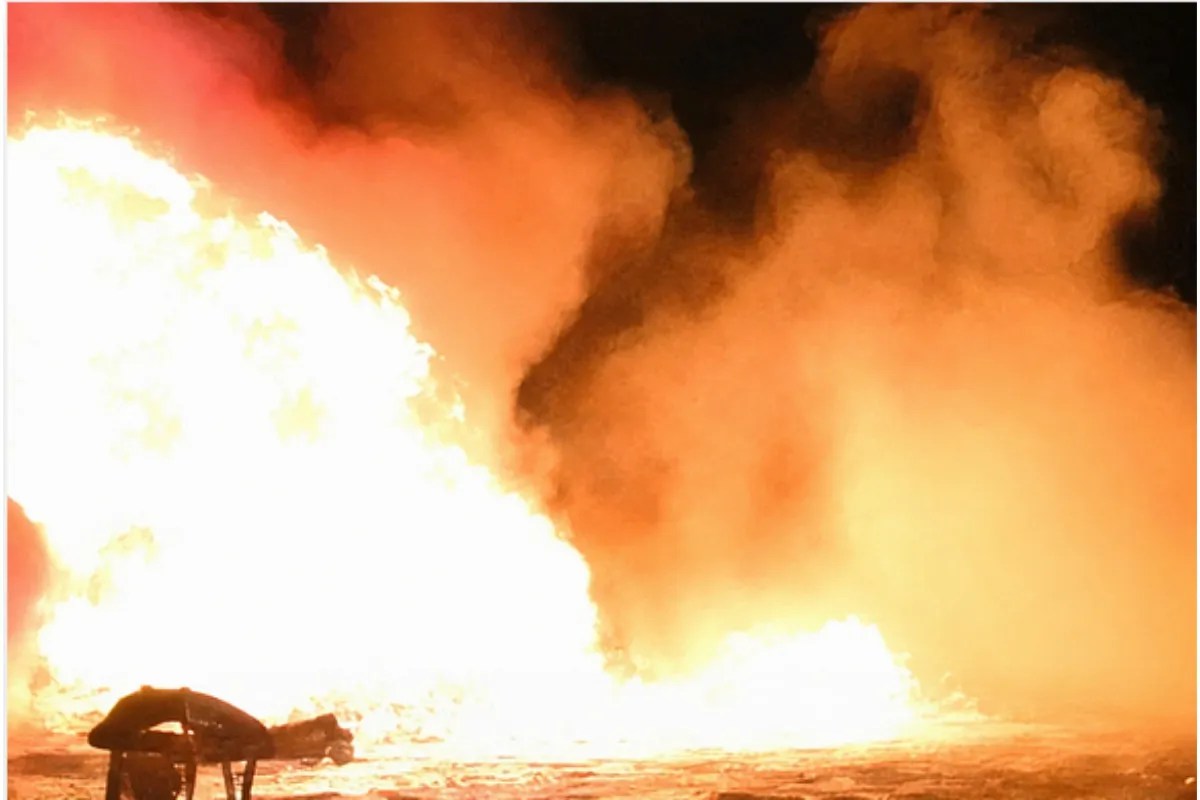
The air in Johannesburg always smells of charcoal and dust before the rain breaks. It is a sharp, distinct scent, heavy with the promise of a cleansing storm. But two years ago, a different kind of storm was brewing in the quiet, glowing rectangles we hold in our palms. It did not smell like rain. It smelled like electronic static and rotting garbage.
Screens lie. We know this intellectually. We swipe past outrage porn on our morning commutes, half-aware that the algorithm thrives on our collective pulse rate. Yet, there is a terrifying alchemy that happens when digital bile crosses the threshold of the physical world. When pixels become cobblestones. When a post typed in a dark bedroom in another hemisphere starts a fire in a township grocery store.
Picture a hypothetical neighborhood grocery owner. Let us call him Farooq. (This is a composite scenario drawn from documented patterns of digital harassment and local retail dynamics during periods of heightened tension.) Farooq opens his shop at dawn. The security gate screeches against the concrete, a familiar morning chord. He arranges the fresh bread, stacks the tomatoes, and waits for the neighborhood regulars. On most days, his biggest worry is the fluctuating cost of electricity or the erratic municipal water supply.
Then, his phone buzzes.
It is a WhatsApp forward. A video. Grainy, poorly lit, stripped of context, showing an incident three thousand miles away. The caption twists the footage into a weapon, claiming that a specific community is orchestrating an imminent assault on local livelihoods. Within hours, the digital ether is saturated with anti-Muslim rhetoric, manufactured panic, and urgent calls to action. The online anti-Muslim backlash is loud, venomous, and entirely divorced from the reality outside Farooq’s front door.
Online, he is an existential threat. Online, he is part of a grand conspiracy.
Offline, he is just Farooq, who knows that Mrs. Dlamini’s knees ache when the weather turns, and always saves her the softer loaves of brown bread.
The Geography of Phantom Threats
To understand how a digital hallucination collides with reality in South Africa, you have to understand the fragile architecture of trust in post-apartheid communities. Scars run deep here. Economic anxiety is not an abstract economic indicator; it is a physical weight felt in empty stomachs and prolonged unemployment lines. When fear is injected into this mix via social media networks, it acts like a match dropped in a tinderbox.
Except, something strange happens when the digital outrage tries to manifest in the physical streets of South Africa.
The screen tells a story of total division. The screen wants us to believe that neighbors cannot look each other in the eye anymore. But when you walk down the actual street where Farooq’s shop stands, the narrative frays.
A group of local youth gathers outside. The tension is palpable. You can cut it with a knife. Phones are out, screens glowing, eyes darting from Twitter feeds to the metal shutters of the shop. The digital instruction manual tells them to riot. The algorithms whisper that they are fighting for their survival.
And then, Mrs. Dlamini walks up.
She pushes past the screen-addled teenagers with the authority of someone who watched most of them grow up. She bangs her walking stick against the pavement. She asks them if they have lost their minds. She points at Farooq’s shop and reminds them who extended credit when the factory down the road closed its doors.
Reality breaks the spell.
South Africa has a long, painful history of manufactured division. The architecture of apartheid was built on the premise that people could be neatly categorized, weaponized against one another, and controlled through fear of the other. The modern social media machine is just apartheid algorithms. It relies on the exact same psychological vulnerabilities. It exploits historical trauma, economic precarity, and the tribal impulse to circle the wagons.
Yet, lived experience often pushes back against the code.
The Friction Between Code and Conscience
We grossly underestimate the friction of actual human proximity. It is remarkably easy to type a genocidal slur or a vicious generalization when your only interface is a piece of polished glass. The screen offers total anonymity and zero emotional feedback. You do not see the flinch. You do not smell the fear. You do not have to look into the eyes of the human being whose life you are systematically dismantling with a keystroke.
But step outside.
In South Africa’s townships and urban centers, life is hyper-relational. People live cheek-by-jowl. Economies of affection and survival bind people of different faiths, backgrounds, and origins together in messy, complicated, unbreakable webs.
When digital hate campaigns try to fracture these communities, they hit a wall of shared reality. The shopkeeper is not a stock character from an ideological war; he is the guy who gave your cousin a job when times were hard. The neighbor is not an invading horde; she is the woman who watched your children while you worked the night shift.
Data supports this friction. Academic studies tracking digital hate speech spikes in South Africa consistently reveal a stark chasm between online volume and offline mobilization. Millions of impressions, thousands of shares, acres of digital vitriol—and yet, when the digital agitators try to translate those metrics into physical violence on the ground, they frequently find that their neighbors simply refuse to play their part in the script.
Why? Because proximity destroys prejudice.
It is a psychological law as old as time. It is much harder to hate someone up close.
The Invisible Stakes
We are living through a grand experiment in mass psychological manipulation, and the stakes are impossibly high. The digital backlash against Muslim communities—amplified by transnational networks of trolls, automated bots, and opportunistic political actors—is not just about religion. It is a stress test for our capacity to share physical space.
If the algorithms win, we retreat into ideological silos where nuance is choked out by volume. We become strangers in our own neighborhoods, terrified of the people living five feet away because a server farm in another country told us to be afraid.
If reality wins—if the messy, stubborn, human friction of everyday life holds—then we might just remember how to look past the glowing screen and see the person standing right in front of us.
Consider what happens next: the next crisis will come. Another video will be manipulated. Another wave of artificial panic will wash over our feeds. The digital machinery of hate is not going away. It will adapt, evolve, and find new ways to exploit our vulnerabilities.
The question is not whether the algorithms will try to set us on fire. We already know they will.
The real question is whether we will drop our phones long enough to smell the charcoal and dust, look our neighbors in the eye, and remember who we actually are when the Wi-Fi goes down.
Farooq slides his metal shutter back up tomorrow morning. The air will smell like rain. Or maybe it won't. But the bread will be fresh, the tomatoes will be stacked, and somewhere down the street, an algorithm will still be screaming into a void that refuses to listen.