A notification pings. It is the sound of a digital tether tightening. Somewhere in a cramped, humid room in Southeast Asia, a young man stares at a screen until his eyes ache. He is not a criminal mastermind. He was a job seeker. He followed a lead for a high-paying customer service role in Thailand, only to find himself driven across a porous border into a fortified compound. Now, he spends eighteen hours a day weaving webs of lies, hunting for a retirement fund to drain or a lonely heart to break.
If he stops, he isn't paid. If he tries to leave, he is beaten. This is the shadow economy of the Mekong—a multibillion-dollar industry built on the wreckage of human lives.
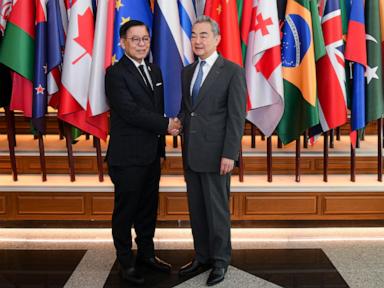
This week, the high-ceilinged halls of government in Bangkok hosted a meeting designed to sever those tethers. Chinese Foreign Minister Wang Yi and Thai Prime Minister Srettha Thavisin sat across from one another, not just as neighbors, but as two leaders staring into the same digital abyss. The "dry" version of the news tells us they agreed to cooperate on transnational crime. The reality is far more visceral. They are trying to dismantle a machinery of misery that has turned the promise of a connected Asia into a hunting ground.
The Architecture of the Trap
To understand why this agreement matters, you have to understand the geography of the scam. These aren't just rogue hackers in basements. These are "scam factories"—vast industrial parks often located in special economic zones along the borders of Myanmar, Laos, and Cambodia. They operate with the efficiency of a Fortune 500 company, complete with HR departments, scriptwriters, and technical support.
The victims exist on both ends of the fiber-optic cable.
On one end, you have the trafficked workers. Many are well-educated young people from China, Vietnam, or Malaysia, lured by the "Golden Triangle" promise of easy money. They arrive to find their passports confiscated and their freedom traded for a headset. On the other end, you have the "marks." These are ordinary citizens in Beijing, Bangkok, and beyond. They are grandmothers losing their life savings to a "police officer" on the phone who claims their bank account is linked to money laundering. They are lonely divorcees sending thousands to a "crypto expert" they met on a dating app.
The scale is staggering. Estimates suggest that hundreds of thousands of people have been trafficked into these centers. The financial drain is a slow-motion heist, pulling billions out of the legitimate economy and into the pockets of shadowy syndicates that operate beyond the reach of any single nation's police force.
A Handshake Across the Mekong
When Wang Yi met with Prime Minister Srettha, the air wasn't filled with just diplomatic pleasantries. There was an admission of a shared vulnerability. For years, these criminal networks have exploited the gaps between jurisdictions. They set up shop in one country, target victims in another, and wash their money through a third.
China has the technological muscle and the data; Thailand has the strategic location and the regional influence.
The agreement pivots on three pillars: intelligence sharing, joint operations, and a crackdown on the "grey" businesses that provide the infrastructure for these scams. It sounds bureaucratic until you realize what it looks like on the ground. It means a Chinese cyber-investigator in Kunming being able to hand a digital breadcrumb to a Thai colonel in Mae Sot in real-time. It means cutting off the power and internet to the compounds that line the riverbanks.
But the real problem lies elsewhere. It’s in the speed of the shift.
Criminals don't wait for treaties. The moment the heat rises in Cambodia, the syndicates move to the lawless borderlands of Myanmar. They are agile. They are well-funded. They use AI to generate deepfake voices of loved ones, making the "emergency call" scam nearly impossible to detect for the elderly. By the time a government issues a warning, the scammers have already rewritten the script.
The Human Cost of the Digital Frontier
Consider the story of "Li," a hypothetical but representative composite of the thousands currently trapped. Li thought he was going to Bangkok to work in a hotel. Instead, he was bundled into a van and driven north. He spent six months in a compound known as "KK Park."
He lived in a dormitory with twelve other men. Every morning, he was given a list of a hundred phone numbers. He had to make them all. If he didn't secure at least three "warm leads"—people who engaged with the scam—he was forced to do squats until his legs gave out. He saw men who tried to climb the wire fences returned with broken fingers as a warning to the rest.
For Li, the news of a high-level meeting between China and Thailand is more than a headline. it is a thin thread of hope. If the borders close, if the money flow stops, maybe the gate to his compound will finally be pushed open.
But the stakes are equally high for the Prime Minister. Thailand is desperate to revive its tourism industry. The "land of smiles" cannot afford a reputation as a transit hub for human trafficking and digital theft. The fear of being kidnapped or scammed has already begun to chill the influx of Chinese tourists, who were once the lifeblood of the Thai economy.
When Srettha and Wang Yi agreed to "strengthen communication," they were trying to rebuild trust. Trust is the currency of the region. Without it, the bridges and high-speed rails currently being built between the two nations are just expensive monuments to a failed integration.
The Invisible War
We often talk about war in terms of tanks and territory. This is a different kind of conflict. It is a war of attrition played out in the private spaces of our pockets. Every time your phone vibrates with an unknown number, you are on the front lines.
The collaboration between China and Thailand represents a realization that the "Wild West" era of the Southeast Asian internet must end. You cannot have a digital economy if the participants are afraid to click a link. You cannot have regional stability when thousands of people are being held in de facto slavery within sight of luxury resorts.
The crackdown has begun to yield results. In recent months, thousands of suspects have been handed over to Chinese authorities in dramatic border transfers. We’ve seen images of men in masks, heads bowed, being led onto buses. These are the small victories.
However, the "heads" of the hydra remain elusive. The kingpins often live in high-end condos in major cities, shielded by layers of shell companies and corrupted local officials. The agreement signed this week is a promise to go after the money, not just the foot soldiers. It’s an attempt to make the "business of misery" too expensive to maintain.
The Echo in the Room
As the meeting concluded, the official statements spoke of "mutual benefit" and "regional peace." But look closer at the faces in the room. There is a sense of urgency that wasn't there five years ago. The leaders know that the technology they are so proud of—the 5G networks, the digital wallets, the seamless connectivity—is being used as a weapon against their own people.
The invisible stakes are the very fabric of social cohesion. When a middle-class family loses their home to a scam, they don't just lose money. They lose faith in the system. They lose faith in the government's ability to protect them. They lose the sense of security that allows a society to function.
The battle against the "scamdemic" isn't just about code and checkpoints. It is about reclaiming the human element from those who have commodified it. It is about ensuring that the next time a young person follows a job lead, they find a career, not a cage.
The sun sets over the Mekong, reflecting gold off the water. On one side, the neon lights of a casino compound flicker to life. On the other, a patrol boat cuts through the current. The chase is on. The tethers are still there, but for the first time in a long time, there is a coordinated hand reaching for the shears.
One ping. One person. One border at a time.


