The screen flickers red. For a trader in Manhattan, it is a data point. For a logistics manager in Rotterdam, it is a headache. But for Sarah—a hypothetical small business owner in Ohio who runs a boutique delivery service—it is the sound of a silent thief.
She watches the local gas station marquee. The numbers climb, not in dollars, but in threats. This is how the geopolitical friction between the United States and Iran finally reaches the kitchen table. It starts with a drone strike thousands of miles away and ends with Sarah wondering if she can afford to keep her vans on the road for another month.
Jim Cramer’s recent analysis of Tuesday’s market action wasn't just about tickers and percentages. It was a diagnostic of a fever. The market gave us a glimpse into a future we aren’t ready for: a world where "if" becomes "when."
The Ghost in the Machine
Modern economics is often sold as a series of spreadsheets. We talk about the S&P 500 as if it were a weather pattern, something distant and atmospheric. In reality, it is a nervous system. On Tuesday, that system twitched.
The immediate reaction to escalating tensions in the Middle East is always the same. Oil prices spike. Defense stocks swell. The rest of the market shudders. But the real story isn't the spike; it’s the erosion. When Jim Cramer points to the U.S. economy’s fate, he is describing a slow-motion collision.
If a full-scale conflict with Iran persists, we aren't just looking at expensive gasoline. We are looking at the death of discretionary spending. Think of the economy as a giant, interconnected web. When the cost of energy—the literal lifeblood of every physical product—increases, every single thread in that web feels the pull.
Consider a simple gallon of milk. To get that milk to your fridge, a truck had to burn diesel. The farm had to run machinery. The plastic bottle was manufactured using petroleum byproducts. When energy costs rise, the milk gets more expensive. Sarah, our delivery owner, has less money in her pocket. She cancels her weekend dinner plans. The local restaurant loses a customer. The waiter at that restaurant sees his tips dwindle. He postpones buying a new pair of shoes.
The shoe store fails to meet its quarterly goals. Its stock drops.
The Mirage of Resiliency
We have been told for years that the U.S. economy is an unstoppable juggernaut. We survived a global pandemic. We weathered inflation that felt like a permanent weight. But Tuesday’s market action suggested that our armor is thinner than we’d like to admit.
The Federal Reserve has spent months trying to find a "soft landing." They want to bring inflation down without crashing the plane. But a war is a bird strike in both engines. It is an exogenous shock that no amount of interest rate tweaking can fully solve.
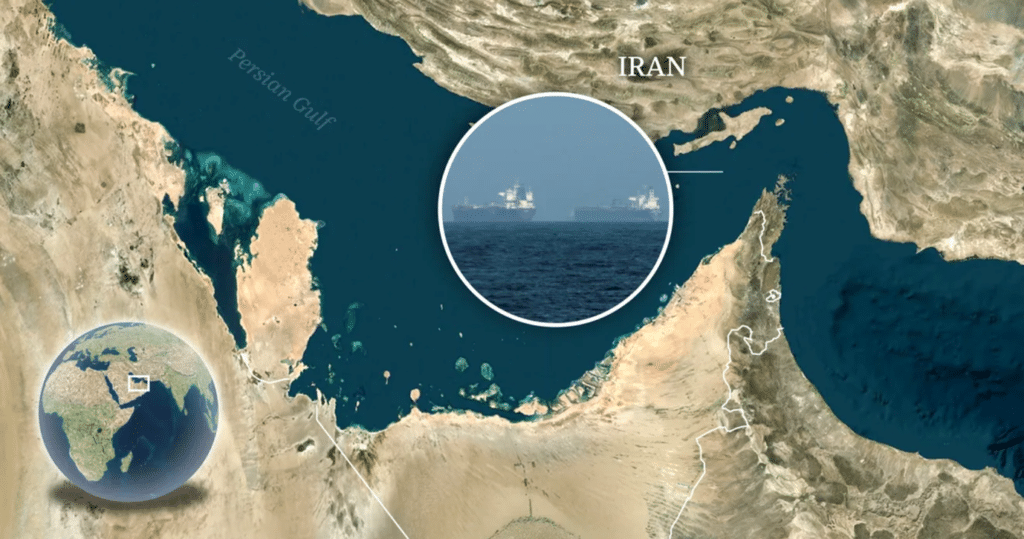
If the Strait of Hormuz—a narrow strip of water through which a fifth of the world’s oil passes—becomes a no-go zone, the math changes instantly. This isn't just about the "oil majors" making a profit. It’s about the sudden, violent re-pricing of reality.
Imagine a bridge. Under normal circumstances, it carries thousands of cars a day. It’s sturdy. But if you start removing the bolts—one by one—the bridge doesn't fall immediately. It creaks. It sags. Then, one day, a single car drives over it, and the whole structure vanishes into the water. Tuesday was the sound of the first few bolts hitting the river below.
The Human Toll of the Ticker
We often ignore the psychological weight of a persistent conflict. Uncertainty is a toxin. When people are afraid, they hoard. They stop innovating. They stop taking risks.
For the investor, the "fate" Cramer mentions is a portfolio that refuses to grow. But for the average worker, that fate is a stagnant wage and a rising cost of living. It is the feeling of running on a treadmill that keeps getting faster while the floor beneath you starts to tilt.
The market's reaction wasn't a panic; it was an acknowledgment. It was the realization that we are tied to a region of the world that is increasingly volatile, and our domestic stability is a fragile thing. We like to think we are independent. We aren't. We are participants in a global drama where we don't always get to write the script.
The Fragility of the Status Quo
There is a specific kind of silence that follows a market crash, but there is a different kind of tension that precedes a long-term decline. Tuesday gave us a taste of the latter. It showed a market that is looking for an excuse to sell.
Why? Because the fundamentals are tired. Consumers are tapped out. Debt is at record highs. When you add the specter of a Middle Eastern war to that equation, the result isn't just a "bad day on the Street." It’s a fundamental shift in how we perceive the future.
If the conflict persists, the "glimpse" we saw Tuesday becomes the new baseline. High volatility. Persistent energy inflation. A defense-heavy budget that leaves little room for social infrastructure. It is a pivot away from growth and toward survival.
We are used to the idea that things eventually "get back to normal." But what if this is the new normal? What if the era of cheap energy and predictable supply chains was the anomaly, and we are simply returning to a more chaotic, expensive mean?
The Weight of the Unseen
Behind every percentage point drop on the Dow, there is a person making a hard choice. There is a father deciding to work a second job because his commute now costs twice as much. There is a young couple putting off buying their first home because the economic "vibe" feels too dangerous.
Cramer’s warning isn't for the billionaires. They have hedges. They have gold. They have exits. The warning is for everyone else. It’s for the people who rely on a stable, predictable world to make their modest dreams come true.
The U.S. economy is a marvel of human ingenuity, but it is not a god. It cannot command the tides or stop the bullets. It is a reflection of our collective confidence. When that confidence is shaken by the drums of war, the numbers on the screen are just the first things to fall.
The real tragedy isn't the loss of capital. It’s the loss of momentum. It’s the way a persistent conflict forces us to look downward at our feet, checking for cracks, instead of upward at the horizon.
Tuesday was a mirror. It showed us an economy that is deeply, perhaps irrevocably, intertwined with the fates of nations we barely understand. We can choose to look away, or we can recognize that the red on the screen is a warning light, flashing in the dark, telling us that the road ahead is far more treacherous than we were led to believe.
The vans in Ohio are still running for now, but the driver is looking at the gauge, and for the first time in a long time, the needle is moving much faster than the wheels.