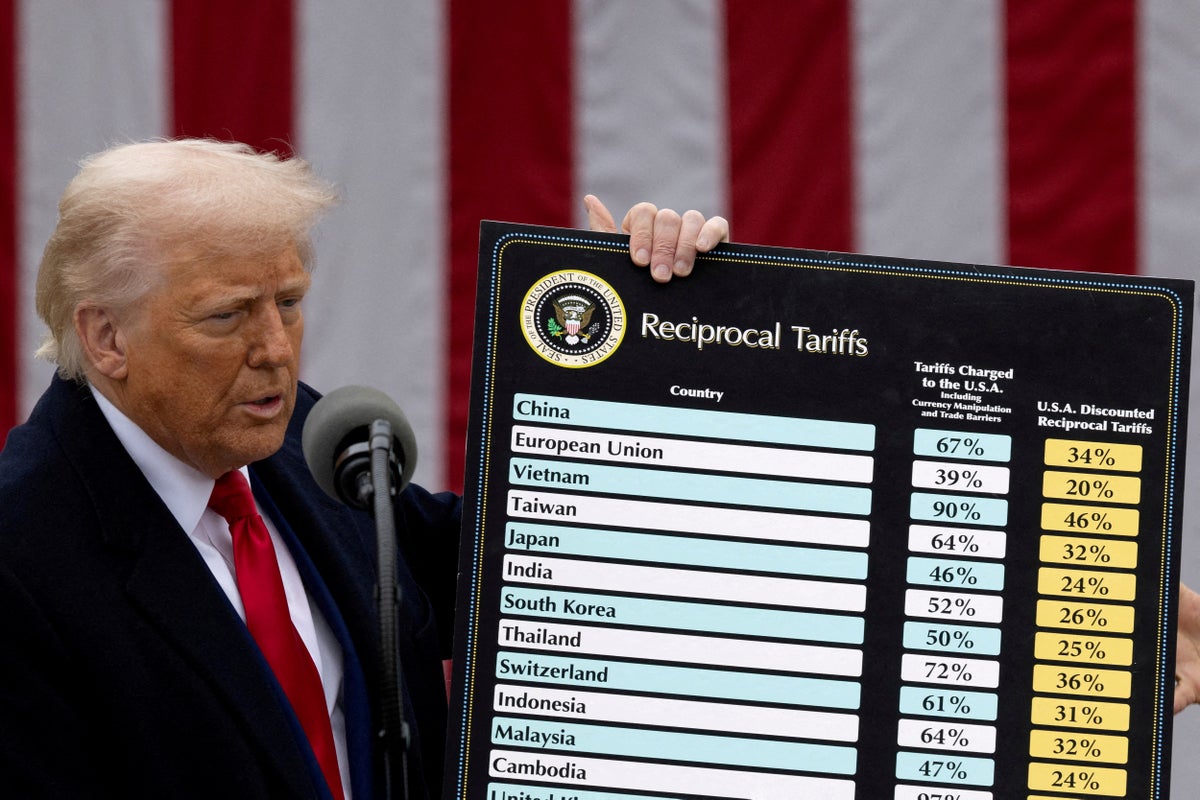
Maria sits at her kitchen table in Ohio, staring at a grocery receipt that feels longer than it has any right to be. The ink is fading, but the numbers are sharp. Eggs, bread, milk—the basics. She isn’t buying luxury items. She isn’t planning a vacation. She is simply trying to keep her three children fed for another week on a paycheck that hasn't stretched to match the rising cost of living.
She hears the news on the radio while packing lunches. More talk of tariffs. It sounds like a policy abstraction, something debated in marble halls far from her quiet suburban street. But for Maria, it isn't an abstraction. It is the twenty-dollar difference between buying the generic brand of chicken or settling for beans again. It is the subtle, biting realization that her money buys less today than it did yesterday.
Tariffs are technically taxes on imports, collected at the border. But they rarely stay at the border. They travel. They move through shipping containers, through wholesalers, and into retail warehouses until they arrive at the shelf where Maria reaches for her groceries. When a government imposes a new round of tariffs, it is effectively placing a toll booth on the goods moving into the country. Businesses, facing higher costs to bring those goods in, pass that burden directly to the people standing in checkout lines.
Think of it like a chain reaction in a crowded room. If you increase the price of the first link—the raw materials or the finished goods arriving from abroad—the cost inevitably ripples forward. It hits the manufacturer, then the distributor, and finally, it crashes into the consumer. It is a invisible tax, quiet and persistent.
The current conversation surrounding new tariffs isn't just about trade strategy or geopolitical maneuvering. It is about the friction between domestic protectionism and the reality of a globalized supply chain. Many of the products Maria buys depend on components sourced from various corners of the globe. When those components are taxed, the final price of the finished product rises, regardless of where the assembly happened.
I remember the first time I realized how much these policy shifts affected my own household budget. Years ago, a sudden shift in trade policy sent the price of household appliances soaring. We had been saving for a new washing machine for months. Suddenly, our goalpost moved. We had to wait, to compromise, to watch our savings lose their purchasing power. It was a visceral lesson in how trade policy transforms into personal hardship. You don't see the bureaucrat signing the order; you see the price tag on the floor model.
Economics often hides behind complex jargon, but the core mechanics are stubbornly simple. When you make it more expensive to import, you make it more expensive to consume. For families already struggling to balance rent, utilities, and rising food costs, this is not a theoretical debate. It is a tightening of the knot.
Some proponents argue that these measures protect domestic industry, creating jobs and fostering local production. There is logic in that goal. Strengthening local manufacturing is a worthy pursuit. Yet, the transition is rarely smooth. Building capacity at home takes years, while the price increases from tariffs are immediate. The pain is felt today; the promise of a revitalized industry remains a hope for tomorrow.
Consider the reality of a small business owner in a mid-sized town. She runs a local hardware store. She relies on specific tools and components that are manufactured abroad. When the government slaps a levy on these goods, she faces a brutal choice. She can absorb the cost, eating into her already thin margins, or she can raise prices, risking the loss of her loyal customers who are themselves watching every penny. She becomes the messenger of bad news, explaining why a basic wrench costs twenty percent more than it did a month ago.
The frustration is palpable. It is the sound of a door slamming shut.
History shows us that trade wars are rarely quick skirmishes. They are prolonged, attritional conflicts. When one country imposes tariffs, others almost always retaliate. It creates a spiral of increasing costs that serves to isolate markets rather than protect them. The victims of this cycle are almost always the people at the bottom of the economic ladder, those who cannot afford to absorb the price hikes.
We have spent decades building a global economy where goods flow with relative ease, lowering the costs of living for billions. Undoing that requires more than just a signature on a document; it requires a complete reimagining of how we produce and consume. Until that shift is complete, we are caught in the middle. We are paying the premium for a future that has not yet arrived.
Maria turns the radio off. She puts the receipt in her purse, right next to the coupons she spent an hour clipping. She has to go to work now. She has to earn enough to cover the new, higher prices that arrived while she was sleeping.
There is a profound loneliness in this struggle. It is the feeling of being a spectator in your own life, watching decisions made in distant offices rewrite the rules of your daily existence. It is the realization that the cost of living is not just a calculation; it is a weight. And for now, that weight is resting squarely on the kitchen tables of families who are running out of room to make adjustments.
The sun begins to set over the houses on her block, casting long shadows across the driveway. Somewhere, a printer is running, creating the documents that will solidify the new tariffs. But here, in the quiet, the cost is already being paid. It is in the hesitation before buying fresh fruit. It is in the careful tally of a grocery cart. It is the silent, ongoing negotiation between what a family needs to survive and what a policy dictates they can afford.