In a nondescript room in Muscat, the air smells of cardamom and the hushed anxiety of three continents. There are no cameras here. No podiums. Just the rhythmic hum of an air conditioner and the heavy silence of men who know that a single misplaced syllable could recalibrate the price of crude oil or the trajectory of a long-range missile. This is the Omani "quiet room," the diplomatic lungs of the Middle East, where the world’s most acrimonious rivals come to breathe when the atmosphere outside becomes unbreathable.
The news filtering out of this room is precise, technical, and deceptively dry. Tehran has reportedly agreed to stop stacking its shelves with 60% enriched uranium. To a casual observer, that sounds like a line item from a chemical supply catalog. To the scientists at the Natanz facility, it is a deliberate hand on a pressure valve.
Uranium enrichment is not a linear climb; it is a steepening curve. At 3.67%, you have fuel for a power plant. At 20%, you have medical isotopes. But at 60%, you are standing on the threshold. You are a short, technical hop away from the 90% required for a nuclear warhead. By agreeing to freeze this stockpile, Iran is not just managing its inventory. It is offering a visual cue. A pause. A signal sent across the Atlantic to a man who is currently measuring the drapes for a return to the Oval Office.
The Shadow of the 47th
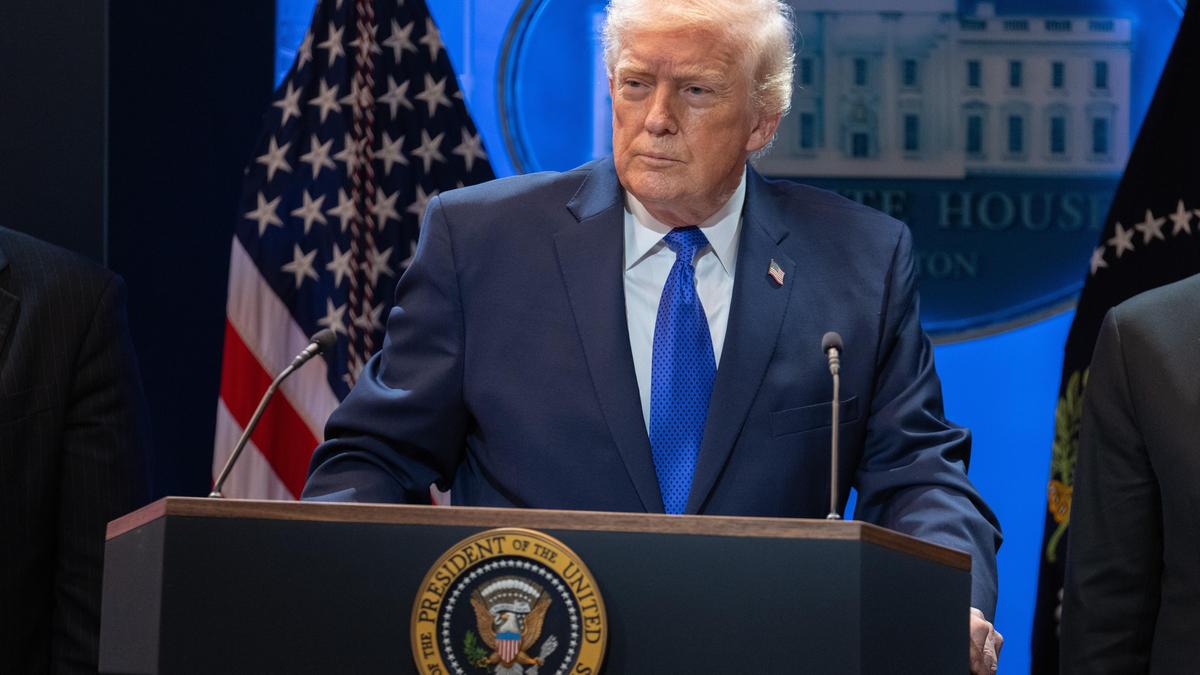
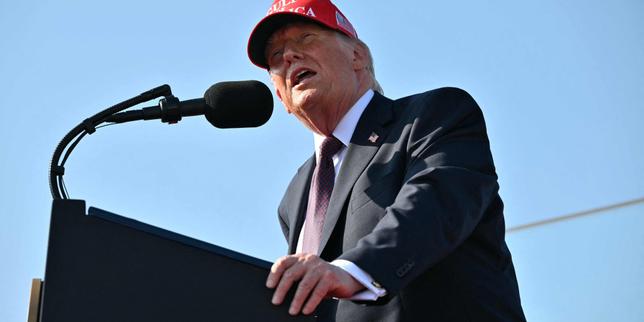
Donald Trump does not care for the nuances of Omani mediation. His shadow looms over these negotiations not as a participant, but as a deadline. In Tehran, the calculus has shifted from long-term diplomacy to immediate survival. The Iranian leadership remembers the "Maximum Pressure" campaign of 2018. They remember the evaporated oil revenues and the Rial tumbling toward worthlessness. They know that if they enter January 2025 with their centrifuges screaming at full tilt, the response will not be a letter from the UN. It will be a sledgehammer.
Consider the hypothetical life of a merchant in the Tehran Grand Bazaar. Let's call him Abbas. Abbas doesn't understand the molecular difference between U-235 and U-238. What he understands is that every time a headline mentions "enrichment," the price of the imported electronic components in his shop ticks upward. For Abbas, the nuclear program isn't a point of national pride; it’s a phantom hand reaching into his pocket. When the Omani mediator, Sayyid Badr Albusaidi, announces a freeze, Abbas sees a glimmer of stability. He sees a world where the "Maximum Pressure" doesn't become "Total Suffocation."
But this freeze is fragile. It is a tactical crouch.
The Mechanics of a Nuclear Stall
To understand why this matters, we have to look at the machines. In the hardened halls beneath the desert floor, thousands of IR-6 centrifuges spin at speeds that defy intuition. They are metallic ghosts, whirring in the dark, separating isotopes with the persistence of a heartbeat.
When a nation stops stocking 60% uranium, they aren't necessarily turning the machines off. They are "downblending" or diverted the flow. It’s like a chef who has all the ingredients for a feast but refuses to put the pot on the stove. The ingredients are still in the kitchen. The chef still has the recipe. The only thing missing is the fire.
The Omani mediators are betting that this "empty pot" strategy will be enough to buy time. They are pitching a "freeze-for-freeze" or, more accurately, a "pause-for-patience." Tehran stops the clock on its nuclear breakout time, and in return, perhaps the incoming American administration holds off on the most crippling new sanctions. It is a high-stakes game of chicken where both drivers are looking for an exit ramp that doesn't look like a surrender.
The Trump Variable
The tension is exacerbated by the sheer unpredictability of the American side. Trump has signaled an impatience that borders on the visceral. His rhetoric suggests he views the current state of affairs not as a delicate balance, but as a leak that needs to be plugged. For him, the Omani mediation might be seen as a stalling tactic—a way for Tehran to wait out the clock until they can find a better opening.
There is a psychological gap here that no diplomat can easily bridge. Washington views the nuclear program as a transactional chip. Tehran views it as an existential shield. When these two worldviews collide, the result is usually a stalemate punctuated by crises.
What makes this moment different is the exhaustion.
The Iranian public is exhausted by an economy that feels like a sinking ship. The American electorate is exhausted by "forever tensions" in the Middle East. Even the mediators in Muscat, who pride themselves on their infinite patience, are starting to look at their watches. The freeze on enrichment is a temporary reprieve, a cool cloth on a feverish brow. But the fever is still there.
The Invisible Stakes
If this deal holds, the immediate reward isn't peace. It’s the absence of catastrophe. It’s one more month where a miscalculation doesn't lead to a strike on the Isfahan facilities. It’s one more month where the Strait of Hormuz remains open and the global supply chain doesn't take another body blow.
We often talk about geopolitics in terms of maps and arrows, but the reality is much more intimate. It’s about the anxiety of a father in Tel Aviv looking at the sky. It’s about a student in Tehran wondering if her degree will ever be worth the paper it’s printed on because of international isolation. It’s about the sheer, exhausting weight of living in a world where two sides are constantly measuring each other for a coffin.
The Omani mediator knows this. He isn't just negotiating percentages of uranium; he is negotiating the heartbeat of the region. By securing this agreement to stop stockpiling, he has lowered the temperature by a fraction of a degree. In a room that was about to burst into flames, that fraction is everything.
But the centrifuges are still there. The knowledge of how to reach 90% isn't something you can downblend or export. It sits in the minds of the engineers, a permanent variable in a shifting equation.
As the winter sun sets over the Persian Gulf, the world waits to see if this pause is the beginning of a conversation or just the silence before a storm. The deal is a bridge built of glass, stretching toward an uncertain shore. We are all walking on it, whether we know it or not, listening for the sound of it cracking under the weight of a January that is coming far faster than anyone is ready for.
The machines may have slowed, but the clock has never ticked louder.
Would you like me to analyze the specific economic impact of these nuclear pauses on global oil markets, or perhaps draft a profile on the key Omani diplomats who keep these channels open?