When prosecutors file a motion to transfer a teenager from juvenile court to the adult criminal system following a fatal shooting at a seasonal retail store, the legal battle shifts immediately from rehabilitation to retribution. The core premise behind such a move—stemming from a deadly shooting outside or inside a Spirit Halloween store that claimed the life of a pregnant woman—is that the severity of the crime and the irreversible loss of life outweigh the standard protections afforded to minors.
Standard local news coverage usually stops at the police blotter. Reporters summarize the probable cause affidavit, quote a grieving relative, and note the date of the upcoming transfer hearing. That surface-level reporting misses the machinery driving these decisions. Moving a minor into adult court is neither automatic nor purely emotional. It is a calculated legal maneuver governed by strict statutory criteria, political pressure, and profound consequences for everyone involved.
The Mechanics of Juvenile Waiver and Transfer Laws
Most people assume that if a crime is heinous enough, a teenager automatically faces adult charges. The reality is far more bureaucratic. Every state maintains a distinct legal boundary between juvenile delinquency and adult criminal culpability, and crossing that line requires navigating a specific procedural mechanism known as a judicial waiver, prosecutorial discretion, or statutory exclusion.
In jurisdictions where prosecutors must petition a judge to try a teen as an adult, the state carries the burden of proof. They cannot simply point to the tragedy of a pregnant woman being killed in a commercial parking lot or storefront and demand a life sentence. Instead, the prosecution must satisfy a multi-factor test established by state statute and rooted in the landmark 1966 Supreme Court decision Kent v. United States.
A judge evaluating a transfer motion examines several concrete variables:
- The seriousness of the alleged offense and whether the protection of the community requires adult restraint.
- The manner in which the offense was committed, specifically looking for premeditation, aggression, or willful violence.
- Whether the offense was against persons or property, with fatal shootings carrying the highest possible weight.
- The prosecutive merit of the complaint, meaning there must be substantial evidence that the juvenile actually committed the act.
- The sophistication and maturity of the juvenile, determined by examining their home life, environmental situation, emotional attitude, and pattern of living.
- The record and previous history of the juvenile, including prior contacts with law enforcement, probation departments, or social services.
- The prospects for adequate protection of the public and the likelihood of reasonable rehabilitation of the juvenile using the procedures, services, and facilities currently available to the juvenile court.
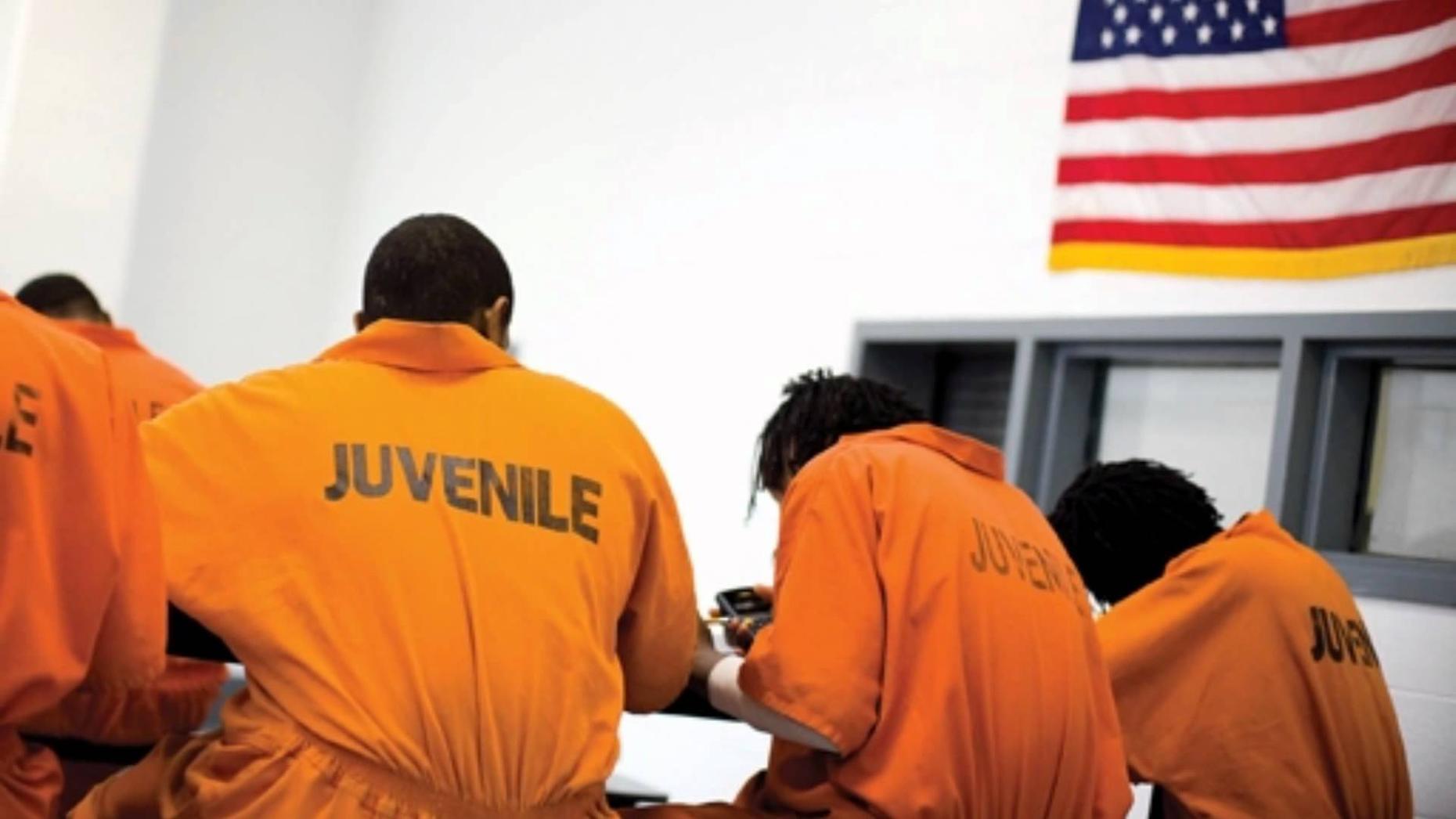
That final point is where most high-profile homicide transfer hearings are won or lost. Juvenile courts lose jurisdiction over an offender once they reach a statutory age limit—often 18, 21, or in rare cases 25. If a 16-year-old or 17-year-old is convicted of murder in juvenile court, the state might only be legally permitted to hold them in a secure youth facility for three to five years. Prosecutors routinely argue that a handful of years in a youth detention center is a wholly inadequate response to a double tragedy involving a pregnant victim.
The Double Tragedy Factor in Fetal Homicide Statutes
When a shooting victim is pregnant, the legal complexity multiplies overnight. Depending on the jurisdiction where the Spirit Halloween shooting occurred, prosecutors may have the statutory authority to file two separate homicide charges—one for the woman and one for the unborn child.
Thirty-eight states currently have fetal homicide laws on the books, and the majority of those statutes apply at any stage of gestation. Under the federal Unborn Victims of Violence Act and parallel state laws, an individual who causes the death of an unborn child during the commission of a violent crime is treated as having committed a separate offense.
For a prosecutor seeking to try a teenager as an adult, a dual-victim scenario changes the strategic calculus entirely.
First, it eliminates almost any viable argument for keeping the case in the juvenile system. Juvenile courts are designed around the concept of parens patriae—the idea that the state should act as a guardian for young offenders who lack full moral culpability. When a single act of gun violence destroys two lives, the political and moral pressure on the District Attorney's office to pursue maximum adult penalties becomes overwhelming.
Second, multiple homicide counts trigger mandatory minimum sentencing guidelines in adult court that simply do not exist in the juvenile system. Even though the U.S. Supreme Court barred mandatory life-without-parole sentences for juveniles in Miller v. Alabama (2012), a teen tried as an adult for a double homicide still faces decades behind bars before becoming eligible for parole.
Why Seasonal Retail Spaces Become Flashpoints
To understand how a routine autumn shopping trip turns into a crime scene, you have to look at the unique vulnerabilities of pop-up retail environments. Seasonal stores like Spirit Halloween operate on a distinct business model that inadvertently strips away many of the passive security measures found in permanent big-box retailers.
Pop-up stores typically lease vacant anchor spaces in aging strip malls or struggling shopping centers for a sixty-to-ninety-day window. Because the occupancy is temporary, the physical infrastructure is minimal.
- Surveillance gaps: Temporary tenants rarely invest in high-definition, exterior parking lot camera networks. They rely on whatever legacy hardware the property landlord left behind, which is frequently outdated, poorly angled, or entirely non-functional.
- Limited loss prevention: Unlike major national chains that employ dedicated, uniformed security personnel or off-duty police officers year-round, seasonal stores operate with lean, temporary staff focused almost entirely on stocking shelves and running registers during intense October rushes.
- High foot traffic and transient crowds: The final weeks of October draw massive, concentrated crowds late into the evening, creating friction in poorly lit parking lots where disputes can escalate rapidly.
Consider a hypothetical scenario that mirrors how many retail parking lot shootings unfold. Two groups of teenagers cross paths near the entrance of a crowded seasonal store. An exchange of words—perhaps fueled by an ongoing dispute on social media or a minor perceived slight—escalates in seconds. One teenager pulls a concealed handgun, fires indiscriminately toward a rival, and strikes an innocent bystander loading shopping bags into her vehicle.
In almost every instance of retail gun violence involving minors, the firearm was not purchased legally. The teen obtained it through an illicit street market, a theft from an unlocked vehicle, or an older acquaintance acting as a straw purchaser. The seasonal store simply serves as the physical backdrop where chronic youth access to illegal firearms collides with a crowded public space.
The Forensic Reality of Prosecuting Teen Shooters
Once a teenager is arrested in connection with a fatal shooting, the investigation shifts from locating the suspect to building a bulletproof evidentiary timeline capable of surviving both a transfer hearing and an adult murder trial.
Detectives and prosecutors rely on a specific triad of digital and physical evidence to establish intent and identity:
Digital Footprints and Geofencing
Modern juvenile crime is almost always documented before, during, or after the fact on mobile devices. Investigators immediately seek search warrants for the suspect's phone, cloud backups, and social media accounts. Location data, private messages bragging about possessing a firearm, or video clips recorded minutes before the shooting frequently provide the exact evidence of "sophistication and maturity" prosecutors need to convince a judge to waive juvenile jurisdiction.
Ballistics and NIBIN Tracing
Every shell casing recovered from the asphalt outside the store is entered into the National Integrated Ballistic Information Network (NIBIN). This automated system compares microscopic markings on fired casings against a national database. If the firearm used in the Spirit Halloween shooting was previously fired in an unsolved drive-by or armed robbery weeks earlier, prosecutors use that ballistic link to prove the teenager is a habitual, dangerous offender rather than a panicked kid who made a single terrible mistake.
Eyewitness and Acoustic Evidence
In crowded retail areas, detectives canvass surrounding businesses for overlapping camera angles that might have captured the suspect's vehicle entering or exiting the shopping center. They also cross-reference 911 call timestamps with acoustic gunshot detection systems, if active in the municipality, to establish the exact sequence of shots fired.
What Happens Inside the Transfer Hearing
A juvenile transfer hearing is essentially a mini-trial, and it is often the most fiercely contested phase of the entire prosecution. Defense attorneys know that if they lose the transfer hearing, their client's life is effectively over. The focus shifts immediately from winning an acquittal to mitigating a catastrophic prison sentence.
During the hearing, the defense will bring in clinical psychologists, neuroscientists, and social workers to testify about adolescent brain development. They will argue that the prefrontal cortex—the region of the brain responsible for impulse control, risk assessment, and long-term planning—is not fully developed in a teenager. Under high-stress conditions, adolescents rely heavily on the amygdala, the emotional center of the brain, making them uniquely susceptible to peer pressure and split-second, catastrophic decision-making.
Defense counsel will also scrutinize the teenager's background for mitigating factors:
- Documented history of severe childhood trauma, abuse, or neglect.
- Prior diagnoses of untreated mental illness or cognitive impairments.
- A complete lack of prior intervention from the juvenile justice system, arguing that the state never even tried to rehabilitate the minor before throwing them into an adult prison.
Prosecutors counter this by focusing relentlessly on the facts of the crime and the irreversible harm inflicted on the victim's family. They cross-examine defense psychologists by pointing to calculated actions taken by the defendant—such as bringing a loaded weapon to a public shopping center, concealing their identity with a mask, fleeing the scene immediately, and disposing of the weapon afterward. Those actions, the state argues, demonstrate clear cognitive awareness and criminal sophistication, not an impulsive childhood mistake.
The Harsh Consequences of Adult Conviction for Minors
If the judge grants the state's motion and transfers the case to adult criminal court, the teenager immediately loses the fundamental protections of the juvenile system.
First, the veil of confidentiality disappears. In juvenile court, proceedings are generally closed to the public, and records are sealed to prevent a youthful offense from permanently ruining a person's future. Once certified as an adult, the teenager's full name, mugshot, charging documents, and court appearances become part of the permanent public record.
Second, housing conditions change dramatically. While federal law under the Juvenile Justice and Delinquency Prevention Act generally requires sight-and-sound separation between youth and adult inmates in local jails, teenagers transferred to adult court often end up in specialized juvenile wings of adult detention facilities. These units frequently rely on extended periods of isolation—sometimes twenty-two hours a day in a cell—to comply with separation mandates, a practice that psychologists warn severely exacerbates mental deterioration.
Third, the sentencing landscape becomes unforgiving. In juvenile court, dispositions are tailored toward treatment, education, and eventual reintegration. In adult court, sentencing is strictly punitive. Even if the teenager accepts a plea bargain to a lesser charge like second-degree murder or voluntary manslaughter to avoid a life sentence, they are still looking at spending their twenties, thirties, and forties inside a maximum-security state penitentiary.
Data compiled by the Department of Justice and independent criminology researchers consistently shows a troubling paradox regarding juvenile transfers. Teenagers prosecuted and incarcerated in the adult system actually have higher recidivism rates upon release than youth who commit comparable violent offenses and are retained in the juvenile system. Exposed to hardened adult offenders during their formative years, stripped of educational and therapeutic programming, and branded with a permanent felony record, transferred youth emerge from prison far more dangerous than when they entered.
The Unresolved Tension in Modern Justice
Prosecutors seeking to try a teen as an adult in a fatal shooting are caught between two irreconcilable demands of the American justice system. On one side stands the foundational legal principle that children are constitutionally different from adults—less culpable for their actions and far more capable of fundamental change. On the other side stands the brutal reality of a pregnant woman killed while shopping, a family shattered, and a community demanding accountability that matches the magnitude of the loss.
No courtroom mechanism can bridge that gap cleanly. Retaining a teen shooter in juvenile court often results in a release date that feels like an insult to the victims' surviving relatives. Transferring that same teen to adult court satisfies the immediate demand for severe punishment, while locking a minor into an adult correctional system designed for warehousing rather than reform. Until legislatures address the upstream failures that put illegal handguns into the hands of teenagers in the first place, prosecutors and judges will continue making these grim, imperfect choices one tragedy at a time.