Geographic separation creates structural vulnerabilities that military doctrines must continuously price into their strategic reserves. When Moscow transmitted a diplomatic memorandum to North Atlantic Treaty Organization capitals warning of potential nuclear escalation over the Baltic exclave of Kaliningrad, analysts immediately misread the communication as a standard rhetorical flare. Stripping away the diplomatic signaling reveals a precise calculation centered on maritime supply lines, spatial geometry, and the threshold where non-kinetic economic friction crosses into kinetic military triggers.
The Spatial Deficit of the Exclave
Kaliningrad operates as a strategic anomaly. Detached geographically from the Russian mainland and wedged between Poland and Lithuania, the territory functions as an isolated node dependent entirely on sea and land transit corridors. In strategic terms, an exclave represents a negative asset during protracted high-intensity conflict unless sustained by secure logistics vectors.
The Baltic Sea has transformed into a defensive basin heavily influenced by Alliance member states. This geographic reality creates an acute logistics bottleneck for Moscow. The primary variables defining this vulnerability include:
- Transit Dependency: Essential commodities and military resupply rely on narrow maritime routes or rail corridors traversing sovereign foreign territory.
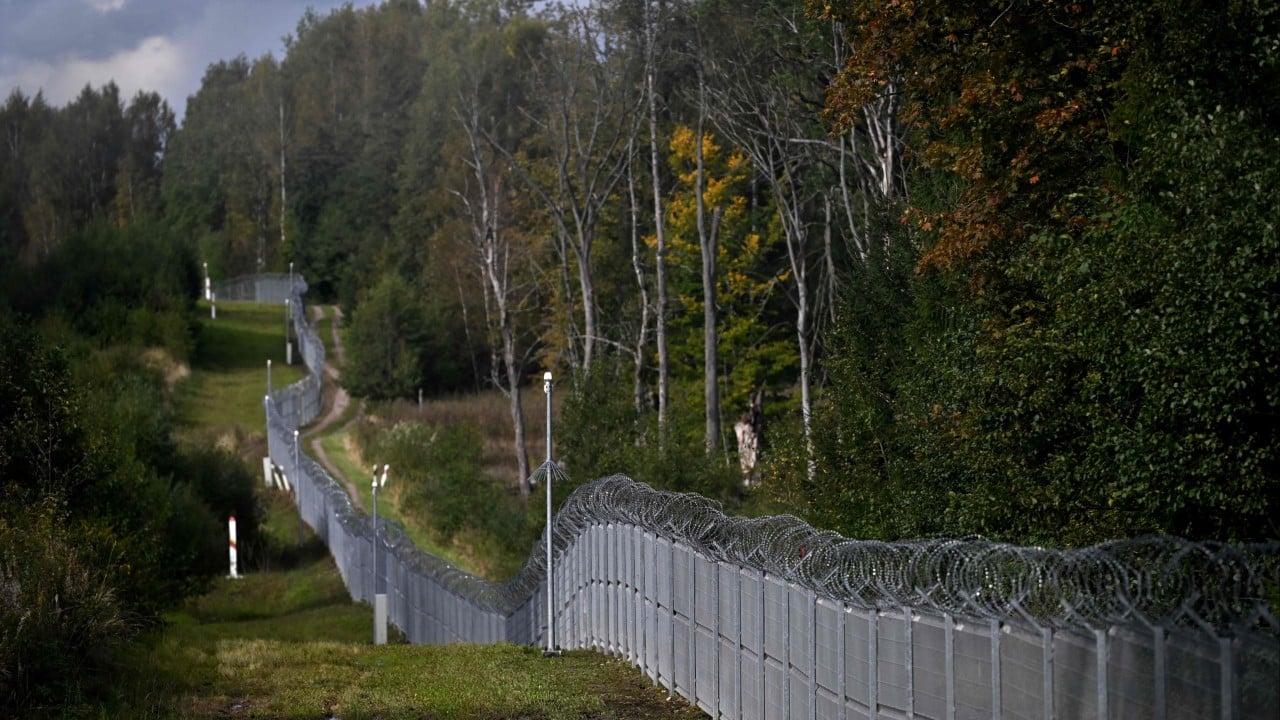
- Perimeter Exposure: The land borders are entirely surrounded by hostile or competing political entities, nullifying traditional depth defense strategies.
- Force Concentration: High densities of naval and air assets stationed at the Baltic Fleet headquarters are trapped within a confined operational theater without immediate reinforcement pathways.
The Economics of a Maritime Interdiction
The core of the recent diplomatic escalation stems from the risk calculus of a blockade. Economic and trade interdiction operates below the threshold of traditional military invasion, creating a strategic gray zone. For European defense planners, restricting transit to Kaliningrad represents a non-kinetic lever to apply pressure. For Moscow, the same interdiction represents an existential attrition mechanism that starves the garrison of operational sustainability within weeks.
When evaluating a blockade cost function, planners measure the time-to-exhaustion of regional stockpiles against the adversary's political will to sustain the restriction. Because Kaliningrad cannot feed or supply itself independently under mobilization conditions, any sustained interruption of maritime traffic forces a binary choice: accept the gradual degradation of the garrison or escalate vertically to break the perimeter.
Doctrinal Escalation and the Nuclear Anchor
Russia’s inclusion of explicit nuclear warnings in a bilateral diplomatic memo marks an operational shift from public broadcast rhetoric to structured threat signaling. Military doctrine traditionally reserves nuclear signaling for existential threats to state integrity. By applying this framework to the logistical isolation of a single regional garrison, Moscow attempts to artificially lower the activation threshold for its strategic arsenal.
This strategy relies on deterrence by asymmetry. Lacking the conventional naval dominance required to break a concentrated Alliance maritime interdiction in the Baltic basin, Russia substitutes conventional maritime inferiority with nuclear escalation dominance. The mechanics of this approach are straightforward:
- Threat Inflation: Elevate the tactical status of a localized blockade to an assault on sovereign territorial integrity.
- Threshold Compression: Remove the middle tiers of conventional graduated response, forcing opponents to choose between immediate backing down or total systemic risk.
- Ambiguity Maintenance: Refuse to define the exact operational trigger, leaving adversaries uncertain about which specific interdiction action initiates a nuclear response.
Strategic Outcomes and Miscalculation Vectors
The structural danger in the Baltic sector does not lie in premeditated aggression, but in mutual miscalculation. Alliance leadership continues to dismiss nuclear memos as routine pressure tactics designed to disrupt military aid to Ukraine. Conversely, defense planners inside Moscow operate under the assumption that a creeping blockade constitutes an active military dismantling of their westernmost strategic bastion.
When two actors evaluate the same physical action through entirely incompatible risk frameworks, standard deterrence models fail. A routine customs inspection, a tightened transit quota, or a naval exercise interpreted by one side as defensive posture can be read by the other as the initial phase of an operational squeeze.
Mitigating this friction requires establishing clear operational definitions for transit security and separating regional garrison logistics from broader continental conflicts. Without institutional guardrails to de-conflict gray-zone maritime enforcement, the structural contradictions of Kaliningrad will remain the primary flashpoint for an unintended systemic collision in Northern Europe.
This video provides an analytical breakdown of why the Kaliningrad exclave is a critical flashpoint and explains the geopolitical drivers behind Russia's recent nuclear warnings to NATO.