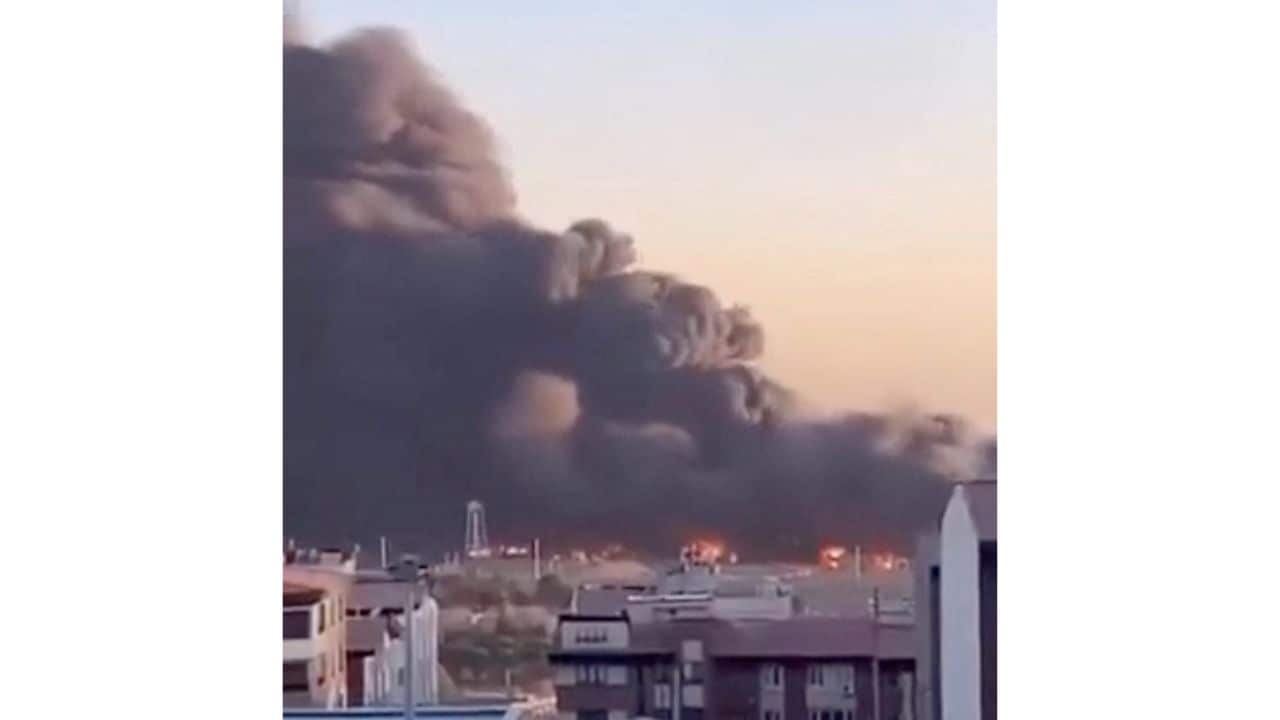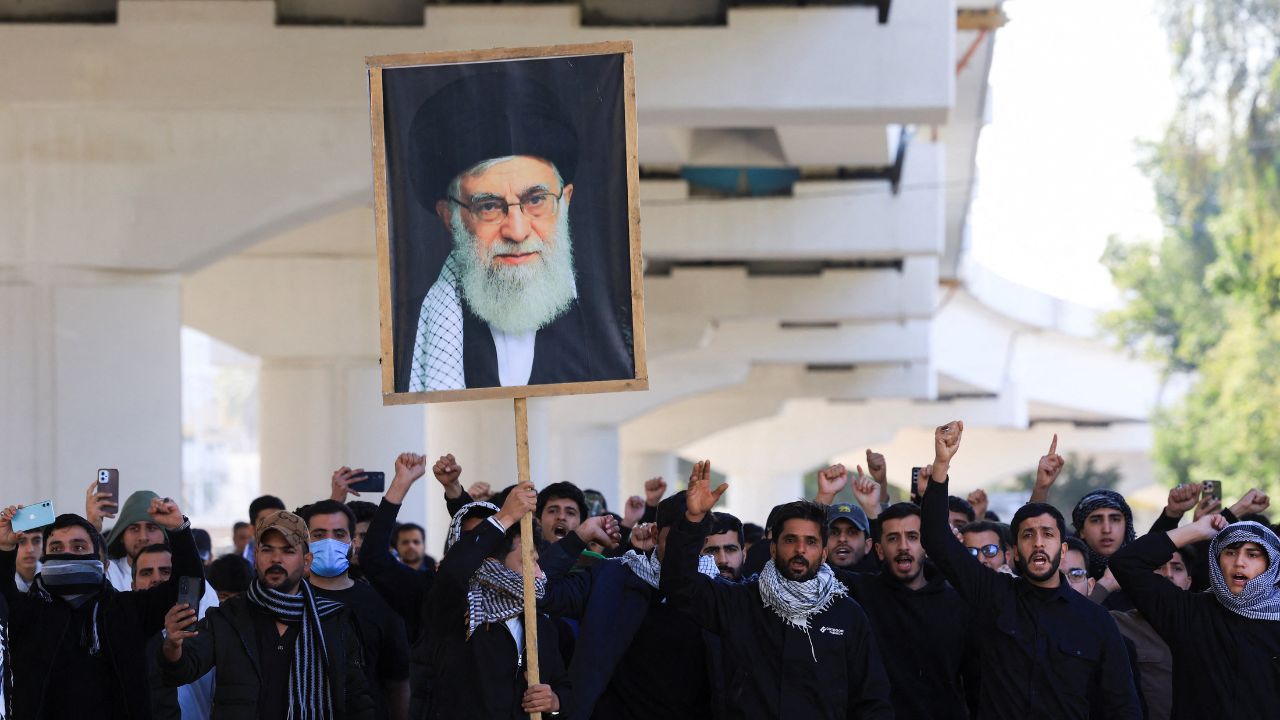
The current state of Iran-Israel relations is not a series of disconnected skirmishes but a calibrated system of managed instability governed by the "Shadow War" equilibrium. This relationship functions as a zero-sum competition for regional hegemony, where the primary objective is the erosion of the opponent’s strategic depth without triggering a full-scale kinetic engagement that would necessitate third-party intervention. The transition from indirect proxy warfare to direct state-on-state signaling marks a phase shift in this equilibrium, moving from deniable attrition to overt deterrence.
The Architecture of Asymmetric Deterrence
The strategic posture of both nations is defined by a fundamental asymmetry in power projection and geographical vulnerability. Israel operates on the "Begin Doctrine," an explicit policy of preemptive denial regarding regional nuclear proliferation, combined with a "Campaign Between the Wars" (CBW) strategy designed to degrade adversary capabilities in the "gray zone." Iran, conversely, utilizes a "Forward Defense" model, exporting its security perimeter to the borders of its rivals through the "Axis of Resistance."
Three pillars sustain this architectural friction:
- Proxy Proliferation and Integrated Firepower: Iran provides non-state actors with precision-guided munitions (PGMs) and Unmanned Aerial Vehicles (UAVs). This creates a multi-front threat that forces Israel to distribute its defensive assets, such as the Iron Dome, David’s Sling, and Arrow systems, across a 360-degree theater.
- Technological and Intelligence Supremacy: Israel’s strategy relies on a qualitative military edge (QME). This involves cyber-kinetic operations (exemplified by the Stuxnet and Duqu families of malware) and targeted eliminations to disrupt the Iranian nuclear program and logistical supply chains in Syria and Lebanon.
- The Nuclear Threshold: Iran’s enrichment levels and centrifuge R&D serve as a "latent deterrent." By hovering at the edge of breakout capability, Tehran gains diplomatic leverage and creates a ceiling for how much conventional pressure Israel and its allies can apply without risking a nuclearized response.
The Cost Function of Kinetic Engagement
Each military action in this theater is weighed against a specific cost function. Decision-makers must calculate the probability of escalation ($P_e$) against the strategic utility of the strike ($U_s$).
The Iranian cost function is heavily weighted toward regime survival and internal stability. Their tactical preference for "strategic patience" is a recognition that a high-intensity conflict with a nuclear-armed Israel, backed by the United States, would likely result in the destruction of critical infrastructure and energy exports—the lifeblood of the Islamic Republic. Consequently, Iran’s retaliation cycles are often designed to be "theatrical"—sufficiently visible to satisfy domestic and proxy audiences but calibrated to avoid crossing the "red line" of Israeli civilian mass casualties.
Israel’s cost function is driven by the "One Bomb" theory—the existential fear that a single nuclear failure would end the state. This leads to a lower threshold for preemptive action. However, the operational cost of a sustained campaign against Iran is prohibitive. The logistics of striking hardened, deeply buried sites like Fordow and Natanz require massive ordnance-penetrating capabilities and prolonged suppression of enemy air defenses (SEAD) over thousands of kilometers of hostile airspace.
The Technological Displacement of Warfare
The battlefield has migrated from traditional geography to the electromagnetic and digital spectrums. This shift allows both states to inflict "clean" damage—harm that degrades capability without producing the visceral imagery of dead bodies that often triggers international condemnation or uncontrolled escalation.
Cyber-Kinetic Integration
The sabotage of the Shahid Rajaee port terminal and the retaliatory attempts on Israeli water command-and-control systems demonstrate that infrastructure is the new frontline. These are not merely data breaches; they are attempts to disrupt the physical reality of the civilian populace. The logic here is "deterrence by punishment" in the digital realm.
The Drone-Missile Nexus
The April 2024 exchange proved that mass-scale UAV swarms are used as "sensor-soakers." By launching high volumes of low-cost Shahed-series drones, Iran forces Israel and its partners to expend high-cost interceptors. This creates an economic attrition model. If an interceptor costs $2 million and the drone costs $20,000, the defender faces a mathematical certainty of exhaustion over a long-term engagement.
Strategic Depth and the Geography of Influence
Iran’s "Land Bridge" through Iraq and Syria to Lebanon is the vital artery of its regional strategy. This allows for the physical movement of IRGC-Quds Force personnel and advanced hardware. Israel’s objective is the "mowing of the grass"—a constant, repetitive series of strikes on these transit points to increase the friction of Iranian operations.
This creates a "bottleneck effect" in eastern Syria. The frequent strikes on Al-Bukamal and the T-4 Airbase are tactical manifestations of a strategic necessity: preventing the permanent Iranian entrenchment on Israel’s northern border. The failure of the Syrian state to regain total sovereignty has turned its territory into a permanent laboratory for this high-tech attrition.
The Limitation of Intelligence-Led Operations
High-fidelity intelligence is the primary enabler of the Israeli strategy. However, reliance on intelligence creates two significant vulnerabilities:
- The Intelligence Gap: Tactical successes (like the elimination of high-ranking commanders) can lead to "strategic blindness." Removing a node in the network does not necessarily destroy the network; it often leads to the evolution of more decentralized and resilient command structures.
- The Provocation Trap: When intelligence is used to execute high-profile strikes, it can force the adversary into a corner where "non-response" becomes more politically expensive than "risky response." This reduces the predictability of the shadow war.
The Economic Dimension of the Conflict
The financial health of both nations dictates their military endurance. Iran’s economy, stifled by sanctions, operates on a "Resistance Economy" model. This prioritizes the defense budget and proxy funding over domestic welfare, ensuring that the IRGC remains well-funded even as the Rial devalues.
Israel’s economy is highly sensitive to the mobilization of reserves. As a high-tech, service-oriented economy, pulling 300,000 workers into active duty for an extended period creates a massive contraction in GDP. Therefore, Israel’s strategic preference is always for short, high-intensity conflicts rather than the "war of a thousand cuts" that Iran prefers.
The Erosion of Red Lines
The historical "rules of the game" are disintegrating. Previously, strikes on Iranian soil were avoided by Israel, and direct Iranian launches against Israel were unthinkable. Both thresholds have now been crossed. This "normalization of the extreme" means that the buffer zone for error has evaporated.
The mechanism of "escalation dominance" is now the primary driver of the relationship. Each side is attempting to prove it can climb the ladder one step higher than the other, believing that the opponent will be the first to blink due to the fear of total war. This is a classic "Chicken" game in game theory, where the risk of a head-on collision increases as neither side is willing to swerve.
Strategic Imperatives for the Decisive Phase
The following logic dictates the likely trajectory of the conflict:
- Hardened Infrastructure Transition: Iran will accelerate the movement of its nuclear and missile production into "mountain-base" complexes that are immune to conventional bunker-busters. This forces Israel into a binary choice: accept a nuclear-capable Iran or initiate a ground-based sabotage campaign of unprecedented scale.
- The Rise of Autonomous AI Warfare: Expect the deployment of AI-driven swarming tech that does not require constant GPS or satellite links, negating the "electronic dome" of jamming currently used by both sides.
- Diplomatic Rearrangement: Iran will seek to further integrate with the BRICS+ architecture to bypass the Western financial system, while Israel will attempt to expand the Abraham Accords to create a formal regional air-defense alliance.
The strategic friction is no longer about ideology; it is a clinical struggle over the physical and digital architecture of the Middle East. The party that successfully integrates its kinetic capabilities with economic resilience and AI-driven intelligence will dictate the terms of the new regional order. Control of the "gray zone" remains the only viable path to victory without self-destruction.