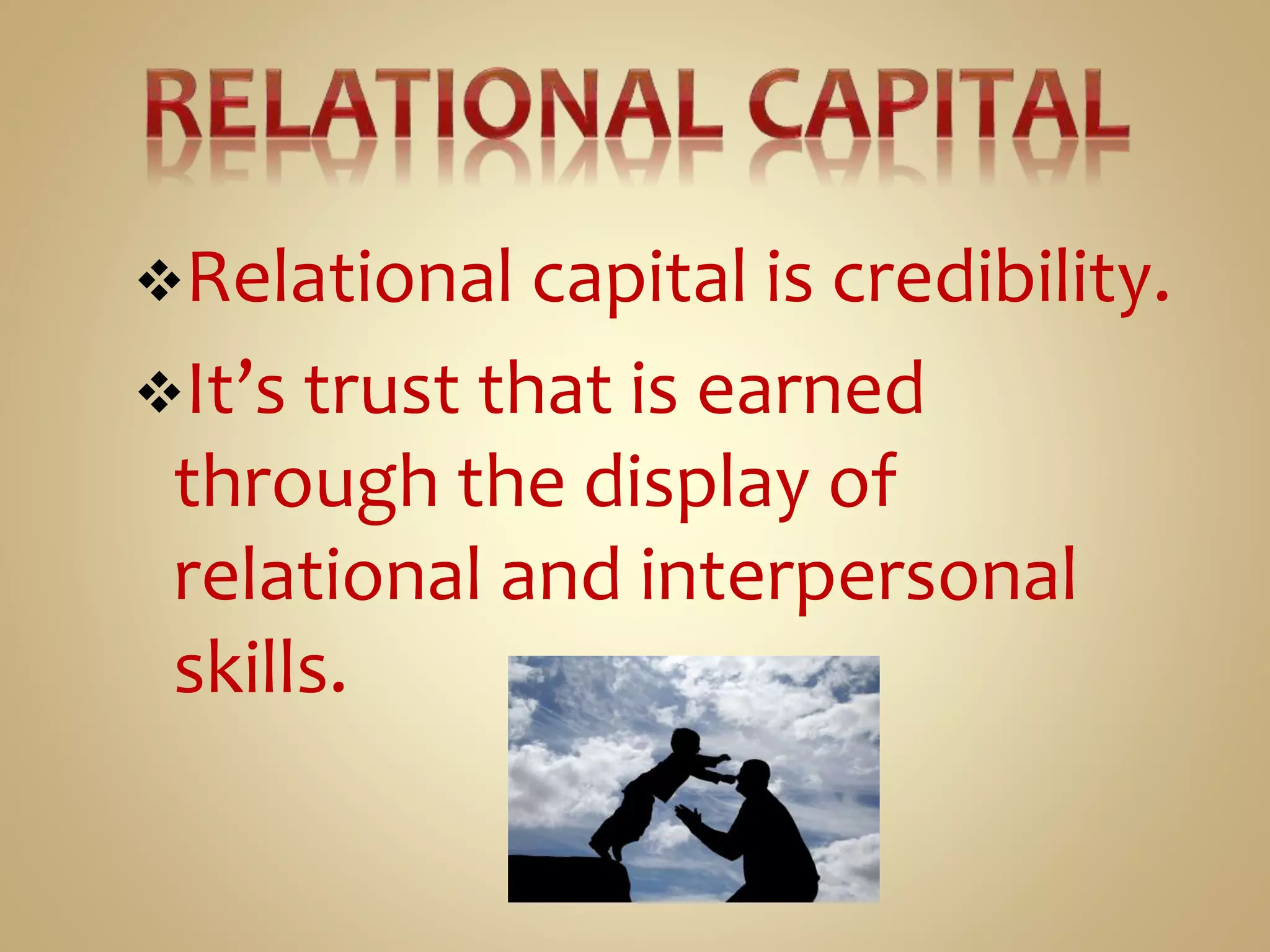
Trust functions as a risk-reduction mechanism that lowers transaction costs within complex systems. When a firm attempts to automate trust, it fundamentally confuses reliability with fidelity. Reliability is a measure of consistent output under stable parameters; fidelity is a measure of adherence to an intended outcome during unforeseen variance. Automation excels at the former but lacks the cognitive and ethical agency required for the latter. In high-stakes environments, the attempt to substitute algorithmic verification for interpersonal trust creates a "trust deficit" that increases system fragility.
The Triad of Trust Components
To understand why automation fails to replicate trust, one must decompose trust into its constituent variables. Trust is not a monolith but a composite of three distinct vectors:
- Competence (The Technical Vector): The perceived ability of a party to perform a specific task. This is the only component of trust that can be effectively automated. An API or a smart contract can demonstrate competence through consistent execution.
- Benevolence (The Intentional Vector): The belief that a party will act in the interest of the trustor, even when a contract is silent or ambiguous. Algorithms lack intent; they possess only instructions. Without the capacity for benevolence, an automated system cannot bridge "the incomplete contract" problem in economics.
- Integrity (The Ethical Vector): The adherence to a set of principles that remain stable despite external pressures. Automated systems operate on optimization logic, which can inadvertently sacrifice ethical constraints if those constraints are not explicitly programmed as hard boundaries.
The inability of technology to simulate benevolence and integrity means that automation provides verification, not trust. Verification requires constant monitoring, which represents a high overhead. True trust allows for "loose coupling," where parties operate with minimal oversight, significantly increasing organizational velocity.
The Fragility of Algorithmic Certainty
Automation operates on the principle of the "Closed World Assumption," where it is assumed that if a condition is not explicitly stated, it does not exist. Human relationships operate in an "Open World," characterized by edge cases, emotional nuance, and shifting social norms.
When a business automates a relationship—such as customer service via LLMs or credit lending via black-box scoring—it creates a rigid interface. This rigidity works until a "Black Swan" event occurs. Because the automated system cannot exercise judgment, it fails at the very moment trust is most required. This is the Automation Paradox: the more reliable a system is, the less prepared the human operators are to intervene when it fails, and the more catastrophic the loss of trust becomes.
The Cost Function of Synthetic Trust
Replacing human relational capital with automated systems introduces hidden costs that are rarely accounted for in ROI calculations.
- The Monitoring Tax: As interpersonal trust is removed, firms must implement increasingly complex monitoring systems to ensure the automated agent is performing as expected. The labor saved on the front end is often redirected to the back end in the form of audit, compliance, and "human-in-the-loop" oversight.
- The Loss of Reciprocity: Human trust is built on reciprocal vulnerability. When a customer or partner interacts with a machine, the element of vulnerability is removed for the machine. This asymmetry prevents the formation of long-term loyalty, turning a relationship into a series of discrete, mercenary transactions.
- Data Latency and Misalignment: Trust allows for the transmission of "soft information"—nuance that cannot be easily digitized. Automating a relationship forces all communication through a digital filter, leading to information loss. The system optimizes for what it can measure (speed, ticket resolution) rather than what matters (satisfaction, long-term value).
Structural Bottlenecks in Smart Contracts and DAO Logic
The blockchain movement attempted to solve the trust problem by creating "trustless" systems. While these systems excel at preventing double-spending or ensuring transparent ledgers, they fail at the level of social layer arbitration.
A smart contract cannot account for "good faith." If a vendor delivers sub-par materials that technically meet the coded specifications but fail the functional requirements of a project, a "trustless" system triggers payment automatically. The human relationship, by contrast, allows for a pause in the transaction to negotiate a remedy. By removing the ability to exercise mercy or common sense, automated trust systems become predatory in their precision.
The Asymmetry of Trust Erosion
Trust is non-linear. It is built incrementally over time (arithmetic growth) but can be destroyed in a single event (geometric decay). Automation accelerates the rate of trust erosion because a machine cannot offer a sincere apology or demonstrate a change in character.
When an automated system fails, the user perceives it as a systemic failure rather than an individual error. This leads to a wholesale rejection of the platform. A human error can be framed as an anomaly; a systemic error is viewed as an inherent flaw in the architecture.
Re-Engineering the Human-Machine Interface
For organizations looking to scale without sacrificing relational capital, the strategy must shift from replacement to augmentation. The goal is to use automation to handle the "Competence Vector" while reserving the "Benevolence" and "Integrity" vectors for human agents.
- De-automate the "Moments of Truth": Identify the specific touchpoints in a customer or partner journey where risk is highest or emotions are involved. These must remain human-centric.
- Transparent Logic Gateways: If an algorithm makes a decision (e.g., denying a loan or flagging a transaction), the "why" must be legible to a human who can then override it based on relational context.
- Invest in "High-Touch" Buffers: Use the efficiency gains from automation to fund a more specialized, empowered human workforce that handles the exceptions.
The competitive advantage in the next decade will not belong to the firm that automates the most relationships, but to the firm that uses automation to free up its people to build the deepest ones. Relational capital is the only asset that cannot be easily commoditized or replicated by a competitor’s software stack.
Strategic Execution: Protecting the Relational Margin
Organizations must audit their current automation pipeline to identify "Trust Leakage." This occurs where efficiency gains are being offset by a decline in stakeholder confidence.
The first move is to map the Trust Sensitivity of every automated process. Processes with low stakes and high frequency (e.g., password resets) should be fully automated. Processes with high stakes and low frequency (e.g., contract negotiations, crisis management) must be shielded from automation.
The second move involves the implementation of Relational Circuit Breakers. These are triggers that automatically escalate a machine-led interaction to a human the moment a deviation from "standard" behavior is detected. This prevents the "death spiral" of automated frustration where a user is trapped in a loop with a system that does not understand the gravity of the situation.
Finally, firms must treat trust as a balance sheet item. If an automation project reduces the "trust score" of a brand, it is essentially a form of debt. Like any debt, it may provide immediate liquidity (efficiency), but it must eventually be paid back with interest in the form of increased marketing costs, higher churn, and a damaged reputation. The most successful operators will be those who recognize that while data is the fuel of the modern economy, trust remains its only viable currency.
Deploying technology to verify facts is an operational necessity; deploying technology to replace the human bond is a strategic error. The future of scale lies in the rigorous application of human judgment at the edge of automated efficiency.