The air inside the Vienna hotel suite always smells of stale espresso and anxiety. For decades, diplomacy between Washington and Tehran has not been conducted in grand, sweeping gestures. It happens in the quiet scraping of chairs, the rustle of briefing papers at 3:00 AM, and the heavy silence of translators holding their breath.
For forty years, this relationship has been a flatline of hostility. Every few years, a blip of hope appears on the monitor, only to vanish into the familiar noise of sanctions, rhetoric, and proxy conflicts.
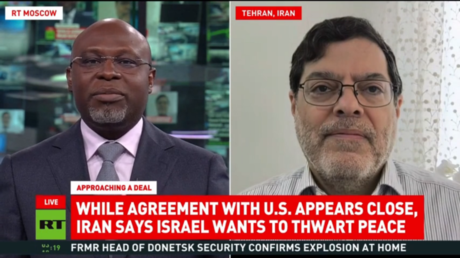
But something shifted recently in the drafty corridors of international diplomacy. The calculus changed. According to seasoned analysts and academic observers who have spent lifetimes parsing the subtle shifts in Iranian political rhetoric, the mathematical probability of a breakthrough between the United States and Iran has just hit its highest point in a generation.
To understand why, you have to leave the think-tank whiteboards behind. You have to look at the grocery stores in Tehran and the gas stations in Ohio.
The Weight of the Ledger
Imagine a shopkeeper in Tehran named Javad. He is a hypothetical man, but his daily reality is shared by eighty million people. Every morning, Javad rolls up the metal shutters of his small storefront. Every morning, he adjusts the prices of his goods based on the black-market exchange rate of the Iranian rial against the US dollar.
Sanctions are not abstract policy tools to Javad. They are a suffocating fog. They mean his daughter’s asthma medication costs three times what it did last month. They mean the spare parts for his delivery truck are stuck in a port somewhere in Dubai, tangled in a web of financial red tape.
For years, the political elite in Tehran operated under the assumption that they could outlast the economic pressure. They called it the "resistance economy." They leaned into alliances with Moscow and Beijing, hoping to build a financial fortress that Washington could not breach.
It failed.
The domestic pressure inside Iran has reached a boiling point. Inflation is a chronic fever. The middle class is evaporating. When a government faces that level of systemic internal strain, the ideological purity of the past becomes a luxury it can no longer afford. Survival requires pragmatism.
Now, look across the Atlantic.
The view from Washington is equally urgent, though driven by a different kind of exhaustion. The American foreign policy establishment is staring at a map that is catching fire in multiple theaters. The war in Ukraine has drained stockpiles and attention. The volatile situation in the Middle East threatens to pull American forces into another open-ended conflict that the electorate desperately wants to avoid.
Gas prices remain a political landmine. The threat of a major regional escalation that shuts down the Strait of Hormuz—through which a fifth of the world’s petroleum passes—is a nightmare scenario for any administration.
Washington needs a win. More importantly, it needs stability.
The Professor's Cold Math
When political scientists calculate the likelihood of a diplomatic breakthrough, they do not look at whether the two sides suddenly like each other. Nations do not have feelings; they have interests.
The current optimism stems from a rare alignment where both adversaries realize that the cost of walking away from the table is suddenly higher than the political cost of sitting down.
Consider the mechanics of the standoff. For years, the Joint Comprehensive Plan of Action (JCPOA)—the 2015 nuclear deal—was treated as a corpse that couldn't be revived. When the United States walked away from the agreement in 2018, it triggered a cascade of retaliation. Iran accelerated its uranium enrichment, pushing past civilian limits and moving closer to the threshold of weapons-grade material.
This created a dangerous game of chicken. If Iran crosses the nuclear threshold, Israel or the United States may feel compelled to strike. A military strike means war. A war means global economic chaos.
But a funny thing happened on the way to the brink. Both sides stopped.
Behind the scenes, away from the grandstanding at the United Nations, quiet channels remained open. Intelligence officials and low-level diplomats kept talking in neutral capitals like Muscat and Doha. They didn't talk about grand bargains or historic handshakes. They talked about de-escalation steps. Small, measurable moves. A pause in enrichment here; a loosening of a specific enforcement mechanism there.
These quiet interactions revealed a fundamental truth: neither side actually wants the war they are publicly preparing for.
The Architecture of Compromise
How do you build a bridge over forty years of burning oil?
You don't do it with a single, massive treaty. The political opposition in both capitals is too fierce for that. Any comprehensive deal would be dead on arrival in the US Congress, and it would be savaged by hardliners within Iran’s Islamic Revolutionary Guard Corps.
Instead, the highest-odds scenario involves a series of parallel, unwritten understandings. It is diplomacy by shorthand.
The United States signals that it will turn a blind eye to certain Iranian oil exports, allowing vital revenue to flow back into Tehran's depleted coffers. In exchange, Iran slows its nuclear centrifuge progression and restrains its regional proxies from targeting American assets.
It is fragile. It is ugly. It is entirely transactional.
Yet, this cynical realism is precisely why the odds are so high. It requires no trust. It only requires mutual self-interest.
The biggest hurdle has always been the ghost of 2018. Iranian negotiators are plagued by a persistent fear: What happens if we sign a deal today, and the next American administration tears it up tomorrow?
It is a valid question. The fluid nature of American democracy makes long-term foreign policy commitments incredibly difficult to guarantee. To overcome this, the current framework focuses on immediate, front-loaded benefits. Iran wants economic relief that can be realized right now, in the present fiscal quarter, to stabilize its restive population. Washington wants a freeze on the nuclear clock immediately.
Future risks are being traded for present certainty.
The Invisible Stakes
It is easy to get lost in the jargon of breakout times, centrifuge models, and banking sanctions. But the true significance of this moment lies in the human lives hanging in the balance.
If these high odds translate into a tangible agreement, the shift will be felt in ways that rarely make the evening news. It means a young software engineer in Isfahan can finally access the global economy without relying on shady VPNs and illegal crypto networks. It means an American soldier stationed at a remote base in the Syrian desert can sleep through the night without listening for the high-pitched whine of an incoming suicide drone.
It means a fragile, uneasy peace holds in a part of the world that has known only volatility.
The window of opportunity is incredibly narrow. Upcoming election cycles, sudden provocations by hardline factions, or an unforeseen miscalculation in the Persian Gulf could shatter the fragile progress in an instant. The diplomatic machinery is moving, but it is moving against the clock.
The diplomats in Vienna know this. They know that opportunity in international politics is a fleeting commodity.
When the lights stay on late into the night in those neutral European suites, it isn't because the participants have found common ground on a shared vision for the world. It is because they have looked down into the abyss of an uncontrolled conflict, stepped back from the ledge, and realized that a bad peace is infinitely better than a good war.
The phones are ringing. The drafts are being exchanged. For the first time in years, the voices on both ends of the line are staying on the phone.