The idea that Europe can defend itself is a nice bedtime story, but the math just doesn't work. Donald Trump recently set the internet on fire—again—by calling NATO a "paper tiger" if the United States isn't the one holding the leash. While the comment sounds like typical campaign trail hyperbole, it hits a nerve because it's largely true. For decades, the European wing of the alliance has treated the U.S. military as a free security subscription. Now that the bill is coming due, the structural rot is finally showing.
If you look at the raw numbers, the "tiger" part of NATO is almost entirely American. We aren't just talking about money; we're talking about the actual guts of a modern military—satellites, long-range transport, and the kind of intelligence-gathering that European nations simply don't have on their own. Without the U.S., NATO is a collection of fragmented armies with no central nervous system.
The 980 billion dollar elephant in the room
The biggest mistake people make is thinking NATO is a pot of money everyone tips into. It's not. It's a commitment of national resources. In 2025, U.S. defense spending is estimated to hit $980 billion. That's roughly 62% of the entire alliance's military budget. Think about that. One country carries nearly two-thirds of the weight for a 32-nation club.
While countries like Poland and the Baltic states are finally stepping up—some even pushing toward 4% or 5% of their GDP—the heavy hitters in Western Europe have been coasting for years. Germany is just now shaking off decades of military neglect, and France, while capable, doesn't have the scale to replace American "enablers." These enablers are the things you don't see in a parade:
- Air-to-air refueling: Most European jets can't stay in the air for long-range missions without American tankers.
- Strategic Airlift: If a crisis hits, Europe lacks the massive cargo planes needed to move heavy armor across the continent quickly.
- Satellite Intelligence: The U.S. provides the "eyes in the sky" that every other member relies on for targeting and early warning.
Take those away, and you're left with a bunch of high-tech tanks that can't get to the front and jets that can't stay airborne. That's what a paper tiger looks like. It looks scary on a spreadsheet but folds the moment it has to operate independently.
Why Trump's rhetoric actually matters in 2026
You might not like the tone, but the "America First" shift is a permanent reality now. The U.S. is $36 trillion in debt and refocusing on the Indo-Pacific. The days of Washington acting as Europe's permanent night watchman are over. Trump's "paper tiger" jab isn't just an insult; it's a diagnostic report. He's pointing out that the alliance's deterrent power is borrowed, not owned.
The "Hague Commitment"—the new push to get allies to spend 5% of their GDP on defense—is a direct response to this pressure. It's a desperate attempt to turn the paper tiger into a real one before the U.S. decides the cost of leadership isn't worth the headache. European leaders like Mark Rutte have been blunt: "If anyone thinks Europe can defend itself without the US, keep on dreaming." That’s a staggering admission of weakness for a continent with a combined GDP that rivals America's.
The Russian bear vs the paper tiger
There's a weird irony here. While Trump is calling NATO a paper tiger, he's also used the same term for Russia. He mocked Putin's "aimless" war in Ukraine, pointing out that a real superpower should've finished the job in a week. It’s a double-edged sword. If Russia is a paper tiger because it's struggling against Ukraine, then NATO is a paper tiger because it's terrified of a struggling Russia.
Putin, of course, isn't taking it lying down. He’s dared NATO to "deal with this paper tiger then," betting that without American Tomahawk missiles and U.S. personnel on the ground, the European response would be a disorganized mess. He’s probably right. Europe has the money, but it doesn't have the "will to act," as Polish PM Donald Tusk recently lamented.
The myth of European strategic autonomy
You’ll hear a lot of talk from Paris and Brussels about "Strategic Autonomy." It sounds great in a press release. It means Europe would be able to handle its own backyard without calling Washington every time a border is crossed. But the reality is a logistical nightmare.
Building a "European Army" isn't just about buying more guns. It’s about standardizing equipment. Right now, European countries use dozens of different types of tanks, helicopters, and communications systems that don't always talk to each other. The U.S. provides the glue that holds these pieces together. If the U.S. pulls out, that glue dissolves. You’re left with 31 different sets of instructions and no one to lead the meeting.
What happens if the U.S. actually leaves
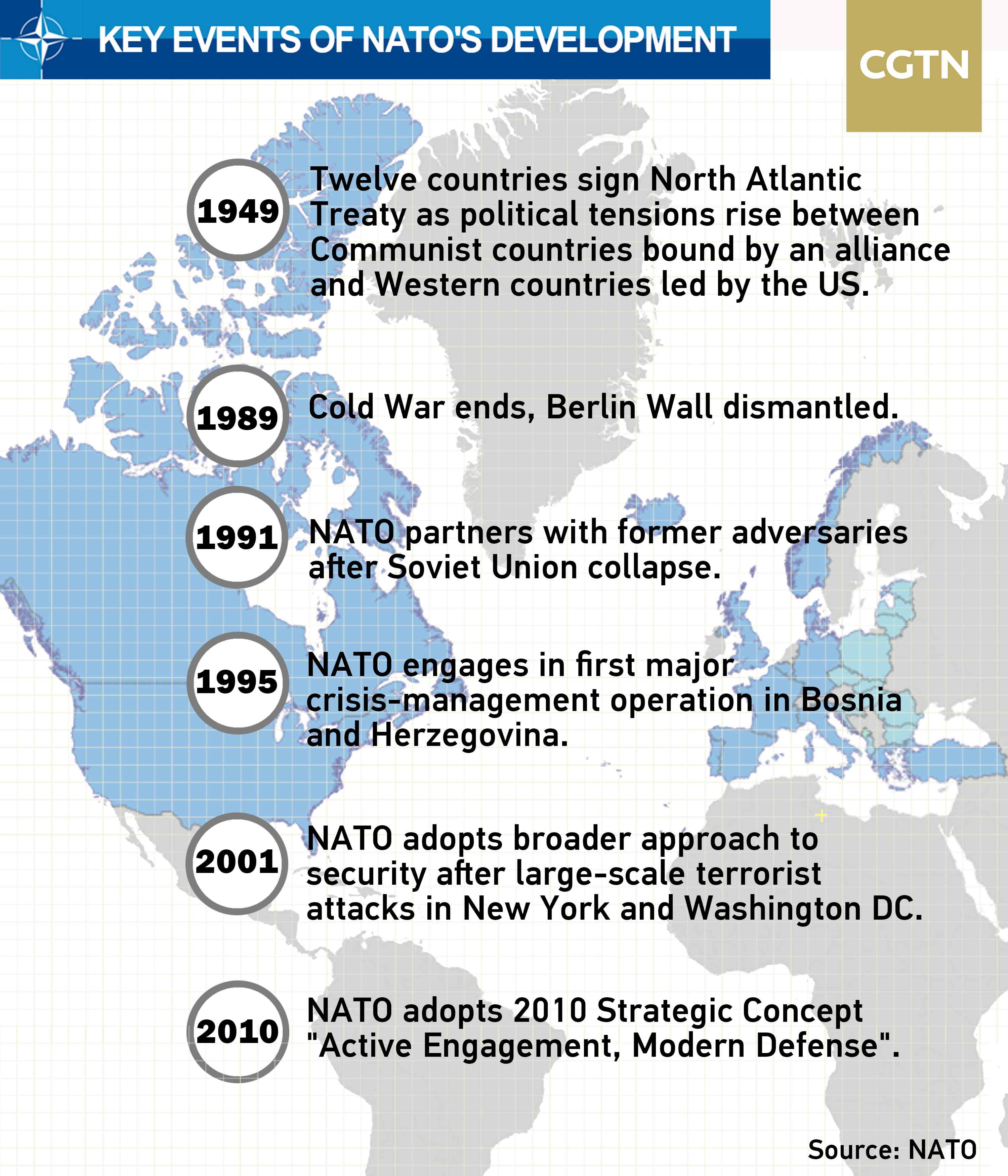
It’s the nightmare scenario for every Eastern European capital. If the U.S. stops underwriting Article 5—the "attack on one is an attack on all" clause—the alliance effectively dies. Article 5 is only a deterrent because everyone knows the U.S. military is the one backing it up. Without the American nuclear umbrella and the 40,000+ troops stationed in Europe, the treaty is just a piece of paper.
Honestly, the risk isn't just a full withdrawal. It's a "soft exit" where the U.S. stays in the club but refuses to send more than a few strongly worded letters. That’s the real paper tiger moment.
Stop overthinking the politics and look at the logistics
The solution isn't more diplomacy; it’s more factories. Europe needs to stop arguing about "identity" and start building its own defense industrial base. They need to replicate the American enablers they’ve relied on for eighty years.
If you're tracking this as an investor or a policy wonk, watch the "equipment expenditure" numbers. European nations are finally starting to spend more on hardware than on soldier pensions, which has been a huge problem in the past. But they're years—maybe decades—away from being able to operate without the U.S. satellite and logistics backbone.
The "paper tiger" label will stick until Europe can launch its own satellites, refuel its own planes, and defend its own borders without checking the weather in Washington first. Until then, they're just an expensive club waiting for an American escort.
Start by looking at your own country's defense white papers. If the spending isn't hitting at least 3% of GDP with a heavy focus on "strategic enablers" rather than just personnel, you're looking at a nation that still expects the U.S. to do the heavy lifting. That expectation is a dangerous gamble in 2026.