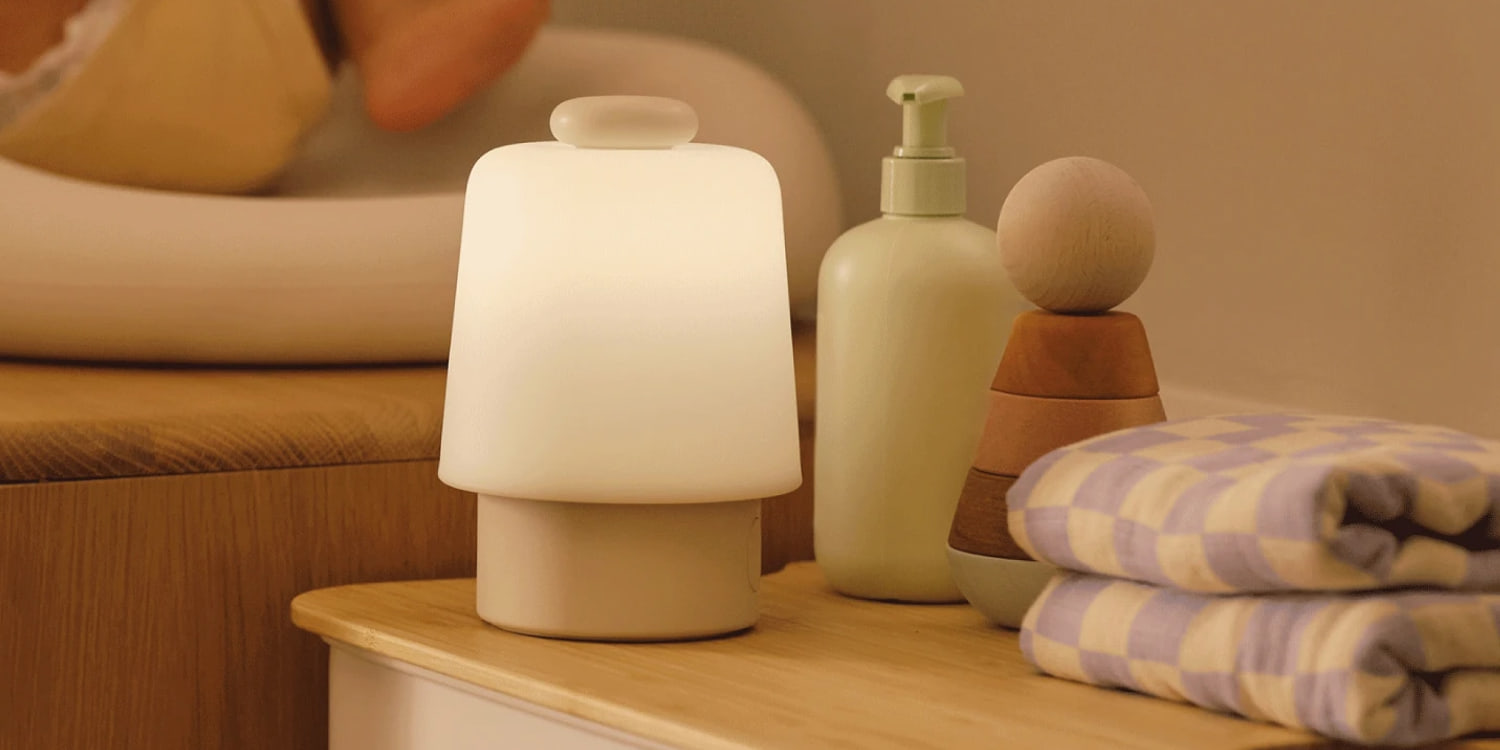
Infant sleep deprivation is not a parenting failure; it is an environmental engineering problem driven by circadian misalignment and sensory overstimulation. The Hatch Baby Rest—and its subsequent iterations—resolves this friction by consolidating acoustic masking, chromatic light therapy, and behavioral time-cues into a single programmable node. Most consumer reviews evaluate this hardware through the lens of convenience or aesthetic minimalism. That framing misses the operational reality. When deployed correctly, the device functions as an external circadian regulator, offloading cognitive strain from exhausted caregivers while establishing deterministic sleep associations for developing neurological systems.
To understand why a single connected cylinder outperforms an entire registry of single-purpose nursery gadgets, one must examine the physiology of infant sleep architecture and the behavioral mechanics of classical conditioning.
The Three Pillars of Sensory Conditioning
Newborns exit the womb lacking an established circadian rhythm. During the first three months of life, sleep is governed primarily by homeostatic sleep pressure and feeding cycles rather than light-dark cues. As the suprachiasmatic nucleus matures, the infant brain becomes increasingly susceptible to environmental entrainment. The Hatch architecture targets three distinct sensory pathways to accelerate this stabilization.
1. Acoustic Masking and Auditory Thresholds
The intrauterine environment is continuously loud, characterized by rhythmic vascular flow and gastrointestinal acoustics measured between 70 and 90 decibels. Sudden silence in a modern nursery creates an unnatural sensory vacuum that lowers an infant's arousal threshold.
- Broadband Sound Mechanics: White and pink noise do not simply "soothe" an infant; they elevate the baseline auditory floor. By introducing a consistent acoustic blanket, the delta between background silence and sudden environmental disruptions—a closing door, a barking dog, a dropped pan—is compressed. The auditory cortex fails to register the spike as a threat, preventing premature transitions from active (REM) to quiet (NREM) sleep or full waking.
- Frequency Attenuation: While pure white noise distributes energy equally across all audible frequencies, pink noise and rain simulations attenuate higher frequencies. In practice, lower-frequency acoustic profiles prevent auditory fatigue over 10-to-12-hour nocturnal cycles while maintaining sufficient masking power against mid-range domestic noise.
2. Chromatic Wavelength Management
Light is the primary zeitgeber—or time-giver—for the human circadian system. Specialized intrinsically photosensitive retinal ganglion cells (ipRGCs) detect short-wavelength light (specifically in the 460–480 nanometer blue spectrum) and signal the pineal gland to suppress melatonin synthesis.
Standard nursery lighting, nightlights, and smartphone screens emit high concentrations of blue light. Turning on an overhead LED during a 2:00 AM feeding immediately resets the infant's—and the caregiver's—biological clock, inducing cortisol production and fragmenting subsequent sleep cycles. The Hatch hardware circumvents this biological trigger through programmable RGB LED arrays.
- Long-Wavelength Illumination: By isolating red and amber wavelengths (620–750 nanometers), the device provides sufficient scotopic visibility for diaper changes and feeding without stimulating melanopsin receptors in the retina.
- Melatonin Preservation: Operating exclusively within the red-amber spectrum preserves endogenous melatonin levels across nocturnal wake windows, shortening sleep onset latency once the infant is returned to the crib.
3. Temporal Cueing and Behavioral Operants
As an infant transitions into toddlerhood (typically between 14 and 24 months), sleep resistance shifts from physiological immaturity to behavioral boundary-testing. Toddlers lack abstract temporal comprehension; telling a two-year-old to stay in bed until 7:00 AM is operationally useless because they cannot read a clock or gauge elapsed time.
The Hatch resolves this through deterministic audiovisual pairings—a classic Pavlovian conditioning model applied to time-to-rise training. By programming a specific chromatic and acoustic shift (for example, transitioning from dim red/rain to bright green/birdsong) at a fixed timestamp, the environment itself becomes the authority. The caregiver removes themselves from the power struggle. The child learns a binary rule: red means sleep; green means awake.
Operational Mechanics and Lifecycle Longevity
Most baby gear suffers from rapid obsolescence. Bassinets, swaddles, and infant swings have functional lifespans measured in months, resulting in poor capital efficiency and recurring transition friction. Every time a piece of sleep equipment is retired, the infant must undergo re-conditioning to a new sleep environment.
The Hatch exhibits a rare multi-stage utility curve that spans from the neonatal period through early childhood, eliminating the need for hardware replacement during critical developmental leaps.
Phase 1: The Neonatal Stabilization Window (Months 0–4)
During the fourth trimester, the device operates primarily as a caregiver utility and sensory buffer. Continuous brown or pink noise runs at 50 to 60 decibels—calibrated via a sound level meter placed at the crib mattress to remain safely below the American Academy of Pediatrics' recommended thresholds while remaining effective. A low-intensity red light remains static throughout the night, enabling silent, zero-friction nocturnal operations.
Phase 2: Circadian Consolidation and Sleep Training (Months 4–12)
Once maternal melatonin clears and the infant begins consolidating nocturnal sleep, predictability becomes the primary driver of sleep efficiency. The hardware shifts from continuous operation to scheduled automation.
- The Pre-Sleep Wind-Down: Thirty minutes prior to target sleep onset, an automated scene triggers warm amber light and low-volume acoustic masking. This serves as a reliable environmental cue that initiates the physiological down-regulation required for sleep.
- Sleep Maintenance: At lights-out, the visual stimulus drops to zero (or a 1% red baseline), while acoustic masking remains active through the night to bridge the 45-to-60-minute infant sleep cycles.
- Nap Standardization: Daytime sleep is notoriously difficult to maintain due to lower homeostatic sleep pressure and ambient daylight. Triggering the exact same acoustic profile during daytime naps creates a Pavlovian bridge, signaling the brain to initiate sleep architecture regardless of external solar cues.
Phase 3: Cognitive Autonomy and Boundary Enforcement (Months 18–60+)
When the crib converts to a toddler bed, physical containment disappears. Without clear environmental boundaries, early-morning waking (5:00 AM) frequently degrades into chronic sleep debt for the entire household.
Programming a "pre-wake" buffer—such as shifting from red to yellow 15 minutes before the target wake time—introduces structured flexibility. The child learns they do not have to remain asleep, but they must remain in their room engaging in quiet play until the green signal activates. This preserves parental sleep architecture while building self-regulation skills in the child.
System Friction and Hardware Vulnerabilities
No hardware ecosystem is devoid of failure modes. Relying on a connected device as a single point of failure for household sleep introduces distinct operational risks that must be engineered around.
Connectivity Dependencies and Network Latency
Early iterations of the Hatch relied on Bluetooth Low Energy (BLE), which suffered from severe range limitations and pairing drops through drywall. Subsequent Wi-Fi-enabled models (Rest+, Rest 2nd Gen) resolved range issues by routing commands through cloud servers, allowing caregivers to adjust volume or lighting remotely without entering the nursery and risking visual detection by the child.
However, cloud dependency introduces network vulnerability. If local Wi-Fi drops or the manufacturer's server experiences downtime, app-based overrides fail. Caregivers must verify that physical capacitive touch controls on the unit remain unlocked or accessible during outages, and ensure the device's internal flash memory stores schedules locally rather than relying solely on real-time cloud pings.
Power Grid Interruptions
A sudden power outage in the middle of the night causes an immediate cessation of acoustic masking. The abrupt drop from 55 decibels to zero creates a reverse-startle effect—the sudden silence wakes the infant faster than a loud noise would.
- Battery Backup Necessity: Standard plug-in models without internal lithium-ion cells are vulnerable to micro-outages. Upgrading to models equipped with integrated battery backups (or pairing standard units with an uninterruptible power supply) is non-negotiable in regions with unstable electrical grids.
- Acoustic Calibration Risks: Parents frequently place sound machines too close to the crib or run them at maximum output. Sustained exposure to sounds exceeding 65–70 decibels at close range risks damaging developing cochlear hair cells. Hardware placement must be fixed at least seven feet from the infant's head, verified with a decibel meter rather than subjective estimation.
Subscription Gatekeeping
Like many modern hardware companies, Hatch has introduced recurring subscription tiers (Hatch+) to monetize curated audio content, bedtime stories, and sleep coaching algorithms. From an operational standpoint, this software layer is largely superfluous. The core physiological mechanisms—broadband noise generation, red-spectrum illumination, and automated scheduling—function entirely within the base hardware tier. Paying for dynamic content like stories often counteracts the primary goal of sleep conditioning by introducing variable cognitive stimulation rather than monotonous sensory masking.
Comparative Architecture: Consolidated Node vs. Fragmented Stack
Before connected nursery hubs became standard, achieving the same environmental control required assembling a fragmented hardware stack: a mechanical white noise machine (such as a Dohm), a separate red-spectrum nightlight, a digital timer outlet, and eventually a standalone "OK-to-Wake" clock.
This fragmented approach fails on three operational fronts:
- Synchronization Drift: Mechanical timers and standalone clocks lose synchronization over weeks, resulting in the light turning green ten minutes before the white noise shuts off, confusing the child's associative conditioning.
- Manual Intervention Overhead: Adjusting settings in a fragmented stack requires physically entering the room, turning dials, or flipping switches—actions that introduce human error and risk waking a light sleeper.
- Failure Surface Area: Four separate plugs, cords, and internal circuits quadruple the probability of hardware failure and create significant cord-management hazards in a child-proofed environment.
By consolidating these functions into a single, programmable device with unified firmware, the user eliminates synchronization drift and reduces the nursery's hardware footprint to a single wall outlet.
Strategic Deployment Protocol
To extract maximum physiological and behavioral utility from the Hatch hardware, abandon the default factory presets and execute a deterministic configuration protocol from day one.
- Audit the Physical Environment: Position the unit across the room from the crib, minimum seven feet away, on a stable surface with the power cord routed inside a rigid plastic cord cover. Download a calibrated decibel meter app, place your phone at the exact center of the crib mattress, and adjust the device volume until the reading stabilizes between 52 and 58 decibels.
- Eliminate Short-Wavelength Light: Delete all default blue, purple, and white light presets from your app favorites. Configure your nocturnal base scene using pure red at 5% to 10% brightness. Reserve warm amber (20% brightness) strictly for the 20-minute pre-sleep wind-down routine.
- Lock In Monotonous Acoustics: Select brown noise, pink noise, or steady rain. Avoid dynamic tracks featuring variable melodies, rhythmic heartbeats, or intermittent birdsong during actual sleep windows, as acoustic variance triggers micro-arousals during light REM phases.
- Automate Transitions Early: Build your automated daily schedule by month three, even if the infant does not yet comprehend the cues. Consistency in the environment precedes consistency in infant behavior; by establishing the audiovisual boundaries early, you ensure the system is already embedded in the child's neural architecture before toddler boundary-testing begins.