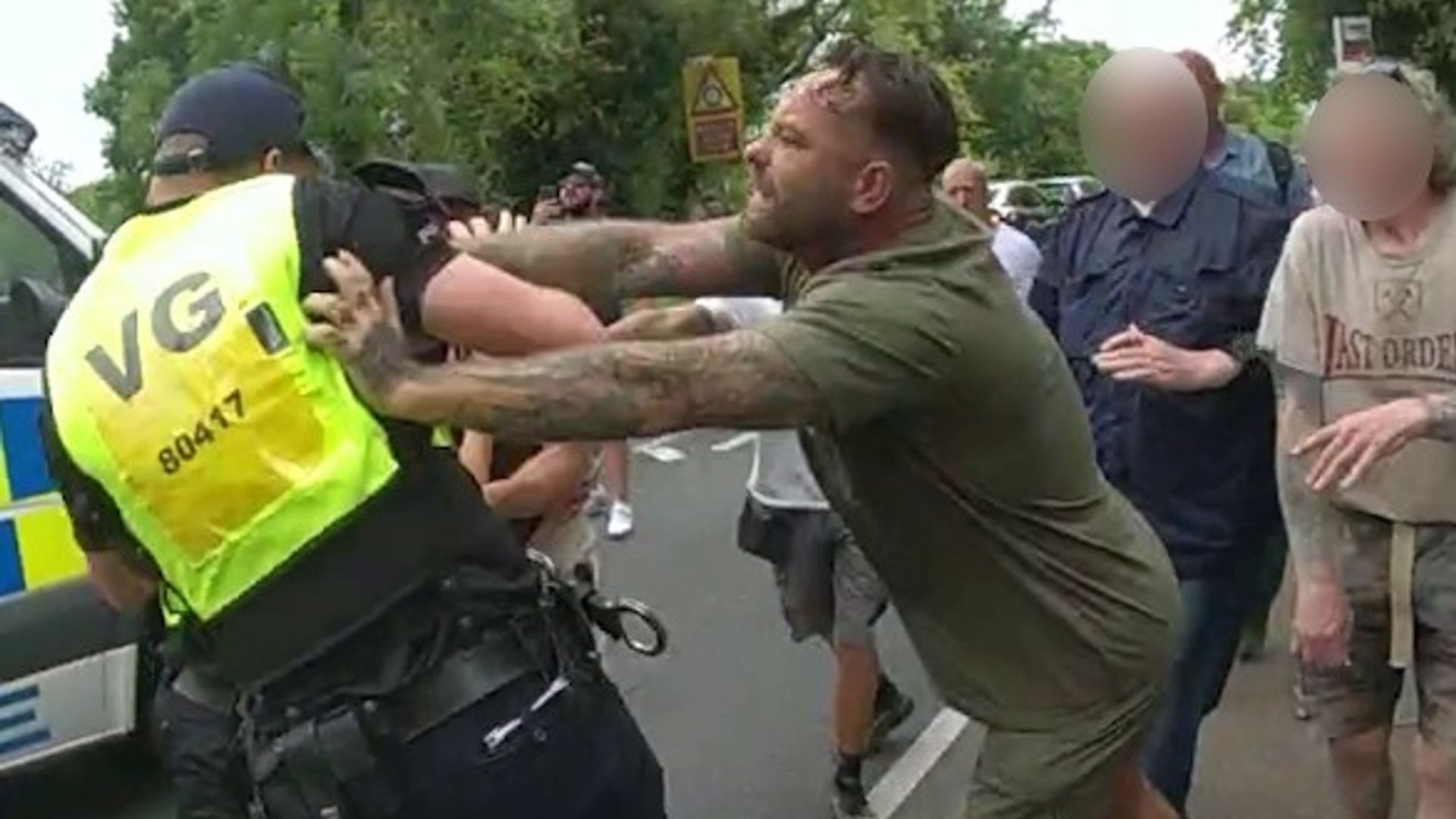
The asphalt was still radiating the day's heat when the first shout cut through the humid evening air. It wasn't a cry for help. It was a rhythmic, guttural pulse that felt less like speech and more like an engine idling too high. Outside the perimeter of a nondescript hotel—a place built for weary travelers and continental breakfasts—a line of high-visibility vests stood as the only barrier between two fundamentally different worlds.
On one side of the glass, people who had fled across continents sat in darkened rooms, listening to the muffled roar of their names being turned into insults. On the other, a swell of bodies pressed forward, fueled by a cocktail of local grievance and digital whispers. In the middle stood the officers. In similar news, take a look at: The Sabotage of the Sultans.
They don't tell you in the academy how the air feels right before a riot pops. It gets heavy. It tastes like ozone and cheap lager. For the men and women in uniform that night, the shift didn't end with a clock-out; it ended with the sound of snapping plastic and the dull thud of boots hitting bone.
The Human Cost of a Line in the Sand
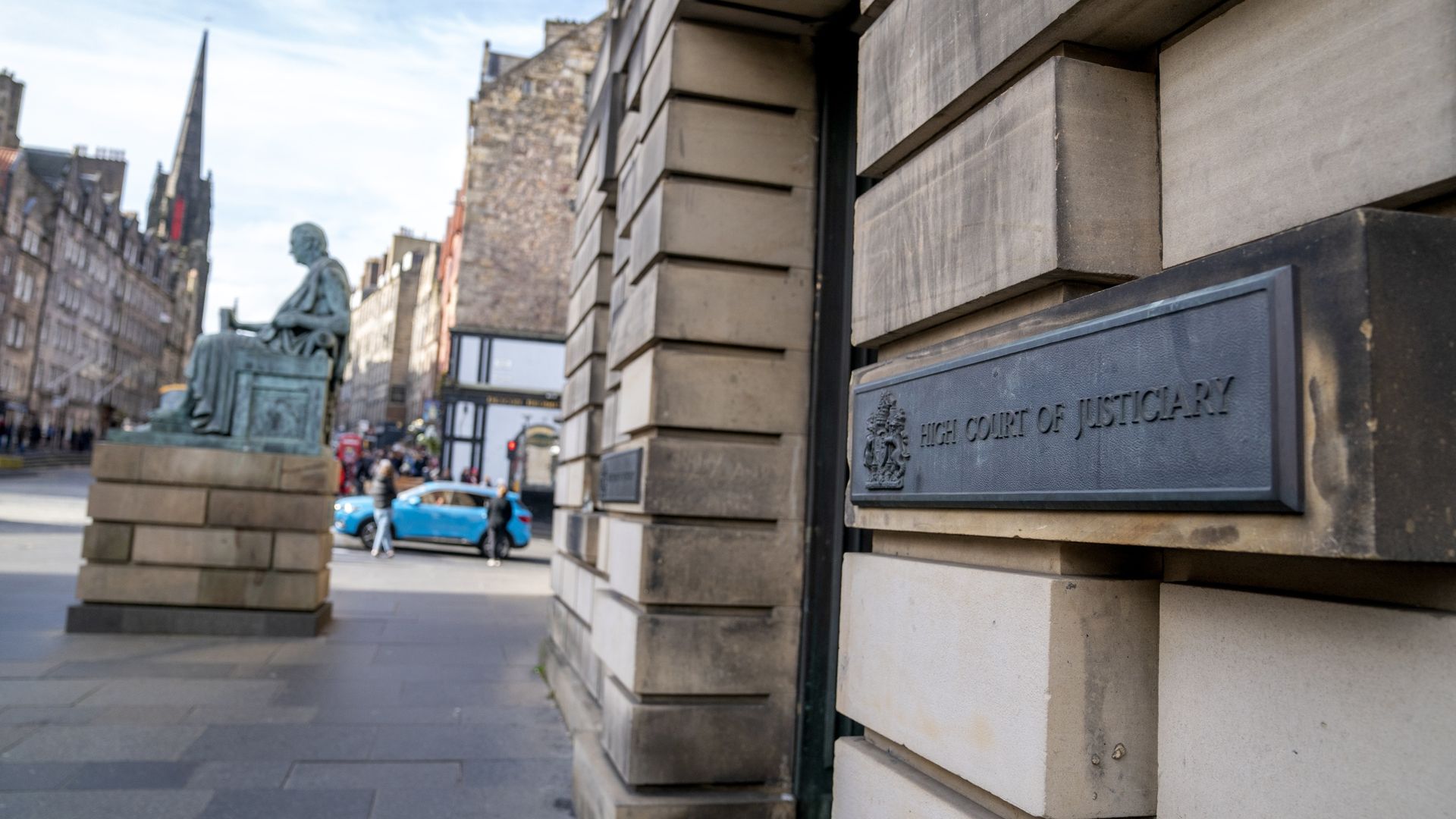
A court in the aftermath is a sterile place. It is a room of polished wood and hushed tones, designed specifically to strip the adrenaline away from an event and replace it with cold, hard nouns. We heard about the "grabbing." We heard about the "pushing." But those words are too small to contain the reality of a three-hundred-pound surge of human weight slamming into a single human chest. The Guardian has also covered this important subject in great detail.
Consider an officer we will call Sarah. She isn't a political figure. She doesn't set national policy on borders or housing. That morning, she had likely been worried about a mortgage payment or a parent’s failing health. By evening, she was a human shield. When the mob surged, the "pushing" mentioned in the legal briefs meant her lungs were being squeezed until the edges of her vision turned gray. The "kicking" wasn't a cinematic stunt; it was the rhythmic bruising of her shins and thighs as she tried to maintain a stance that would keep the peace.
Why does this matter more than just another headline about a protest?
Because when a crowd decides that a uniform is no longer a person, something vital in the machinery of a country breaks. The violence wasn't accidental. It was a choice. To grab an officer by the throat or to punch someone trying to maintain order is to decide that your anger is more sacred than the law.
The Invisible Stakes of the Lobby
Inside the hotel, the perspective was even more fractured. Imagine being three thousand miles from the only home you’ve ever known, staring at a flickering television in a room that isn't yours, while a thousand people outside scream for your departure. You don’t need to speak the language to understand the tone of a mob.
The stakes here aren't just about policy or "asylum seeker numbers." They are about the terrifying ease with which we can dehumanize the person on the other side of a door. To the protesters, the people inside were a faceless threat, a drain, a symbol. To the people inside, the protesters were a terrifying wall of fire. And for the police, they were the meat in the sandwich, bruised by both the physical reality of the fight and the psychological weight of being the targets of their own neighbors.
The court heard how the violence escalated from verbal abuse to physical assault. This is a pattern we see repeated when the digital world bleeds into the physical one. A comment section doesn't have consequences. A punch does. The disconnect lies in the fact that many of those standing in that crowd likely see themselves as "good people" defending their community. Yet, they find themselves standing over a fallen officer, boots swinging, faces twisted in a mask of rage that they won't recognize when they see the police body-cam footage later in a quiet room.
The Anatomy of the Surge
Violence is rarely a straight line. It’s a series of ripples.
First, there is the noise. It builds until you can’t hear the person next to you. Then comes the "grabbing"—the testing of the line. A hand on a shoulder. A tug on a belt. It’s a feeler sent out by the collective consciousness of the crowd to see if the barrier will hold. When the barrier wavers, the "punching" starts.
The physical toll on the officers involved that night wasn't just limited to the immediate injuries. There is a lasting vibration in the nervous system after an event like this. You don't just go home and sleep off a riot. You sit in your kitchen at 3:00 AM, the house silent, and you feel the phantom pressure of hands on your vest. You hear the rhythmic chanting in the hum of the refrigerator.
The law treats these as "assaults on emergency workers," a tidy phrase for a messy reality. But we have to look at what led to that threshold being crossed. It wasn't just a disagreement over local housing. It was an explosion of a deeper, more volatile tension that has been simmering in the dark corners of the internet and the forgotten corners of the town.
The Fragility of the Shield
We often talk about the "thin blue line" as a cliché, but that night, it was literal. It was a thin line of flesh and blood holding back a tide of resentment. If that line fails, what is left?
If we accept that "grabbing, pushing, punching, and kicking" are just part of the price of public service, we are admitting that the social contract has expired. The court proceedings are an attempt to re-establish that contract, to say that even in your deepest anger, there are lines you cannot cross. But a judge’s gavel cannot heal a bruised rib, nor can it easily repair the sense of safety that evaporates when a mob turns on the very people meant to protect it.
The real tragedy isn't just the violence itself, but the vacuum it leaves behind. In the wake of the shouting, there is only a scarred pavement, broken glass, and a community that has seen the worst of itself mirrored in the eyes of the people it attacked.
The officers go back to work. The asylum seekers stay behind the glass. The protesters go back to their screens. But the threshold has been weakened. Every time a hand is laid on an officer in anger, the wall that protects us all gets a little thinner, a little more brittle, until one day, we might find there is nothing left to hold the weight.
The moon rose over the hotel roof that night, indifferent to the chaos below. By dawn, the crowds were gone, leaving only the smell of scorched rubber and the heavy, ringing silence of a place where the peace had been fought for and nearly lost. In the end, the bruises will fade, but the memory of how quickly the neighbors turned into a mob will remain, a cold shadow in the bright light of day.