The air in the Roosevelt Room doesn't just sit; it presses. It is a heavy, recycled atmosphere, thick with the ghosts of a century’s worth of decisions that altered the map of the earth. On a particular evening that has only recently come to light, the weight of that air centered on a single man who wasn't a career diplomat or a four-star general. He was a veteran with a television profile, a man whose transition from the battlefield to the screen had landed him in the inner sanctum of global power.
Pete Hegseth stood before the President of the United States. He wasn't there to talk about poll numbers or media cycles. He was there to talk about the desert, the centrifuges humming beneath the Iranian soil, and the specific, terrifying math of nuclear breakout.
Donald Trump would later recount this moment with the casual cadence of a man describing a business deal, but the reality was far more visceral. Hegseth, according to the President’s own admission, was the first to truly push the button of urgency. He wasn't just suggesting a policy shift. He was advocating for a kinetic strike.
Imagine a hypothetical technician in a facility like Natanz. Let’s call him Elias. Elias doesn't care about Washington rhetoric. He cares about the pressure gauges on a cascade of IR-6 centrifuges. He knows that if those machines spin fast enough for long enough, the world changes. For Elias, it is a job. For Hegseth, looking at the intelligence briefings in the White House, those spinning cylinders represented an existential timer ticking toward zero.
The argument wasn't built on the dry, cautious language of the State Department. It was built on the raw, jagged edges of "what if." What if we wait? What if the window slams shut? What if the next time we look at the satellite imagery, the Enrichment is no longer a theoretical threat but a finished product?
Most people think of war as a series of grand movements, of armies clashing on open plains. They are wrong. Modern war begins in quiet rooms with hushed voices. It starts with a persuasion. Hegseth’s role in this narrative is fascinating because it bypasses the traditional filters of the Pentagon. He spoke a language of directness that resonated with a President who famously distrusts the "Deep State" bureaucracy.
The stakes were invisible to the public, hidden behind redacted lines and classified briefings. While the rest of the country was arguing about social media trends or the latest celebrity scandal, a handful of men were debating whether to launch a strike that could ignite a regional conflagration.
Hegseth’s logic was grounded in a specific kind of military realism. He saw the Iranian nuclear program not as a diplomatic puzzle to be solved with more signatures on more pieces of paper, but as a physical target that was growing more difficult to hit with every passing day.
Every hour of delay was an hour of fortification.
The tension in these discussions is rarely captured in the news tickers. We see the headline: "Trump Says Hegseth Pushed for Strike." We don't see the sweat on the palms of the aides. We don't hear the silence that follows a suggestion of such magnitude. A strike on a sovereign nation’s nuclear infrastructure isn't just a military operation; it is a rupture in the fabric of international order. It is a gamble with a million variables, most of which lead to chaos.
But Hegseth wasn't looking at the chaos. He was looking at the threat.
To understand this, you have to understand the sheer terrifying speed of nuclear physics.
$E=mc^2$
That famous equation isn't just a bit of trivia; it’s the reason why a few kilograms of enriched material can level a city. When Hegseth spoke of the "nuclear threat," he wasn't using a metaphor. He was talking about the terrifying efficiency of the atom. He was talking about a future where a regime hostile to Western interests possessed the ultimate leverage.
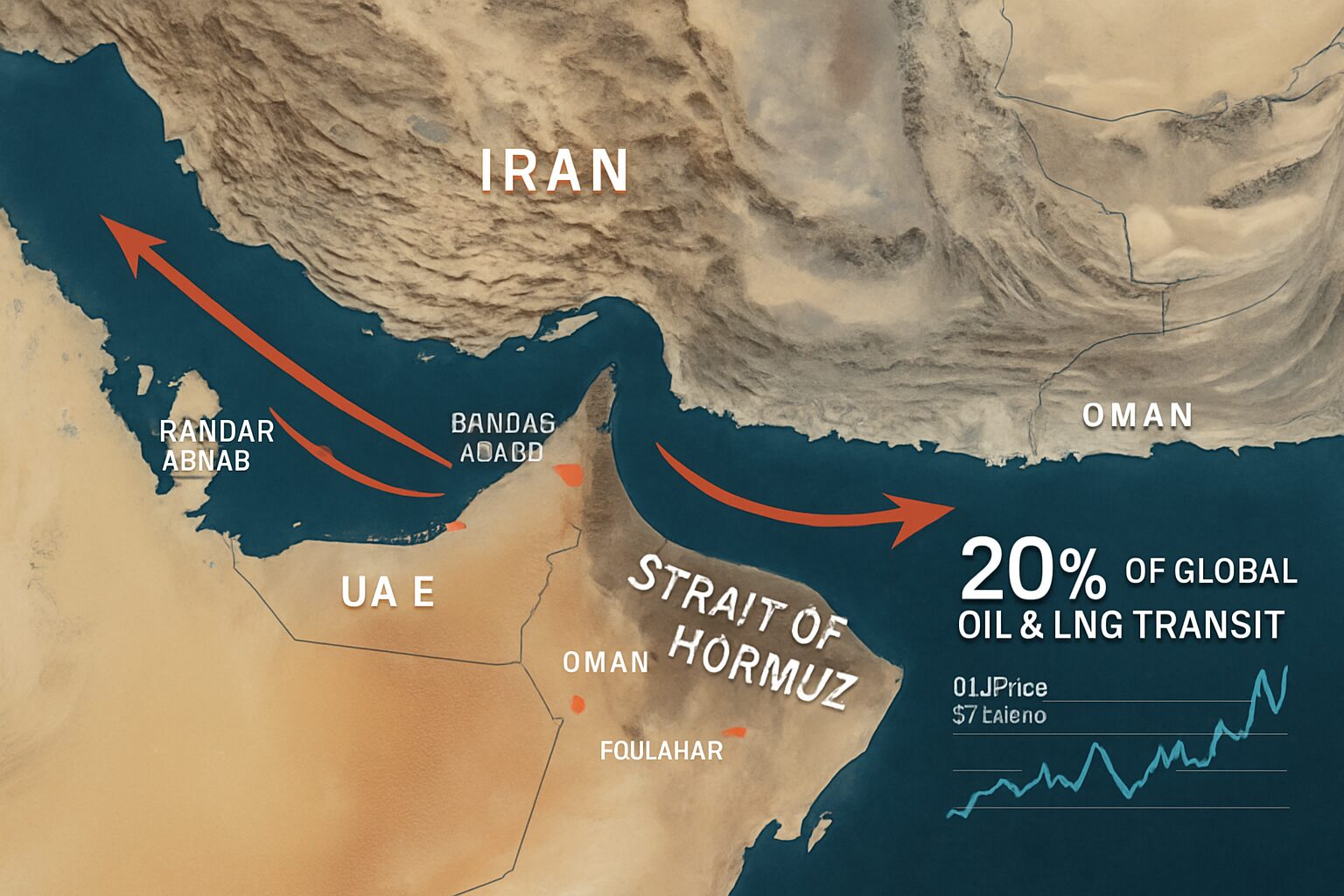
Consider the ripple effect. If a strike occurs, the oil markets don't just fluctuate; they scream. The Strait of Hormuz becomes a graveyard of tankers. Shipping insurance premiums skyrocket, and suddenly, a family in a suburb in Ohio finds that their grocery bill has doubled because the fuel for the delivery trucks has become a luxury item.
This is the human element of high-stakes geopolitics. A decision made in a carpeted room in D.C. ends up at your kitchen table.
The President’s revelation about Hegseth’s influence serves as a window into how power actually functions in the modern era. It isn't always the person with the most stars on their shoulder or the longest tenure in the Senate who carries the day. Sometimes, it is the person who can frame the danger in a way that feels personal, urgent, and undeniable.
Critics will say this is dangerous. They will argue that foreign policy should be the domain of the dispassionate, the career experts who have spent decades studying the nuances of Middle Eastern history. They fear the "gut instinct" of the outsider.
But there is another side to that coin. The experts are often the ones who managed the status quo while the centrifuges kept spinning. They are the ones who authored the agreements that the other side ignored. Hegseth’s push was a rejection of that status quo. It was a demand for a hard stop.
It is a terrifying realization that our lives can be redirected by a single conversation. We like to believe in the stability of systems, the checks and balances that ensure every move is calculated to the tenth decimal point. In reality, history is often moved by the force of personality.
Hegseth saw a map. He saw a threat. He saw a window of opportunity that was closing.
The debate wasn't just about Iran. It was about the soul of American interventionism. Do we strike first to prevent a greater catastrophe, or do we wait and hope that diplomacy can catch lightning in a bottle?
There is no easy answer. Anyone who tells you otherwise is selling something. If you strike, you risk a war that could last a generation. If you don't strike, you risk a world where the most dangerous weapons are in the hands of the most volatile actors.
It is a choice between two different kinds of nightmares.
As the details of these meetings continue to surface, we are forced to confront the fragility of the peace we take for granted. We realize that the "dry facts" of a news report are actually the coordinates of our collective future.
The story of Hegseth and the Iran strike isn't just a footnote in a political biography. It is a reminder that in the halls of power, the most potent weapon isn't always a missile. Sometimes, it is the ability to convince the person with the codes that the time for talking has ended.
We live in the space between the suggestion and the action. We live in the quiet moments before the sky turns a different color.
The centrifuges continue to spin. The men in the rooms continue to talk. And the rest of us continue to wait, hoping that whoever has the President’s ear understands that once the first stone is thrown, the ripples never truly stop.
The weight of the world remains in the palm of a hand, resting on the strength of a single argument.