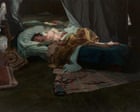
Jacob Collins winning the 2026 Packing Room Prize is not a victory for portraiture. It is a white flag.
Every year, the Art Gallery of New South Wales goes through this tired ritual. They gather the staff who hoist the crates—the "packers"—and let them pick a winner. The media laps it up. It is framed as the "people’s choice" before the actual People’s Choice. It is sold as a refreshing, salt-of-the-earth antidote to the supposed snobbery of the official Archibald trustees.
This narrative is a lie.
The Packing Room Prize does not democratize art. It infantilizes it. By elevating the "relatable" over the remarkable, we are conditioning the public to believe that the only value of a portrait is its ability to look exactly like a high-resolution photograph.
The Curse of the Literal
Jacob Collins is a master technician. Nobody is disputing his ability to render skin tones or the way light hits a lapel. But when the packing room staff chooses a work like his, they aren't rewarding art. They are rewarding labor.
We have reached a point where "good art" is synonymous with "time spent." If a painting looks like it took three hundred hours of meticulous squinting, we call it a masterpiece. If it uses bold, gestural strokes to capture the psychological disintegration of the subject, we call it messy.
The Packing Room Prize is the ultimate participation trophy for the literal-minded. It celebrates the craft of copying reality while completely ignoring the soul of interpretation. A portrait should be a biography written in oil, not a DMV photo with better lighting.
I have spent two decades watching galleries move away from challenging the viewer. I have seen curators grow terrified of any work that requires more than three seconds of "gut feeling" to process. The Packing Room Prize is the epicenter of this intellectual laziness.
The Myth of the Blue-Collar Eye
The most condescending part of this entire spectacle is the "aw-shucks" framing of the packers themselves. The media portrays them as some collective Oracle of the Common Man. The implication is that because they move the boxes, they have a purer, less "tainted" view of art than the trustees.
This is a logical fallacy.
Moving a crate does not grant you a magical insight into the history of figurative painting. Expertise is not a sin. The Archibald trustees—as flawed and political as they often are—at least attempt to judge a work based on its place in the 105-year history of the prize. They look for how a portrait speaks to the Australian identity, how it pushes the medium forward, and how it handles the weight of the tradition.
The Packing Room Prize ignores all of that for a "he looks just like him" moment. It’s the visual equivalent of choosing the Best Picture Oscar based on which movie had the most explosions.
Why Reality is a Creative Dead End
If you want an exact likeness, take a photo. We carry 48-megapixel cameras in our pockets. The era of the portraitist as a mere documentarian ended in 1839 with the daguerreotype.
When we reward the Collins approach, we are telling young artists that their unique perspective—their "voice"—is secondary to their ability to function as a human Xerox machine. We are stifling the next generation of Quiltys or Blackmans.
Think about the portraits that actually stick in your ribs. They are rarely the ones that are perfectly proportional. They are the ones that feel "wrong" in all the right ways.
- Francis Bacon didn't care if the nose was in the right place.
- Lucian Freud didn't care if the subject looked "nice."
- Alice Neel didn't care about photorealism.
They cared about the truth. The truth of a person is often ugly, distorted, and vibrating with anxiety. You don't find that truth by measuring the distance between the tear duct and the bridge of the nose with a pair of calipers. You find it by taking risks. The Packing Room Prize is the enemy of risk.
The Commercial Trap
Let’s talk about the money. Winning the Packing Room Prize is a massive commercial signal. It tells the wealthy suburbanites who buy "investment art" that this artist is a safe bet. It creates a market for boring, technically proficient, soul-crushing realism.
I’ve seen artists who started their careers with fire and grit slowly sand down their edges because they realized that "Packer-friendly" work sells. It’s a slow-motion tragedy. We are incentivizing the creation of lobby art—paintings that look expensive but say absolutely nothing.
The 2026 finalists list is a snapshot of this tension. For every daring, experimental piece that makes the cut, there are five "safe" portraits designed to please the crates-and-dolly crowd. By giving the Packing Room Prize so much oxygen, the AGNSW is effectively telling artists: "Go ahead and experiment, but if you want the fame and the check, keep it simple."
The Counter-Intuitive Truth
The best thing that could happen to the Archibald Prize is for the Packing Room category to be abolished.
Wait. Not just abolished. Replaced.
If we want a "People’s Choice," let’s make it a "Dissenters Choice." Let the staff pick the painting that makes them the most uncomfortable. Let them pick the one they hated the most on first glance. Let’s reward the work that forces a conversation, not the one that ends it with a polite nod of recognition.
We are addicted to the comfortable. We want our art to be like our Netflix queues—curated to match our existing tastes so we never have to encounter something that challenges our worldview.
Jacob Collins won because he gave the people exactly what they expected. In any other industry, being "predictable" is a death sentence. In the Australian art world, it’s a $3,000 check and a press release.
Stop Asking if it "Looks Like Them"
The next time you walk through the Archibald exhibition, I want you to ignore the names on the plaques. Don't look for the celebrity faces. And for the love of everything holy, stop checking to see if the painting "looks like" the person.
Ask yourself these questions instead:
- Does this painting tell me something about the subject that a camera couldn't?
- Does the artist have a relationship with the paint, or are they just using it to fill in the blanks?
- If I saw this portrait in a dark room, would it feel like there was someone else in there with me?
If the answer is "no," it doesn't matter how realistic it is. It’s a failure of imagination.
The Packing Room Prize is a celebration of the mundane. It’s a pat on the head for the status quo. Jacob Collins is a fine painter, but his win is a symptom of a culture that has forgotten how to be challenged.
We don't need more "perfect" portraits. We need more dangerous ones.
Stop settling for the likeness. Demand the ghost.