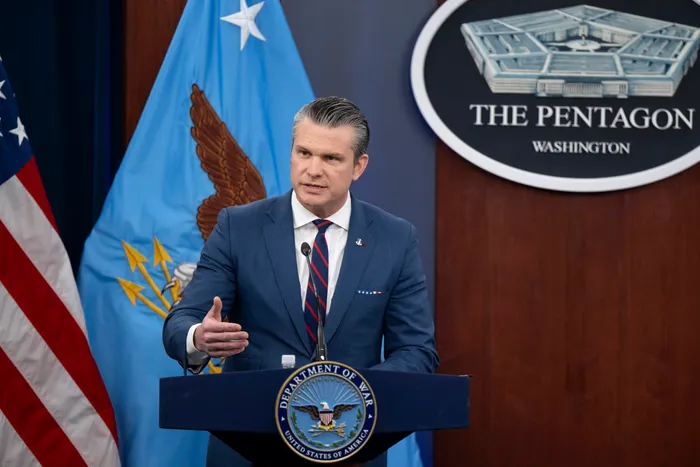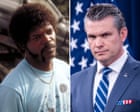
When Defense Secretary Pete Hegseth stepped to the podium at a Pentagon worship service this week, he probably didn't expect a pop culture firestorm. He shared a prayer he called "CSAR 25:17," attributing it to military combat search-and-rescue teams. The words he spoke were striking. They were also instantly recognizable to anyone who has seen Quentin Tarantino’s Pulp Fiction.
The internet immediately erupted. Social media users pointed out that the passage Hegseth recited—centered on "the path of the downed aviator" and "great vengeance"—mirrored the iconic monologue delivered by Samuel L. Jackson’s character, Jules Winnfield, in the 1994 film. While Hegseth suggested the prayer was meant to reflect the biblical verse Ezekiel 25:17, the reality is far more layered. This isn't just a case of someone accidentally quoting a movie. It's a look into how stories, myths, and military jargon blend in the modern era.
The Collision of Scripture and Cinema
To understand the confusion, you have to look at the source material. The actual King James Version of Ezekiel 25:17 is short and direct. It reads: "And I will execute great vengeance upon them with furious rebukes; and they shall know that I am the Lord, when I shall lay my vengeance upon them."
That’s it. It doesn’t mention "the path of the righteous man" or "shepherds in the valley of darkness." Those lines were creative inventions by Tarantino and co-writer Roger Avary. They took a single biblical anchor and built a cinematic sermon around it to give their character a sense of gravitas and menace.
When Hegseth recited his version, he kept the structure of the Pulp Fiction monologue but swapped out the cinematic flair for military terminology. Instead of "the righteous man," he spoke of "the downed aviator." Instead of "the Lord," he claimed his call sign was "Sandy One."
Why This Matters in a Military Setting
Critics are focusing on the optics. The Pentagon is a serious place. Using a monologue from a violent movie—even one modified for a prayer—feels tone-deaf to many. It raises questions about the intersection of religious practice and institutional authority within the Department of Defense.
However, viewing this simply as a "gaffe" misses the point. Inside specialized communities like combat search-and-rescue units, language often evolves in ways that outsiders don't immediately grasp. Phrases that start as pop culture references can be adopted, repeated, and eventually treated as tradition. If "CSAR 25:17" has been circulating among A-10 crews as a way to find solace or meaning before a dangerous mission, it matters less where the words originally came from and more what they represent to the people using them.
The Problem of Institutional Authority
The real issue isn't whether Hegseth knew he was quoting Tarantino. It’s about the fragility of authority when it relies on borrowed, fictionalized language.
When a high-ranking official presents a text as a spiritual or military tradition, it carries the weight of their office. When that text is revealed to be a derivation of a Hollywood screenplay, the authority of the message evaporates. It creates a "gotcha" moment that distracts from any intended meaning.
It also highlights a deeper trend. We live in an age where the lines between authentic history, pop culture myth, and personal narrative are increasingly blurred. People often prefer stories that feel true over ones that are textually accurate. Hegseth isn't the first person to mistake a cultural artifact for a foundational truth, and he won't be the last.
Moving Past the Viral Moment
If you're looking for the takeaway, it's not about memorizing the Bible or avoiding movies. It's about recognizing how we build our own versions of reality through the language we choose.
- Check your sources. Before presenting a quote as authoritative or traditional, verify its origin. It saves you from public embarrassment and strengthens your credibility.
- Understand the context. What sounds profound in a movie or a high-stress military environment can sound jarring or ridiculous in a formal, public setting.
- Focus on the message, not the myth. If the intent is to honor search-and-rescue crews, there are countless authentic, non-fictional ways to do that without relying on stylized, violent monologues.
Ultimately, the firestorm surrounding the Pentagon prayer proves how quickly digital discourse can strip away nuance. Whether the use of the prayer was intentional or a mistake, it’s now part of the public record. In a world where every word is scrutinized, you have to be careful about which stories you choose to tell.
The incident likely won't change military operations, but it serves as a sharp reminder that when you stand at a podium, the words you choose define your message—and sometimes, they define your legacy.