A peaceful Monday afternoon in the heart of Manhattan turned into a nightmare when random violence erupted just outside One Times Square.
At roughly 4:30 p.m., 49-year-old Pamela Cisneros of Queens pulled two large kitchen knives from a shopping bag and launched an unprovoked attack on pedestrians near West 42nd Street and Seventh Avenue. Her first target was a 68-year-old man who had just stepped out of a subway station alongside his wife. Seconds later, she targeted 32-year-old Erin Piacenti, a Bank of America vice president, plunging a knife into her abdomen. The entire stabbing sequence lasted barely 20 seconds, leaving onlookers screaming and scattering across the tourist hub.
Inside the Four-Minute Standoff
When a crisis hits the crossroads of the world, seconds matter. But what happened immediately after the slashing reveals a complex breakdown between crisis management and lethal force.
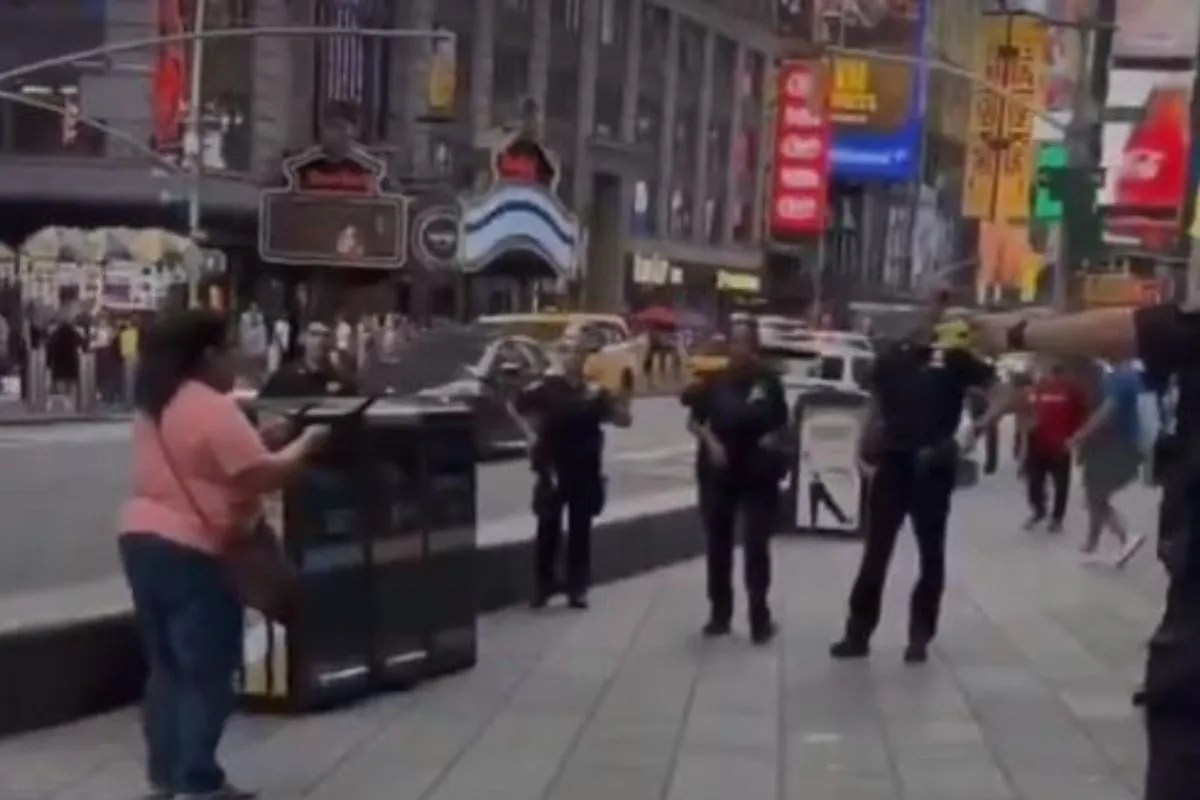
Cisneros fled directly toward an NYPD substation located right at the scene. According to New York Police Commissioner Jessica Tisch, officers engaged the armed suspect in a tense, four-minute standoff. Video footage captured at least ten officers forming a perimeter around Cisneros, who brandished two kitchen knives and screamed threats at the authorities.
She shouted directly at the responding officers, declaring, "I'm not dropping anything, I would rather kill both of you."
Officers attempted non-lethal intervention first. They deployed Tasers to incapacitate her, but the stun guns failed to stop her forward momentum. As she continued to advance while waving the blades, two officers opened fire, striking her. First aid was administered immediately after she was handcuffed, but she was later pronounced dead at Bellevue Hospital.
The Human Toll and Safety Realities
The attack claimed the life of Erin Piacenti, whose sudden death sent shockwaves through the corporate and local community. The 68-year-old male victim survived the initial trauma and was listed in stable condition.
Public safety statistics in New York City often paint a picture of improving metrics. The NYPD reported steep drops in major index crimes and homicides heading into late 2026. Yet, high-profile tragedies in hyper-visible zones like Midtown disrupt public trust instantly. Random, unprovoked acts defy macro-level crime data. They expose the terrifying vulnerability of everyday commuters and tourists walking down a crowded Manhattan avenue.
Addressing Mental Health Gaps in Public Spaces
Law enforcement officials quickly confirmed that Cisneros had a documented history of mental health incidents with the NYPD spanning back to 2018 and 2019, though she possessed no prior formal arrest record.
This revelation reignites hard questions about how the city handles individuals suffering from severe, untreated psychological distress. Relying on armed police substations to act as the last line of defense for mental health crises puts both officers and civilians into impossible scenarios. Tasers failed because adrenaline and heavy clothing often nullify non-lethal electrical currents, leaving officers with a binary choice in seconds: risk their own lives and the lives of nearby civilians, or use deadly force.
Mayor Zohran Mamdani praised the quick intervention of the responding officers for preventing an even larger massacre, while emphasizing that standard internal investigations and body-camera reviews will follow.
If you travel through high-density transit hubs, staying alert to your immediate surroundings remains your best personal safeguard. Keep your eyes up, identify exit routes in crowded spaces, and support local initiatives that expand street-level mental health response teams before a crisis turns fatal.